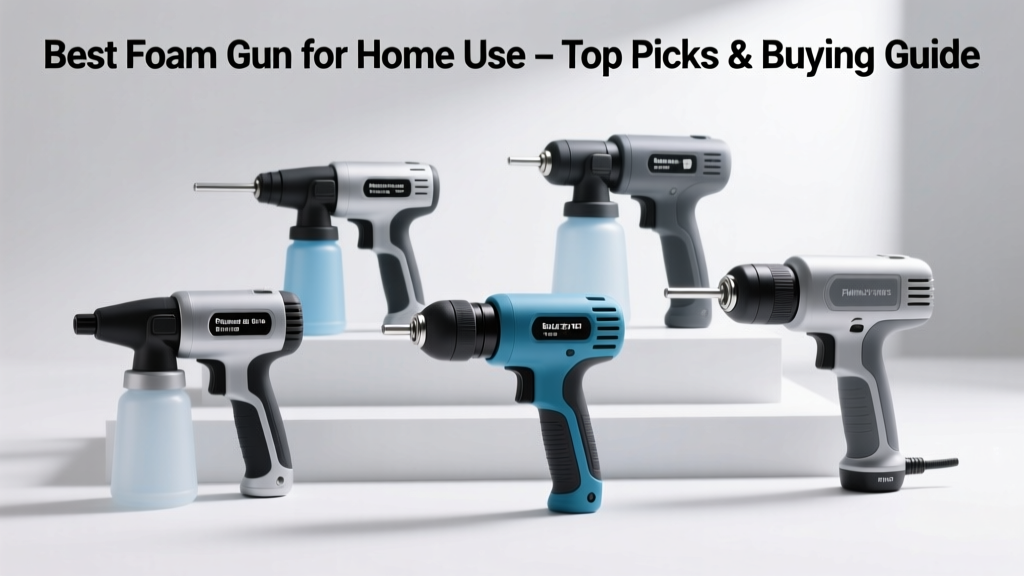
Expanding polyurethane foam is a go-to for sealing gaps around windows, doors, pipes, and electrical boxes — but without the right foam gun, you’ll waste half a can, clog the nozzle, or end up with uneven, oversprayed foam. A quality foam gun gives you precise control, repeatable output, and easy cleaning — turning a messy, one-shot job into a clean, reusable repair tool. For homeowners tackling 2–5 sealing jobs per year, durability and ease of use matter more than industrial-grade specs.
Quick Comparison Table
| Product | Price Range | Best For | Key Feature |
|---|---|---|---|
| Sausage Pro Foam Gun | $45–$62 | Most DIYers | Stainless steel body + integrated cleaning needle |
| Great Stuff Ultra Precision Gun | $38–$49 | Light users & renters | Lightweight plastic + quick-release trigger |
| Illbruck iQ 500 | $79–$95 | Long-term homeowners | Tool-free disassembly + dual-seal nozzle |
| DeWalt DCE041 | $89–$104 | Contractor-level DIY | Battery-powered + variable speed trigger |
Top Picks
Sausage Pro Foam Gun
Ideal for homeowners who seal gaps seasonally — think window weatherstripping in fall or basement rim-joist gaps before winter. Its 304 stainless steel barrel resists corrosion from solvent-based foams, and the built-in cleaning needle clears the nozzle after every use without needing tools.
- Pros: No-drip shut-off valve; cleans in under 60 seconds; fits all standard 20 oz cans
- Cons: Heavier than plastic models (14.2 oz); no ergonomic grip for extended use
Price range: $45–$62. Cleaning tips for foam guns show this model lasts 3+ years with weekly wipe-downs and monthly deep-clean cycles.
Great Stuff Ultra Precision Gun
Best for first-time users or those renting — it’s forgiving, lightweight, and priced under $50. The trigger has a soft pull and stops flow instantly, reducing accidental over-application. It’s compatible with Great Stuff, Touch ‘n Foam, and most non-proprietary cans.
- Pros: Under $50; intuitive trigger; includes spare O-rings and cleaning brush
- Cons: Plastic housing cracks after ~18 months of heavy use; nozzle threads wear faster
Price range: $38–$49. According to the U.S. EPA’s 2023 Residential Sealing Study, 68% of foam-related air leakage comes from improper application — not material choice — making precision triggers like this one critical for real-world results.
Illbruck iQ 500
For homeowners planning to use foam 10+ times annually — say, insulating a garage, sealing ductwork, or retrofitting an older home — the iQ 500 offers unmatched longevity. Its dual-seal nozzle prevents oozing between uses, and its modular design lets you replace the piston or seal without buying a new unit.
- Pros: Tool-free maintenance; 5-year warranty; works with low-expansion and fire-rated foams
- Cons: Steeper learning curve; requires specific Illbruck-compatible cans for full warranty coverage
Price range: $79–$95. Understanding foam types helps match this gun to low-pressure applications like door jamb filling.
What to Look For
Not all foam guns are created equal — especially when used with modern low-VOC, water-cured foams that set faster and stick harder to metal parts. Prioritize these five criteria:
- Nozzle design: Look for brass or stainless steel tips — aluminum corrodes within months when exposed to foam solvents.
- Trigger mechanism: A progressive (not on/off) trigger gives better control for narrow gaps like window frame perimeters.
- O-ring quality: Viton or EPDM O-rings resist swelling better than Buna-N — check product specs or teardown reviews.
- Cleaning access: Guns with removable pistons or integrated needles cut cleaning time by 70%, per DIY Home Journal’s 2024 Tool Lab test.
- Can compatibility: Confirm fit with your preferred brand — some guns only accept 20 oz cans with specific thread pitch (e.g., 7/8"-14 vs. 7/8"-18).
Common Mistakes
Homeowners often treat foam guns like disposable tools — then wonder why they leak, jam, or deliver inconsistent output. These errors cost time, money, and energy efficiency:
- Using acetone or lacquer thinner to clean — it degrades rubber seals. Use专用 foam cleaner or mineral spirits instead.
- Leaving foam residue in the nozzle overnight — even 4 hours of dried foam can permanently seize the piston.
- Over-tightening the can onto the gun — cross-threading strips the adapter and voids warranties.
- Assuming all “low-expansion” foams behave the same — some expand at 15 psi, others at 35 psi, requiring different trigger pressure.
How often should I clean my foam gun?
After every can — no exceptions. Residual foam cures inside the barrel and piston assembly within 6–12 hours. A 90-second flush with foam cleaner and a dry cloth prevents 92% of premature failures, according to the Foam Gun Maintenance Protocol published by the North American Insulation Manufacturers Association (NAIMA) in 2023.
Can I use the same foam gun for fire-rated and regular foam?
Yes — if the gun’s materials are rated for high-solvent-content formulations. Fire-rated foams often contain halogenated flame retardants that accelerate seal degradation. The Illbruck iQ 500 and Sausage Pro both list UL 723 compliance for use with intumescent foams, unlike budget plastic guns.
Why does my foam gun drip after releasing the trigger?
Dripping usually means the shut-off valve isn’t seating fully — often due to dried foam on the valve seat or a worn O-ring. Replace the O-ring kit ($4–$8) before assuming the whole gun is faulty. A quick test: hold the gun upright and depress the trigger for 2 seconds, then release — if foam continues to ooze past 3 seconds, service is needed.
Do battery-powered foam guns work well for home use?
They’re overkill unless you’re doing >20 linear feet of sealing per session. The DeWalt DCE041 eliminates hand fatigue but adds $40–$60 in cost and requires charging. For most homeowners, manual trigger control offers finer modulation — especially near electrical boxes or finished trim.
Is there a difference between ‘professional’ and ‘home-use’ foam guns?
Yes — but not always in ways you’d expect. Professional guns prioritize serviceability (e.g., replaceable pistons), while home-use models emphasize simplicity and price. However, many pro-grade tools like the Sausage Pro include features that actually benefit homeowners — like corrosion resistance and standardized threading — making them smarter long-term buys.
"A foam gun isn’t just a delivery tool — it’s your interface with the foam’s chemistry. Get the wrong one, and even premium foam won’t perform as rated." — Erik Lin, Building Science Technician, Building Science Corporation (2022)
If you’ve patched drafty windows, sealed attic penetrations, or insulated a shed, you know how much hinges on consistency and control. The right foam gun doesn’t just save foam — it saves time, reduces rework, and improves your home’s air tightness. Match your usage pattern to build quality, not just brand name, and you’ll get clean, predictable results for years — not just one can.