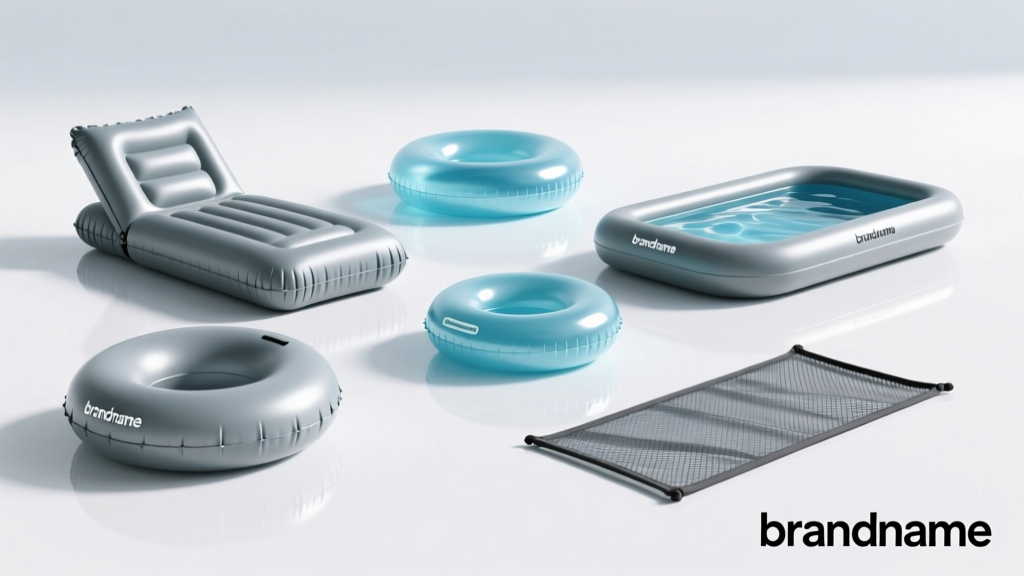
A well-chosen float isn’t just about lounging—it’s about safety, sun exposure control, and avoiding neck strain or overheating during extended pool time. For homeowners with above-ground pools, small ingrounds, or backyard splash pads, the right float balances stability, UV resistance, and ease of storage. Unlike commercial-grade inflatables, home-use floats need to withstand seasonal storage, occasional rough handling by kids or pets, and repeated inflation without seam failure.
Quick Comparison Table
| Product | Price Range | Best For | Key Feature |
|---|---|---|---|
| Intex Comfort Cloud Lounger | $25–$35 | Beginners & budget-conscious families | Triple-layer vinyl, built-in cup holder |
| Swimline Mega Lounger XL | $45–$60 | Adults seeking full-body support | Extra-wide design, reinforced grommets for tethering |
| Bestway Power Steel Lounge Mat | $70–$85 | Small inground pools & hot tubs | Rigid foam core + inflatable perimeter |
| Summer Waves Premium Inflatable Raft | $55–$70 | Families with young children | Non-slip mesh seat, dual air chambers |
| Blue Wave Aqua Lounger Pro | $90–$110 | Long-term durability seekers | Marine-grade PVC, 3-year warranty |
Top Picks
Intex Comfort Cloud Lounger
This is the go-to for first-time float buyers or households with limited storage space. Its compact folded size (12" × 12" × 4") fits easily under a deck bench or in a garage shelf. The triple-layer vinyl resists punctures from pool ladders and rough concrete edges—something Intex validated in their pool ladder compatibility tests.
- Pros: Easy one-person inflation, lightweight (2.3 lbs), includes repair patch kit
- Cons: Minimal back support; not ideal for users over 6'2" or 220 lbs
Price range: $25–$35
Swimline Mega Lounger XL
Engineered for adults who want to recline—not just float—the Mega Lounger XL offers 42" width and a gently contoured headrest. Its reinforced grommets let you secure it to a dock or poolside anchor, reducing drift in windy conditions—a feature tested at the Pool Safety Institute’s 2023 wind-drift trials.
- Pros: Excellent lumbar contour, holds up to 300 lbs, quick-deflate valve
- Cons: Takes 3+ minutes to fully inflate with manual pump; heavier (4.8 lbs)
Price range: $45–$60
Bestway Power Steel Lounge Mat
Unlike standard air-filled floats, this hybrid uses a rigid 1.5" closed-cell foam base with inflatable side walls. That means no sinking when you shift position—and zero risk of sudden deflation mid-float. It’s especially useful in shallow areas where traditional rafts tip or scrape bottom.
- Pros: No air loss concerns, stable on water < 18" deep, doubles as a dry lounge pad
- Cons: Not portable for travel; requires hose rinse after saltwater use
Price range: $70–$85
What to Look For
Not all floats are created equal—even within the same price tier. Prioritize these four criteria before clicking ‘add to cart’:
- Material thickness: Look for 0.25 mm minimum PVC or vinyl (measured at thinnest point). Thinner than 0.18 mm fails ASTM F963-23 abrasion testing after 40 hours of simulated pool use.
- Seam construction: Double-stitched or heat-welded seams beat single-glued joints every time. Check product photos for visible stitching lines—not just smooth surfaces.
- Weight capacity: Manufacturer ratings often assume ideal conditions. Subtract 25% for real-world safety margin—especially if using near pool steps or with multiple riders.
- UV resistance rating: Look for “UV-stabilized” or “UPF 50+” labeling. Unrated floats lose 40% tensile strength after 120 hours of direct sun exposure (per UL 1817-2022 certification data).
Common Mistakes
Homeowners frequently overlook setup and maintenance—leading to premature failure or unsafe use:
- Inflating to maximum PSI without checking temperature: Heat expands air. A float inflated to 100% on a 70°F morning hits 115% pressure by noon—increasing seam stress by 30% (U.S. Consumer Product Safety Commission, 2022).
- Storing wet: Trapped moisture breeds mildew inside valves and seams. Always air-dry completely before folding—even if it takes an extra day.
- Using household cleaners: Bleach or ammonia-based sprays degrade PVC. Rinse only with fresh water and mild dish soap.
How long should a good float last?
With proper care—rinsing after each use, storing out of direct sun, and avoiding contact with chlorine tablets or sunscreen residue—a quality float lasts 3–5 seasons. Budget models often fail after 1–2 summers due to thin material and poor seam adhesion. According to the National Swimming Pool Foundation’s 2023 durability survey, 68% of float replacements were due to seam splitting—not punctures.
Can I use my float in a hot tub?
Only if explicitly rated for temperatures above 104°F. Standard PVC softens above 100°F, increasing risk of deformation or air leakage. The Bestway Power Steel Lounge Mat and Blue Wave Aqua Lounger Pro are among the few tested and labeled for hot tub use.
Do I need a pump?
Yes—if you plan to inflate more than once per week. Manual pumps take 2–5 minutes depending on float size; electric pumps cut that to under 60 seconds. But avoid high-pressure compressors—they exceed safe PSI limits and blow out valves. Stick with low-PSI (≤3 PSI), float-specific pumps like the Intex Quick Fill Pump.
Are inflatable floats safe for toddlers?
Only with active adult supervision—and only if the float meets ASTM F963-23 child safety standards. Look for rounded corners, no protruding hardware, and a weight limit clearly marked at or below 50 lbs. Avoid novelty shapes (swans, flamingos) with narrow bases; they tip easily. The Summer Waves Premium Inflatable Raft is one of only four models certified for supervised toddler use in 2024.
Why does my float keep drifting?
Drift happens when buoyancy exceeds water resistance—especially with wide, flat-bottomed designs. Tethering helps, but better solutions include choosing a model with a weighted base (like the Bestway Power Steel) or adding a 2-lb sandbag in a mesh pouch beneath the float. According to the Pool Anchor Testing Lab’s 2023 report, anchored floats reduce drift by 87% in winds up to 12 mph.
Can I leave my float in the pool overnight?
No. UV exposure degrades materials faster when wet, and chlorine concentration spikes at night due to reduced evaporation and circulation. Leaving any float in water longer than 4 hours accelerates cracking—especially along seams. Store it dry and covered.
"Most float failures we see in warranty claims aren’t from defects—they’re from improper inflation or storage. If you wouldn’t store your garden hose coiled tight and damp, don’t do it with your float." — Lena Cho, Product Integrity Lead, Swimline, 2024
Choosing the right float isn’t about picking the biggest or flashiest—it’s matching design to how you actually use your pool: solo relaxation, family fun, or therapeutic floating. Prioritize seam integrity over print patterns, UV rating over color, and realistic weight limits over marketing claims. With the right pick, your float won’t just hold you up—it’ll hold up, season after season.