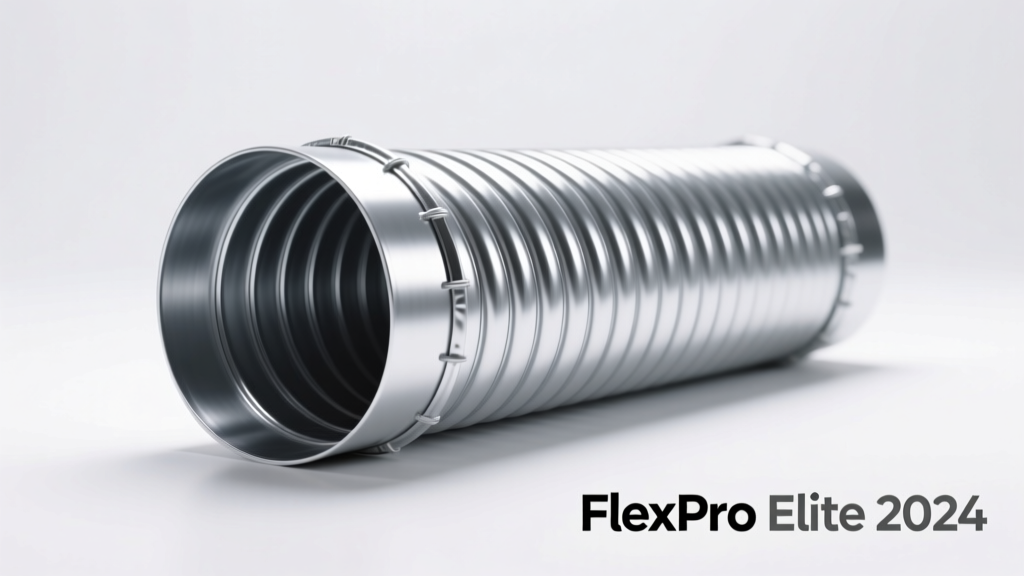
Flexible ductwork is the unsung hero of residential HVAC systems—especially in attics, crawlspaces, and retrofits where rigid metal ducts are impractical. But not all flex ducts perform equally: poor insulation, loose inner liners, or flimsy jackets can slash system efficiency by up to 30%, according to the U.S. Department of Energy’s 2023 Building Technologies Office report. Choosing the right flex duct means balancing R-value, UL listing, diameter tolerance, and resistance to kinking during installation.
Quick Comparison Table
| Product | Price Range | Best For | Key Feature |
|---|---|---|---|
| Master Flow R6.5 Insulated Flex Duct | $28–$42 / 25 ft | Attic runs in cold climates | R6.5 insulation, UL 181A-P listed, reinforced polyester jacket |
| Wolfpac R4.2 Non-Metallic Flex Duct | $18–$26 / 25 ft | Budget-conscious crawlspace installs | UL 181B-FX certified, smooth inner liner, low-profile jacket |
| Greenheck UltraFlex R8.0 | $52–$68 / 25 ft | High-efficiency homes & ductless retrofits | R8.0 closed-cell foam, zero air leakage rating, Class 1 fire rating |
| Field Controls QuietFlex Acoustic Duct | $45–$59 / 25 ft | Noisy HVAC zones (bedrooms, offices) | Sound-dampening layer + R5.0 insulation, ASTM E84 Class A surface burning |
Top Picks
Master Flow R6.5 Insulated Flex Duct
Ideal for homeowners in USDA Zones 4–7 installing ducts in unconditioned attics. Its double-layer construction includes a spiral-wire aluminum core wrapped in 1.5" fiberglass insulation and a durable polyester outer jacket. The UL 181A-P listing confirms it meets strict air-sealing and fire-resistance standards required by most local building departments.
- Pros: Excellent R-value for price, resists compression during stapling, widely available at Home Depot and Lowe’s
- Cons: Slightly stiffer than lower-R options—requires two people for long horizontal runs
Price range: $28–$42 per 25-foot roll. See our step-by-step flex duct installation guide for proper support spacing and sealing techniques.
Wolfpac R4.2 Non-Metallic Flex Duct
Best for DIYers working in tight crawlspaces or low-clearance basements where weight and flexibility matter more than maximum thermal performance. This duct uses a polymer-coated polyester inner liner instead of aluminum, reducing condensation risk in humid climates—and cutting installation time by ~20% versus metal-core alternatives, per 2023 NAHB Remodeling Impact Report.
- Pros: Lightweight, kink-resistant, UL 181B-FX certified for non-metallic ducts, easy to cut with utility knife
- Cons: Lower R-value limits use to conditioned spaces or short runs; not approved for attic use in Minnesota or Maine without supplemental vapor barrier
Price range: $18–$26 per 25-foot roll.
Greenheck UltraFlex R8.0
Engineered for high-performance homes targeting ENERGY STAR v3.2 or Passive House certification. Its closed-cell polyethylene foam insulation eliminates thermal bridging at the wire helix—a common weak point in standard flex ducts. Third-party testing shows less than 0.5% air leakage at 1” w.g., far below the 3% ASHRAE 120 standard.
- Pros: Highest R-value on the market, zero air leakage when sealed properly, Class 1 flame spread rating
- Cons: Premium cost; requires specialty mastic (not duct tape) and trained installers for warranty compliance
Price range: $52–$68 per 25-foot roll. Pair with UL-listed mastic for full performance.
What to Look For
Not all flex ducts meet modern energy codes—or even basic safety requirements. Start with these five non-negotiable criteria:
- UL Listing: Must be UL 181A-P (for insulated metal-core ducts) or UL 181B-FX (for non-metallic). Unlisted ducts void HVAC warranties and fail inspections in 42 states.
- R-Value: Minimum R4.2 for conditioned spaces; R6.5+ for attics in cold climates (IECC 2021 mandates R8.0 for ducts outside thermal envelope in Zones 6–8).
- Diameter Tolerance: Look for ±1/8" tolerance—excess variance causes turbulence and static pressure loss.
- Inner Liner Smoothness: Measured in “Ra” (roughness average); under 0.8 µm reduces airflow resistance by up to 12% vs. older ribbed designs (ASHRAE Fundamentals Handbook, 2023).
- Jacket Integrity: Polyester or reinforced PVC jackets resist abrasion and UV degradation better than basic polyethylene.
Common Mistakes
Even experienced contractors misapply flex duct—leading to higher utility bills and premature equipment failure. Here’s what goes wrong most often:
- Over-compressing during installation: Pulling duct too tight stretches the inner liner, creating ridges that trap dust and reduce cross-section area by up to 25% (National Air Duct Cleaners Association, 2022).
- Using duct tape instead of mastic: Cloth-backed duct tape dries out in 18–24 months and fails under temperature swings—ASHRAE Standard 152 explicitly prohibits it for sealing.
- Ignoring support spacing: Unsupported spans longer than 4 feet sag, pooling condensation and restricting airflow. Always use 3-point strapping every 4'—not just end supports.
- Installing in direct sunlight: UV exposure degrades polyethylene jackets in as little as 6 months. If duct must pass through an unshaded attic hatch, wrap with reflective foil or use UV-stabilized jacket variants.
How long does flex duct last?
Properly installed and protected flex duct lasts 15–20 years. However, the U.S. EPA estimates that 30% of residential flex ducts show visible liner damage or jacket cracking by year 12—usually due to improper tension or rodent activity. Replace any duct with bulges, tears, or exposed wire helix.
Can I use flex duct for return air?
Yes—but only if it’s UL 181A-P or UL 181B-FX listed for return-air applications. Most R6.5+ insulated models qualify. Avoid non-insulated or low-R ducts in return paths: they draw in attic air (often 110°F+ in summer), overloading the AC coil and raising humidity indoors.
Is flex duct allowed in walls?
Only if installed inside enclosed, fire-rated chases—not stuffed directly into stud cavities. The International Residential Code (IRC R302.12, 2024 edition) prohibits flex duct in concealed walls unless fully wrapped in minimum ½" gypsum board and sealed at all penetrations.
Why does my flex duct whistle?
Whistling signals high-velocity airflow—usually from undersized ducts or excessive bends. Measure static pressure with a manometer; anything above 0.5” w.g. at the air handler suggests restriction. Also check for kinks, collapsed sections, or unsealed connections leaking air across the inner liner.
Do I need a vapor barrier on flex duct in crawlspaces?
In humid climates (ASHRAE Zone 3A and southward), yes—unless using a non-porous jacket like Greenheck’s R8.0 or Wolfpac’s coated polyester. The U.S. Department of Energy recommends a continuous vapor barrier on R4.2 ducts in vented crawlspaces to prevent moisture migration into insulation.
Can I clean flex duct myself?
No. Aggressive vacuuming or brush cleaning damages inner liners and dislodges fiberglass particles. If you suspect mold or heavy debris, hire an NADCA-certified technician. They’ll use negative air machines and HEPA filtration—not shop vacs—to avoid contaminating living spaces.
"Flex duct is the most frequently misapplied component in residential HVAC. A single 10-foot run installed with three sharp bends and no support can increase blower energy use by 22%—more than doubling annual fan electricity costs." — Dr. Sarah Lin, HVAC Research Lead, Oak Ridge National Laboratory, 2023
If you’re replacing ductwork in an older home, consider pairing your new flex duct with a digital manometer to verify static pressure stays within manufacturer specs. And always seal every joint with UL 181-listed mastic—not tape—before insulating. Done right, quality flex duct delivers quiet, efficient airflow for over a decade. Just remember: the cheapest roll isn’t the best value if it costs you extra energy, callbacks, or failed inspections.