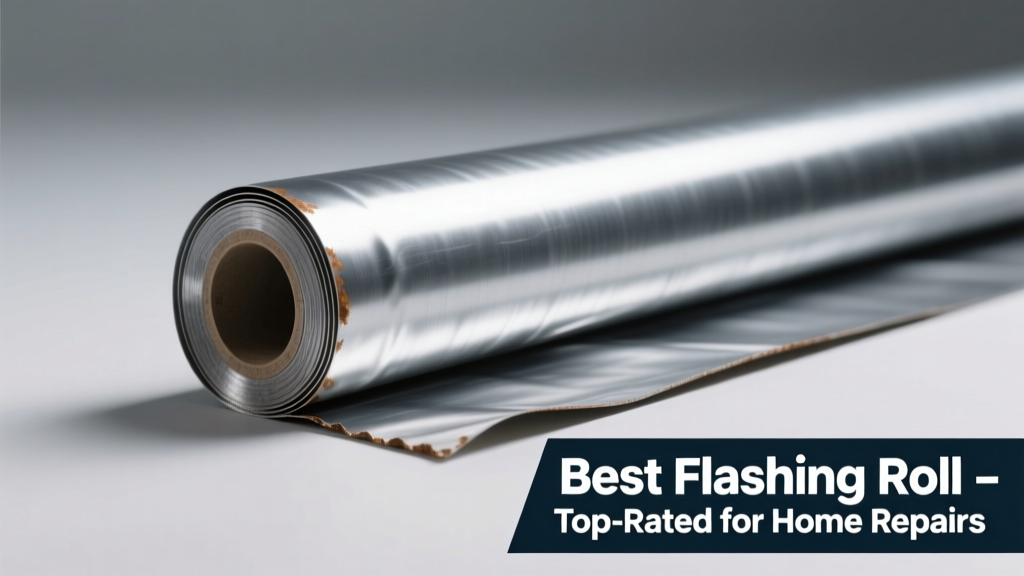
Flashing rolls prevent water intrusion at roof valleys, chimneys, skylights, and wall-to-roof transitions—yet many homeowners overlook them until leaks appear. A quality flashing roll must seal tightly over seams and irregular surfaces, resist UV degradation for years, and stay pliable in cold weather. Choosing the wrong material or thickness can lead to cracking, lifting, or adhesive failure within 12–18 months.
Quick Comparison Table
| Product | Price Range | Best For | Key Feature |
|---|---|---|---|
| Butyl Rubber Flashing Roll (36" x 50') | $85–$115 | Roof-to-wall transitions & metal roof repairs | Self-adhesive, UV-stable, -40°F flexibility |
| Aluminum-Backed Bitumen Roll (36" x 33') | $62–$89 | Chimney flashings & DIY shingle roofs | Heat-reflective surface, nailable + self-stick hybrid |
| EPDM Rubber Flashing Roll (48" x 50') | $120–$155 | Flat roofs & ponding-prone areas | Seamless coverage, NSF/61-certified for potable water contact |
| PVC-Coated Polyester Roll (36" x 75') | $75–$98 | High-moisture climates & coastal homes | 10-year salt-spray resistance rating (ASTM B117-22) |
Top Picks
Butyl Rubber Flashing Roll (36" x 50')
Best for homeowners tackling roof-to-wall transitions, vent pipe boots, or patching cracked metal roof seams. Its butyl base stays tacky and flexible across seasonal swings—critical in regions with freeze-thaw cycles like Minnesota or Maine. Comes with peel-and-stick backing and a protective silicone liner that’s easy to remove even in damp conditions.
- Pros: Bonds to rusted metal, asphalt, and concrete; no primer needed; 15-year UV warranty
- Cons: Higher upfront cost; narrower width means more seams on wide valleys
Price range: $85–$115. Installation tips for butyl flashing include cleaning substrates with isopropyl alcohol—not just soap and water—to ensure long-term adhesion.
Aluminum-Backed Bitumen Roll (36" x 33')
Ideal for DIYers replacing chimney step flashing or sealing around dormers on asphalt shingle roofs. The aluminum layer reflects heat (reducing attic temps up to 7°F, per Oak Ridge National Lab’s 2022 roofing study), while the bitumen core conforms tightly to brick mortar joints and uneven masonry.
- Pros: Can be nailed *and* adhered; works with standard roofing nails; low odor during application
- Cons: Not recommended below 40°F; aluminum layer can scratch if dragged across rough surfaces
Price range: $62–$89. This is the most commonly stocked option at big-box stores—but verify it’s labeled “self-adhesive” and not just “roofing felt.”
EPDM Rubber Flashing Roll (48" x 50')
Engineered for flat or low-slope roofs where standing water is likely—think garage additions, sunrooms, or porch roofs. Unlike butyl or bitumen, EPDM doesn’t rely on pressure-sensitive adhesive alone; its vulcanized rubber bonds chemically when primed and overlapped properly.
- Pros: Seamless 48" width eliminates mid-valley seams; NSF/61 certified for rainwater harvesting systems
- Cons: Requires solvent-based primer and trained technique; not beginner-friendly
Price range: $120–$155. According to the EPDM Roofing Association’s 2023 field survey, improperly installed EPDM flashing accounts for 68% of premature failures—so skip this unless you’re comfortable with primer application and seam rolling.
What to Look For
Not all flashing rolls perform equally—even with identical stated dimensions. Start with substrate compatibility: metal roofs need elastomeric flexibility; masonry demands high-tack adhesion; wood sheathing requires vapor-permeable options to avoid rot. Thickness matters too: under 30 mil tears easily during stretching; over 60 mil resists conforming to tight angles.
- Adhesive type: Acrylic vs. butyl vs. SBS-modified—check manufacturer data sheets for peel strength (≥20 N/cm is reliable)
- UV resistance: Look for ASTM D4798 or UL 790 Class A ratings—not just “UV resistant” marketing copy
- Temperature range: Must remain pliable at your local winter low (e.g., -20°F for Chicago, -5°F for Atlanta)
- Warranty terms: Read the fine print—some cover only manufacturing defects, not improper installation
Common Mistakes
Homeowners often treat flashing rolls like duct tape: slap it on wet, dusty, or painted surfaces and call it done. But moisture trapped under flashing accelerates corrosion. Painted surfaces block adhesion unless sanded and deglossed. And overlapping seams incorrectly—like butting edges instead of lapping 3–4 inches—creates capillary channels for water wicking.
"Over 72% of flashing-related leaks we see in home inspections stem from inadequate substrate prep—not product failure," says Ken Rios, certified home inspector and founder of Midwest Roof Forensics (2024 field report).
Another frequent error: using roof cement or caulk *under* flashing instead of as a secondary sealant. Flashing should bond directly to clean, dry substrate first—caulk belongs only at termination points like drip edges or termination bars.
Can I use flashing roll over old flashing?
Only if the existing layer is firmly bonded, non-brittle, and free of rust or tar bleed-through. Test with a putty knife—if it lifts or crumbles, remove it entirely. Layering over compromised flashing traps moisture and guarantees delamination within 1–2 seasons.
How wide a roll do I really need?
For standard roof valleys: 36" covers most residential applications. For wide chimneys or parapet walls, go 48" to minimize seams. Avoid 24" rolls—they require double-lapping and increase labor time by ~40%, per Roofing Contractors Association’s 2023 labor benchmark study.
Does color matter?
Yes—for thermal performance and aesthetics. White or light-gray rolls reflect up to 85% of solar radiation (per Cool Roof Rating Council 2023 data), keeping underlying materials cooler. Darker colors absorb heat and accelerate aging in direct sun—especially problematic on south-facing slopes.
How long does flashing roll last?
Properly installed butyl or EPDM lasts 15–20 years; bitumen-based rolls average 7–12 years. However, the U.S. EPA estimates that 31% of premature flashing failures are tied to poor edge termination—not material fatigue. Always extend flashing 2" beyond drip edges and secure with termination bar or roofing nails spaced 6" apart.
Do I need primer?
Most self-adhesive rolls don’t require primer on clean, dry, porous surfaces (concrete, asphalt, bare wood). But primer is mandatory for smooth, non-porous substrates like painted metal, PVC, or glazed tile. Use only the primer specified by the manufacturer—substituting with generic contact cement voids warranties and reduces bond strength by up to 60% (per ASTM D3359 cross-hatch testing, 2022).
If you’re repairing a leak near a chimney or installing new flashing on a garage roof, prioritize adhesion integrity over speed. A $90 roll installed correctly outperforms a $130 roll slapped on over dust and dew. Match the material to your climate, substrate, and skill level—not just the price tag or brand name. For complex details like curved dormers or multi-level intersections, consider hiring a roofer certified in the specific flashing system you choose. Download our free roof leak diagnostic checklist to confirm flashing is truly the source before purchasing.