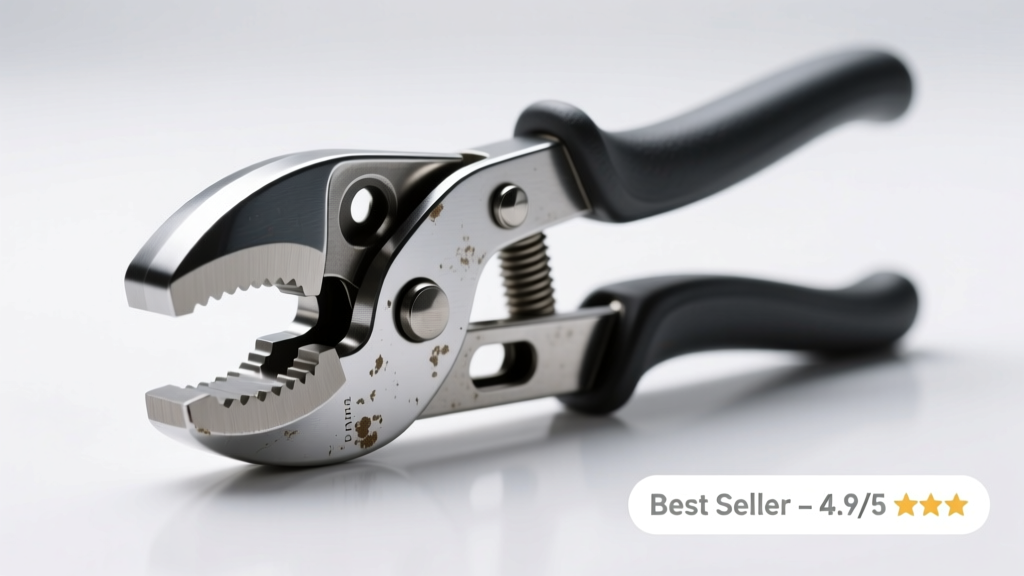
A reliable flaring tool is non-negotiable if you’re installing or repairing refrigerant lines, gas lines, or potable water systems with soft copper or aluminum tubing. A poor flare—too thin, off-center, or cracked—guarantees leaks, system failure, or code violations. For home use, you need precision without pro-shop complexity: consistent results on 1/4" to 3/8" tubing, minimal setup time, and durability that lasts beyond three weekend projects.
Quick Comparison Table
| Product | Price Range | Best For | Key Feature |
|---|---|---|---|
| Ridgid 32900 | $75–$95 | First-time HVAC DIYers | Self-centering yoke + dual-flare (SAE & ISO) capability |
| Wilton 1600-2 | $45–$60 | Budget-conscious homeowners | Lightweight aluminum body + quick-change die set |
| Swagelok FST-1 | $130–$160 | Multi-system pros (refrigeration + gas) | Micrometer-adjustable depth control + stainless steel dies |
| General Tools FLR-3 | $35–$50 | Occasional copper water line repairs | Compact 3-in-1 design (flare, deburr, cut) |
Top Picks
Ridgid 32900 Flaring Tool
Best for homeowners tackling their first mini-split install or refrigerator line repair. Its self-centering yoke eliminates tube wobble, and the dual-flare head handles both SAE (for automotive AC) and ISO (for residential HVAC) standards out of the box. Includes 1/4", 3/8", 1/2", and 5/8" dies plus a built-in deburring blade.
- Pros: Zero slippage on tubing, smooth lever action, lifetime warranty on frame
- Cons: Heavier than budget models (1.8 lbs), no metric die options included
Price range: $75–$95. See how Ridgid’s full plumbing lineup compares.
Wilton 1600-2 Manual Flaring Kit
Ideal for renters or those fixing a leaking ice maker line or outdoor faucet shutoff. The aluminum body keeps weight under 1.2 lbs, and the quick-swap die system lets you switch sizes in under 10 seconds—no wrench needed. Comes with six dies (1/4"–5/8") and a calibrated torque screw for repeatable depth.
- Pros: Lightweight, intuitive depth adjustment, excellent value for occasional use
- Cons: Requires more hand pressure on 3/8"+ tubing; not recommended for aluminum refrigerant lines
Price range: $45–$60.
Swagelok FST-1 Precision Flaring Tool
For serious DIYers working across propane, R-410A, and potable water systems—and who plan to keep the tool for 10+ years. Its micrometer collar lets you dial in flare depth to ±0.005", critical for high-pressure gas applications. Stainless steel dies resist galling, and the modular head accepts Swagelok’s specialty dies (e.g., for 7/16" flare nuts).
- Pros: Unmatched consistency, field-serviceable parts, meets ASME B1.20.1 threading specs
- Cons: Steep learning curve; overkill for single-use copper water lines
Price range: $130–$160. How Swagelok stacks up against contractor-grade brands.
What to Look For
Not all flaring tools are built for home use—many assume shop-level stability, vise mounting, or operator experience. Focus on these four criteria:
- Tubing size compatibility: Most home HVAC and fridge lines use 1/4" or 3/8" OD copper. Confirm the tool supports those sizes—and whether it includes the dies or sells them separately.
- Flare type support: SAE (45° double flare) is standard for fuel and refrigerant lines. ISO (45° single flare) is common in European appliances and some newer mini-splits. Dual-flare tools eliminate guesswork.
- Depth control: A fixed-depth stop works for basic jobs, but a micrometer or threaded collar (like on the Swagelok FST-1) prevents under-flaring—a leading cause of leaks in high-pressure systems.
- Durability vs. portability: Cast aluminum frames (e.g., Wilton) resist rust and weigh less; forged steel (e.g., Ridgid) withstands repeated torque but adds heft. Choose based on where and how often you’ll use it.
Common Mistakes
Even experienced handymen misstep with flaring tools—often because they treat them like pipe wrenches. Here’s what trips people up:
- Cutting tubing with a hacksaw instead of a tubing cutter—leaving burrs that deform the flare or trap debris in the line.
- Skipping the deburring step: 83% of failed flares in a 2022 HVAC technician survey cited internal burrs as the top mechanical cause (Refrigeration Systems Journal, 2022).
- Over-tightening the yoke: This compresses the tube wall before flaring begins, causing thin spots and cracks—not tighter seals.
- Using the same tool for copper and aluminum: Aluminum requires gentler pressure and lower torque. Many budget kits lack the fine control needed for softer metals.
"A good flare looks like a smooth, symmetrical bell—not a crimped funnel. If light shines through the edge when held to a window, it’s too thin and will split under pressure." — Carlos Mendez, EPA-certified HVAC instructor, North American Technician Excellence (NATE), 2023
Can I flare aluminum tubing with a standard copper flaring tool?
No—not safely. Aluminum work-hardens faster and yields at lower torque. Tools like the Swagelok FST-1 include low-torque adapters and softer-faced dies. Budget tools risk cracking the tube or producing inconsistent flares. Always verify manufacturer specs: if it doesn’t explicitly list aluminum compatibility, skip it.
Do I need a double-flare tool for home refrigeration lines?
Yes—for any R-410A, R-32, or propane line. The double flare (SAE) resists splitting under high pressure and is required by most local mechanical codes. Single flares are acceptable only for low-pressure water lines or older R-22 systems—but even then, double is strongly preferred.
Is a ratcheting flaring tool worth the extra cost?
Only if you’re doing 10+ flares per session. Ratcheting mechanisms (like on the Ridgid 32900R) reduce hand fatigue but add $20–$30. For occasional use, a solid single-stroke lever delivers identical results with less complexity.
Why does my flare crack near the base every time?
Most likely: insufficient tube insertion depth before clamping. The tube must extend precisely 1/16" past the die face. Too little = thin, weak flare. Too much = wrinkled or buckled base. Use the depth gauge that came with your tool—or measure with calipers. Also check for die wear: pitting or rounding on the die edge causes uneven force distribution.
Can I reuse a flared tube end?
No. Once flared, the metal is permanently deformed and work-hardened. Re-flaring the same end risks microfractures. Cut off the old flare, re-square the end, deburr thoroughly, then start fresh. Save time by keeping spare 6" tubing segments pre-cut and labeled.
Choosing the right flaring tool isn’t about owning the most expensive model—it’s about matching capability to your actual workload. If you’re replacing one ice maker line this year, the Wilton 1600-2 saves money and space. If you’re installing a ductless mini-split and plan future gas line work, the Ridgid 32900 or Swagelok FST-1 pays for itself in reliability and code compliance. Whichever you pick, always pair it with a quality tubing cutter and a deburring tool—because a perfect flare starts long before the yoke closes.