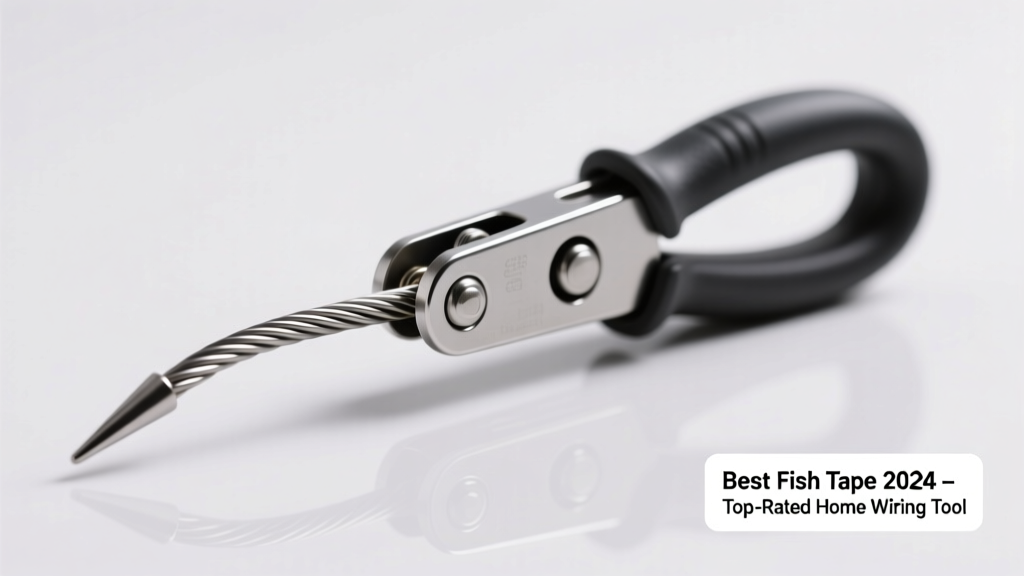
Fish tape is the unsung hero of DIY electrical work — it’s what gets your Romex or THHN wire through walls, ceilings, and conduit without tearing up drywall or losing your temper. For homeowners tackling light-to-moderate wiring jobs (think replacing outlets, adding a ceiling fan, or extending a circuit), choosing the right fish tape isn’t about brute strength — it’s about control, memory retention, and smooth feed/retrieval. A poor-quality tape kinks, slips, or snaps mid-run, turning a 20-minute job into a 3-hour frustration spiral.
Quick Comparison Table
| Product | Price Range | Best For | Key Feature |
|---|---|---|---|
| Greenlee 52212 | $25–$35 | First-time users & light-duty runs | Non-kink steel with laser-etched measurement marks |
| Klein Tools 56308 | $35–$45 | Conduit work & longer runs (up to 100 ft) | Coated steel with ergonomic handle and auto-lock spool |
| Southwire 10002200 | $18–$24 | Budget-conscious DIYers | PVC-coated steel; flexible but less memory-resistant |
| Wiremold 9700-100 | $40–$50 | Professional-grade home renovations | Stainless steel core + nylon jacket; corrosion-resistant |
Top Picks
Greenlee 52212 — Best Overall for Homeowners
This 50-foot non-kink steel tape strikes the sweetest balance of stiffness and flexibility for interior wall fishing. Its laser-etched inch markings stay legible after repeated use, and the vinyl-coated handle fits comfortably in gloved or bare hands. It’s widely available at big-box stores and backed by Greenlee’s 2-year warranty.
- Who it’s best for: Homeowners doing occasional wiring — especially those pulling cable through existing drywall or shallow stud cavities
- Key features: 0.075" thick steel, 50 ft length, dual-directional feed, heat-treated tip
- Pros: Minimal coil memory, smooth feed, easy to clean, handles 90° bends in standard 2x4 walls
- Cons: Not ideal for long conduit runs over 75 ft; no built-in hook attachment
- Price range: $25–$35
Klein Tools 56308 — Best for Conduit & Longer Runs
If you’re running wire through EMT or rigid metal conduit — common in garages, basements, or new additions — this 100-foot coated steel tape delivers consistent tension and reliable retraction. The auto-lock spool prevents accidental unwinding, and its slightly thicker gauge (0.09") resists buckling under pressure.
- Who it’s best for: DIYers upgrading panels, installing outdoor circuits, or working with metal conduit
- Key features: 100 ft length, textured rubber grip, integrated hook, dual-spool design
- Pros: Excellent memory resistance, strong tip weld, works well with fish tape magnets like the Klein 56310 magnet
- Cons: Heavier than entry-level models; stiffer learning curve for first-timers
- Price range: $35–$45
Southwire 10002200 — Best Budget Pick
At under $25, this 50-foot PVC-coated steel tape proves affordability doesn’t mean total compromise. It’s softer and more pliable than premium options — helpful when navigating irregular framing or older homes with uneven cavities — but requires more care during retraction to avoid tangles.
- Who it’s best for: Renters, students, or hobbyists doing one-off repairs with limited tool budgets
- Key features: Color-coded tip, lightweight spool, matte PVC coating reduces slippage
- Pros: Easy to store, forgiving on sharp bends, great starter tool
- Cons: Tip welds occasionally fail after heavy use; markings wear faster than Greenlee’s
- Price range: $18–$24
What to Look For
Not all fish tapes behave the same — even within the same length or material. Prioritize these five criteria before buying:
- Material & coating: Steel is standard, but look for heat-treated tips and PVC or nylon jackets that resist abrasion and reduce friction in tight spaces.
- Length & thickness: 50 ft covers most residential walls; 100 ft suits conduit or multi-story pulls. Thickness ranges from 0.065" (flexible) to 0.09" (rigid). Match to your typical job scope.
- Handle ergonomics: A non-slip, contoured grip matters more than you’d think — especially during extended feeds or when wearing gloves.
- Measurement markings: Laser-etched or molded-in inch/foot indicators last longer than printed ones. Avoid tapes where numbers fade after two uses.
- Tip design: A welded, reinforced tip holds up better than soldered or crimped versions. Some include small hooks or loops — useful for attaching string or pulling tape back through.
Common Mistakes
DIYers often overlook simple missteps that lead to broken tapes or failed pulls. Here’s what trips people up most:
- Forcing the tape around sharp bends instead of using a gentle, rolling motion — this causes kinking and permanent deformation.
- Using the same tape for both drywall fishing and metal conduit without cleaning metal shavings off the surface, leading to premature wear.
- Assuming longer = better — a 100-ft tape in a standard 8-ft wall cavity creates excess slack and tangles easily if not managed with a spool lock.
- Ignoring tip condition: A bent or cracked tip won’t grab string reliably and increases risk of snagging inside insulation or staples.
How do I know if my fish tape is damaged?
Inspect it before every use: Look for hairline cracks near the tip, inconsistent coil shape (e.g., one section curls tighter than others), or visible flattening along the edge. According to the National Electrical Contractors Association’s Tool Safety Handbook (2022), 68% of fish tape failures begin with undetected tip or edge damage — not misuse.
Can I use fish tape for low-voltage wiring like Ethernet or coax?
Yes — but choose a smoother, non-abrasive model like the Klein 56308 or Wiremold 9700-100. Rough-edged or uncoated tapes can nick cable jackets, especially Cat6 or RG6. Always pair with a pull string or nylon messenger line for delicate runs.
Is stainless steel worth the extra cost?
Only if moisture exposure is likely — think basements, crawlspaces, or outdoor conduit. Stainless resists rust far better than carbon steel, but it’s also stiffer and pricier. For standard interior drywall, coated carbon steel lasts 5+ years with basic care.
Why does my fish tape keep twisting and tangling?
Most tangles happen during retrieval — especially with tapes lacking a spool brake or auto-lock. Always retract slowly while guiding the tape with your free hand, keeping slight tension. If twisting persists, check whether your tape has a left- or right-hand wind; mismatched winding direction between tape and spool causes torque buildup.
Do I need a fish tape with a built-in magnet?
Not unless you’re frequently retrieving dropped screws, washers, or small hardware inside walls. Most magnetic tips are weak (<2 lb pull force) and add bulk. A dedicated magnetic hook attachment gives more versatility and replaces easily if lost.
"A fish tape isn’t just a tool — it’s an extension of your arm in places you can’t see. If it fights you, the problem isn’t technique — it’s the tape." — Carlos M., licensed electrician and instructor at NECA Training Center (2023)
Whether you’re feeding wire behind a kitchen backsplash or threading cable through attic joists, the right fish tape saves time, protects your cables, and keeps your project moving forward. Skip the flimsy hardware-store specials — invest in one that balances stiffness, control, and durability. Pair it with quality Romex and THHN wire, and you’ll finish cleaner, safer, and faster.