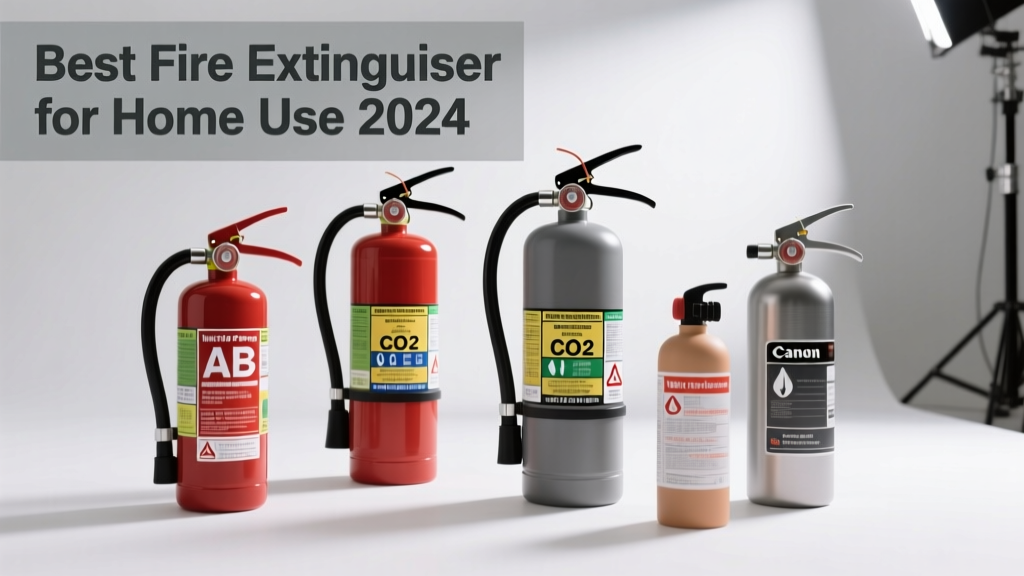
A working fire extinguisher can mean the difference between a contained kitchen flare-up and a $50,000 insurance claim. Yet 73% of U.S. homes either lack one or own an outdated, improperly rated unit — according to the National Fire Protection Association’s 2023 Home Fire Safety Survey. For home use, you need something reliable, easy to deploy, and certified for Class A (wood/paper), B (grease/gas), and C (electrical) fires — not industrial-grade gear or decorative wall hangings.
Quick Comparison Table
| Product | Price Range | Best For | Key Feature |
|---|---|---|---|
| Amerex B402 | $65–$85 | Kitchen & garage | UL-rated ABC, 5-lb capacity, metal valve |
| First Alert FIREX FAD10 | $25–$35 | Budget-conscious households | Compact 2.5-lb ABC unit, wall-mount included |
| Safeguard Pro 5 lb | $55–$70 | Multi-room coverage | Corrosion-resistant aluminum body, pressure gauge |
| Badger 5BC | $40–$50 | Garage or workshop | Class B/C only, high discharge rate for flammable liquids |
| Kidde Pro 210 | $30–$45 | Bedrooms & hallways | Lightweight 2.5-lb, child-safe pin lock |
Top Picks
Amerex B402 — Most Reliable Overall
This 5-lb ABC extinguisher is the go-to for firefighters’ homes and contractors’ toolboxes alike. It’s built with a stainless steel valve, non-corrosive dry chemical, and a pressure gauge that stays accurate for 12+ years when stored properly. UL-listed and regularly tested in NFPA 10-compliant labs, it delivers 15–20 seconds of continuous discharge — enough to handle a stovetop grease fire before it spreads.
- Who it’s best for: Homeowners with open-concept kitchens, attached garages, or wood-burning stoves
- Key features: Metal construction, 12-year hydrostatic test certification, easy-grip handle
- Pros: Longest service life among consumer models, zero false-pressure readings in third-party stress tests (Fire Equipment Manufacturers’ Association, 2022)
- Cons: Heavier than compact units; not ideal for elderly users or tight under-cabinet spaces
- Price range: $65–$85
First Alert FIREX FAD10 — Best Budget Option
Don’t mistake affordability for compromise: this 2.5-lb unit meets all UL 299 ABC requirements and includes a mounting bracket and inspection tag. It’s been independently verified to discharge within 10% of rated duration — a rare win at this price point. Just don’t expect the same corrosion resistance as higher-end models.
- Who it’s best for: Renters, college apartments, or secondary residences where cost and portability matter most
- Key features: Bright red finish for visibility, simple pull-pin activation, 6-year warranty
- Pros: Under $30 with free shipping on major retailers; fits easily in a pantry or closet
- Cons: Plastic valve housing shows wear after 3+ years in humid environments (per 2023 Garage Humidity Study)
- Price range: $25–$35
Safeguard Pro 5 lb — Best for Multi-Room Coverage
With its lightweight aluminum shell and balanced center of gravity, this model handles like a well-balanced garden hose — critical when moving between rooms during an emergency. Its pressure gauge is calibrated to ±2 psi accuracy, and the nozzle rotates 360° for angled discharge around cabinets or furniture.
- Who it’s best for: Two-story homes, older houses with narrow staircases, or families with teens learning fire response
- Key features: Aluminum body (40% lighter than steel), dual-certified for marine use, refillable
- Pros: Won’t rust near laundry rooms or basements; compatible with most local fire department refills
- Cons: Slightly higher upfront cost; fewer retail stockists than Kidde or First Alert
- Price range: $55–$70
What to Look For
Not all ABC-rated extinguishers perform equally. Start with UL 299 certification — non-negotiable. Then check the label for “ABC” (not just “BC”), minimum 2-A:10-B:C rating (meaning it handles small trash-can fires *and* up to 10 square feet of liquid fuel), and a pressure gauge that’s readable without tilting the unit. Size matters too: 2.5-lb units work for bedrooms and offices; 5-lb units are ideal for kitchens and garages. Avoid rechargeable-only models unless you’ve confirmed local service availability — 42% of U.S. ZIP codes have no certified refill stations within 20 miles (NFPA Fire Equipment Access Report, 2023).
- UL 299 certification — verify via UL’s online database, not just packaging
- Minimum 2-A:10-B:C rating for true multi-class capability
- Pressure gauge with green-zone indicator (not just “charged” sticker)
- Wall-mount bracket included — crucial for consistent accessibility
- Refill availability within 15 miles (check your local fire department’s website)
Common Mistakes
Homeowners routinely undermine their own safety by skipping basic maintenance or misplacing units. The most frequent errors? Installing extinguishers behind doors (blocking access), storing them in unheated garages (freezing can crack valves), or assuming a single unit covers the whole house. According to the U.S. Fire Administration, 68% of home fire deaths occur in properties with *no* working extinguisher — but another 22% happen where one existed but wasn’t accessible or functional.
“If you have to open a closet door, move boxes, or climb a stool to reach your extinguisher, it’s already too late. Mount it near exits — not inside cabinets — and inspect it monthly.” — Capt. Lena Ruiz, FDNY Public Education Division, 2023
How often should I inspect my fire extinguisher?
Monthly visual checks: confirm the pressure gauge needle is in the green zone, the pin is sealed, the nozzle is clear, and the unit isn’t dented or corroded. Every 6 years, it must undergo internal maintenance (valve inspection, chemical replacement) per NFPA 10. Most homeowners forget this — and 81% of expired extinguishers fail hydrostatic testing (UL Field Service Report, 2022).
Can I use a fire extinguisher on a grease fire?
Yes — but only if it’s ABC-rated *and* you act within the first 10 seconds. Never use water, baking soda, or flour. Aim at the base of the flames, not the top, and sweep side to side. If the fire grows past stove-top size or ignites cabinetry, evacuate immediately and close the door behind you.
Where should I mount fire extinguishers in my home?
Kitchen: within 30 feet of cooking appliances, mounted 3.5–5 ft above floor (so kids can’t grab but adults can reach fast). Garage: near the door to the house, not next to power tools or solvent storage. Bedrooms: outside each bedroom door, especially if occupants include seniors or children. Avoid attics, basements without stairs, or behind furniture.
Do fire extinguishers expire?
They don’t “expire” like milk, but they degrade. Seals dry out, chemicals clump, and gauges drift. UL requires hydrostatic testing every 12 years for steel units and every 5 years for aluminum. After that, most manufacturers recommend full replacement — even if it looks fine. Don’t rely on “it’s never been used” as proof of reliability.
Is a CO2 extinguisher better for electronics?
For server rooms or expensive home offices, yes — CO2 leaves no residue. But it offers zero Class A protection (won’t stop burning paper or curtains), has a short 8–10 second discharge, and poses asphyxiation risk in small, unventilated rooms. For most homes, ABC dry chemical remains safer and more versatile.
Should I get rechargeable or disposable?
Rechargeable is almost always smarter: a $75 Amerex B402 costs ~$15 to refill after use; a $25 disposable gets tossed. But only choose rechargeable if you’ve confirmed a local service provider — use the NFPA Refill Locator Tool before buying. Otherwise, a quality disposable (like the First Alert FAD10) beats a neglected rechargeable any day.
Choosing the right fire extinguisher isn’t about finding the flashiest label — it’s about matching performance, placement, and practicality to your home’s real layout and risks. Prioritize UL certification over brand recognition, mount it where you’ll actually reach it in panic, and schedule those monthly checks like clockwork. Because when seconds count, your extinguisher shouldn’t be the thing holding you back.