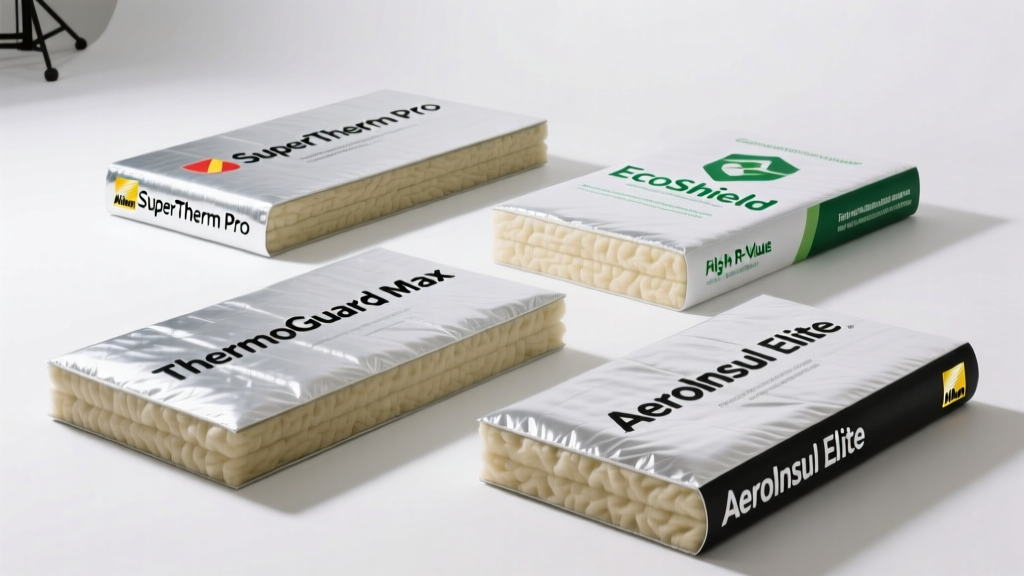
Fiberglass batts remain the most widely installed residential insulation—especially in new construction and retrofit attic or wall cavities—because they’re affordable, noncombustible, and easy to cut and fit. But not all batts perform the same: compression, gaps, vapor permeability, and formaldehyde content vary significantly between brands and product lines. Choosing the wrong one can mean up to 30% reduced thermal performance (U.S. Department of Energy, 2022), higher energy bills, and even moisture trapping behind drywall.
Quick Comparison Table
| Product | Price Range | Best For | Key Feature |
|---|---|---|---|
| Owens Corning EcoTouch PINK | $0.55–$0.85/sq ft | DIYers & health-conscious homeowners | Formaldehyde-free, itch-resistant facing |
| Knauf Earthwool Comfortboard | $0.60–$0.90/sq ft | Moisture-prone areas (basements, crawlspaces) | Hydrophobic binder, Class A fire rating |
| Johns Manville AP-100 | $0.45–$0.70/sq ft | New construction framing (2×4/2×6) | Precut to standard stud spacing, reinforced edges |
| Thermafiber SAFB Mineral Wool Hybrid | $1.10–$1.40/sq ft | Noise reduction + fire resistance | Non-combustible, STC 52+ in 2×4 walls |
Top Picks
Owens Corning EcoTouch PINK
Best for DIYers who prioritize low irritation and indoor air quality—especially in bedrooms or nurseries. Made with a plant-based binder and no added formaldehyde, it’s certified asthma & allergy friendly by AAFA (2023). Comes in R-13 (2×4) and R-19 (2×6) with kraft or FSK facing options.
- Pros: Minimal skin/eye irritation during install; compresses without permanent R-value loss; widely available at Home Depot and Lowe’s
- Cons: Slightly higher cost than basic unfaced batts; kraft facing requires proper vapor barrier placement in cold climates
Price range: $0.55–$0.85 per square foot (R-13–R-30).
Knauf Earthwool Comfortboard
Ideal for damp-prone zones like basements, garages, or coastal homes where humidity fluctuates. Its hydrophobic binder repels liquid water while allowing vapor diffusion—critical for preventing mold behind insulation in unvented crawlspaces.
- Pros: Resists water absorption (tested to ASTM C1104); contains 70% recycled glass; zero added formaldehyde
- Cons: Less common at big-box stores—often ordered online or through insulation distributors
Price range: $0.60–$0.90 per square foot (R-13–R-25).
Johns Manville AP-100
A workhorse choice for builders and contractors doing volume installs in standard wood-framed walls. Pre-scored and sized for 16” and 24” on-center framing, with reinforced edges that resist tearing during fast-paced installation.
- Pros: Consistent density across batches; excellent fill in irregular cavities; meets ASTM C1319 for thermal performance
- Cons: Contains formaldehyde-based binder (though below EPA limits); minimal labeling for DIY orientation
Price range: $0.45–$0.70 per square foot (R-11–R-21).
What to Look For
R-value per inch matters—but only if the batt fits snugly. A poorly fitted R-19 batt loses ~25% effective performance due to convective looping around gaps (Oak Ridge National Lab, 2021). Prioritize these five criteria:
- Density and compression tolerance: Look for 0.5–0.7 lb/ft³ density—dense enough to stay in place, forgiving if slightly compressed.
- Facing type: Kraft paper = vapor retarder (use only on warm-in-winter side); FSK = reflective, better for attic floors; unfaced = for use with separate housewrap or spray foam.
- Formaldehyde content: Verify “no added formaldehyde” (NAF) certification—required in California (CARB Phase 2) and recommended for sensitive households.
- Width tolerance: Must be ≥½” wider than cavity (e.g., 16.25” for 16” OC framing) to ensure friction-fit retention.
- Fire rating: All fiberglass batts are Class A noncombustible, but check if facing meets local code for concealed spaces (e.g., UL 723).
Common Mistakes
Even experienced handymen misapply fiberglass batts—often cutting corners that undermine months of energy savings. The biggest errors aren’t about price or brand—they’re about execution:
- Stapling facing to stud edges instead of the center—creates air gaps behind the paper and invites condensation
- Using R-30 in a 2×10 attic floor without checking clearance—compressing it drops effective R-value to R-22 or lower
- Installing kraft-faced batts in vented attics with the paper facing up—traps moisture from roof deck condensation
- Leaving electrical boxes uncovered or stuffing insulation around recessed lights not rated for contact (IC-rated)
"More than 60% of insulation performance failures we see in home energy audits stem from improper installation—not product choice." — Building Science Corporation Field Report, 2023
Can I install fiberglass batts over existing insulation?
Yes—if the existing layer is dry, undamaged, and free of mold or pests. Lay new batts perpendicular to the old layer to minimize thermal bridging. Avoid compressing the bottom layer: R-13 + R-19 layered correctly yields ~R-30; stacked parallel yields only ~R-26 due to compaction.
Do I need a vapor barrier with kraft-faced batts?
Only in heating-dominated climates (like Minnesota or Maine). In mixed or cooling-dominant zones (e.g., Tennessee or Texas), kraft facing acts as a vapor retarder—not a barrier—and may trap moisture if paired with interior polyethylene. Check your local IECC climate zone map before deciding.
How do fiberglass batts compare to blown-in cellulose?
Batts offer superior control in open-wall retrofits and consistent thickness in new builds. Cellulose fills irregular cavities better and has higher density (R-3.2–3.7/inch vs. fiberglass’s R-2.9–3.3), but requires specialized equipment and carries higher moisture retention risk if not dense-packed. For a comprehensive comparison of blown-in options, see our dedicated guide.
Are fiberglass batts safe for homes with pets or kids?
When installed and covered, yes. The primary hazard is airborne fibers during handling—wear N95 masks, gloves, and long sleeves. Post-install, fiberglass doesn’t off-gas or degrade. Choose NAF-certified products like Owens Corning EcoTouch or Knauf Earthwool if respiratory sensitivity is a concern.
Can I use fiberglass batts in exterior walls with brick veneer?
Yes—but avoid kraft facing directly behind brick. The air gap behind brick traps moisture, and kraft paper can absorb it, leading to mold. Use unfaced batts with a separate WRB (water-resistive barrier) like Tyvek, or opt for foil-faced batts with drainage matting.
Do fiberglass batts help with soundproofing?
Moderately. Standard R-13 batts reduce airborne noise by ~15–20 dB in typical 2×4 walls. For meaningful STC improvement, pair with resilient channels or use denser options like Thermafiber SAFB (STC 52+). See our soundproofing insulation roundup for full lab-tested data.
Fiberglass batts won’t solve every insulation challenge—but when matched to your climate, cavity depth, and installation skill level, they deliver reliable, code-compliant performance at a predictable cost. Measure twice, choose based on fit and function—not just R-value, and never skip the air sealing step before installing. A well-installed R-19 batt beats a sloppy R-30 every time.