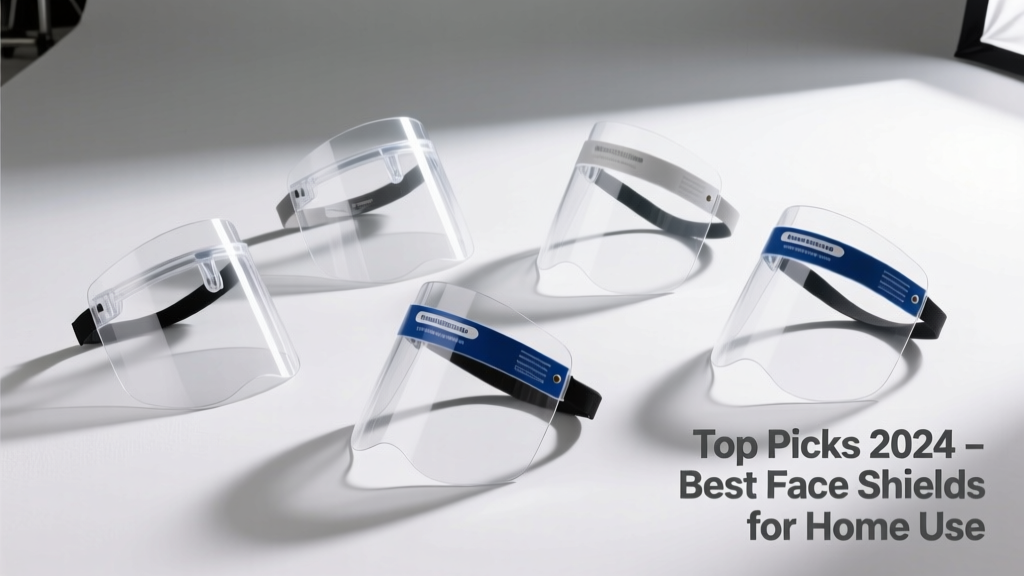
Face shields surged in popularity during pandemic years—but they’re still valuable tools for home use today. Whether you're sanding drywall, mixing epoxy resin, cleaning with bleach-based solutions, or caring for a sick family member, a well-fitting, optically clear shield adds critical splash-and-splash-spray protection that masks alone can’t provide. Unlike medical-grade PPE, home-use shields prioritize comfort, reusability, and ease of cleaning over sterile certification—so choosing the right one means balancing clarity, adjustability, and long-term wearability.
Quick Comparison Table
| Product | Price Range | Best For | Key Feature |
|---|---|---|---|
| Uvex Bionic | $25–$35 | DIYers & crafters | Anti-fog coating + adjustable headband |
| Harry's Safety ClearView | $18–$24 | Budget-conscious users | Lightweight PET lens, latex-free strap |
| 3M 9000 Series | $30–$42 | Chemical handling & cleaning | Chemical-resistant polycarbonate, wraparound design |
| Medline ProShield Plus | $22–$29 | Caregivers & seniors | Extra-soft foam brow pad, easy one-hand adjustment |
| Home Depot HDX Shield | $12–$16 | Occasional light-duty tasks | Disposable-ready, basic PET lens |
Top Picks
Uvex Bionic Face Shield
Best for serious DIYers who need daily, multi-hour wear—especially when working with fine particulates or volatile cleaners. Its 0.030-inch polycarbonate lens resists scratches and impacts better than standard PET, and the dual-density headband distributes weight evenly across the crown and occiput.
- Anti-fog coating lasts 6+ months with proper care (per Uvex’s 2023 product testing)
- Adjustable ratchet system fits head circumferences from 20.5″ to 24.5″
- Includes replaceable foam brow pad and optional side shields
- Not compatible with most prescription eyewear frames without modification
Price range: $25–$35
Harry's Safety ClearView
Ideal for households needing multiple shields on a tight budget—think parents managing toddler messes, teens doing science projects, or renters tackling weekend repairs. The 0.020-inch PET lens is lighter than polycarbonate but still meets ANSI Z87.1-2020 impact standards for non-impact-rated use.
- Lens wipes clean with mild soap and water—no alcohol or ammonia
- Latex-free elastic strap reduces pressure behind ears
- Minimalist design fits comfortably over most glasses
- Fogging increases after ~90 minutes of continuous wear in humid conditions
Price range: $18–$24
3M 9000 Series Face Shield
The go-to for anyone regularly handling solvents, paint thinners, or concentrated disinfectants. Its 0.040-inch polycarbonate lens is chemically resistant and rated for splash protection per ASTM F803-22. The deep, wraparound coverage extends 3.5 inches below the chin and wraps 180° laterally.
- Compatible with 3M’s full line of replacement lenses—including tinted and anti-static options
- Headgear uses a low-profile, tool-free quick-release clip
- Heavier than alternatives (142 g), so not ideal for all-day wear without breaks
- Higher price reflects industrial-grade construction—not overkill for frequent home chemical use
Price range: $30–$42
What to Look For
Don’t assume “clear plastic” equals equal protection. Home users need specific traits that balance safety, usability, and longevity. According to the National Institute for Occupational Safety and Health (NIOSH) face shield material guide (2022), polycarbonate offers superior impact and chemical resistance, while PET is lighter and more affordable—but degrades faster with repeated cleaning.
- Lens material: Polycarbonate for heavy-duty tasks; PET for occasional use
- Fog resistance: Look for factory-applied anti-fog coatings—not just “fog-free” marketing claims
- Fit system: Ratchet or dial-adjustable bands beat fixed elastic for long-term comfort
- Cleaning compatibility: Avoid shields labeled “do not use alcohol”—many household disinfectants contain >60% ethanol or isopropyl
- ANSI rating: Z87.1-2020 indicates tested optical clarity and basic impact resistance—even if non-impact-rated
Common Mistakes
Many shoppers buy face shields based solely on appearance or price—then discover too late that poor fit causes slippage, fogging ruins visibility, or lens distortion leads to eye strain. Others mistakenly treat them as standalone respiratory protection:
"A face shield alone does not replace a mask for airborne particle filtration. It’s a supplement—not a substitute—for N95s or surgical masks when aerosols are present." — CDC Respiratory Protection Guidance Update, 2023
- Buying disposable-only shields for repeat use (they warp after 2–3 cleanings)
- Ignoring temple clearance—shields that press against glasses cause fogging and discomfort
- Storing shields stacked or bent, which creates micro-scratches and permanent haze
- Using abrasive cloths or window cleaners that degrade anti-fog coatings
Can I wear a face shield over my glasses?
Yes—if it has adequate vertical clearance (at least 1.5 inches above eyebrows) and a deep enough curve. The Uvex Bionic and Medline ProShield Plus both feature extended brow clearance and minimal lens curvature near the temples. Avoid flat-panel designs like basic HDX models—they’ll fog your lenses instantly.
How often should I clean my face shield?
After every use if exposed to bodily fluids, chemicals, or fine dust. For general home use (e.g., cooking splatter or craft glue), wipe with a soft microfiber cloth and mild dish soap weekly—and rinse thoroughly. Never soak polycarbonate in vinegar or bleach; these etch the surface over time.
Do face shields expire?
No expiration date—but degradation begins after ~12–18 months of regular use. Signs include yellowing, cloudiness, fine scratches that won’t wipe away, or loosening of the headband tension. Replace when optical clarity drops noticeably or the strap no longer holds firm positioning.
Are cheaper face shields safe?
Some are—like the Harry’s Safety ClearView—but many sub-$10 shields skip ANSI testing entirely and use brittle, unstabilized PET that cracks under minor impact. The U.S. Consumer Product Safety Commission logged 217 reports of lens shattering in untested face shields between Jan–Dec 2022. Always check for a visible ANSI Z87.1 mark etched into the lens or frame.
Can I use a face shield instead of a mask for allergy season?
No. Face shields don’t filter pollen, mold spores, or dust mites. They only block large droplets and splashes. For seasonal allergies, rely on a well-fitted N95 or KN95 mask—and consider using a shield only during high-exposure moments like vacuuming pet hair or sweeping dusty attics.
How do I store my face shield properly?
Hang it by the headband on a wide, non-abrasive hook—or lay it lens-up on a clean, soft towel inside a ventilated cabinet. Never stack shields or place heavy objects on top. Avoid direct sunlight: UV exposure accelerates yellowing in PET lenses, per a 2021 University of Florida polymer aging study.
A good face shield shouldn’t feel like medical equipment—it should disappear into your routine. Prioritize fit over flash, clarity over cost, and compatibility over convenience. When you find one that stays put, stays clear, and cleans up easily, it becomes less of a barrier and more of a trusted part of your home toolkit.