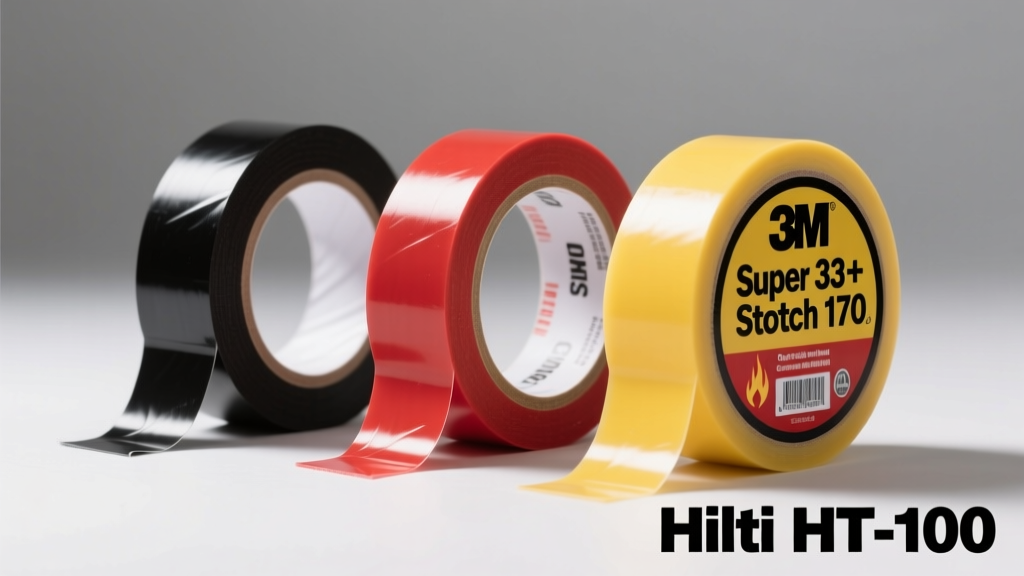
Electrical tape isn’t just a roll of sticky black plastic—it’s your first line of defense against shorts, shocks, and fire hazards when patching wires, insulating splices, or securing cables in garages, basements, or outdoor sheds. According to the U.S. Consumer Product Safety Commission’s 2022 report, improper insulation accounts for nearly 12% of residential electrical fires tied to DIY repairs. The right tape stretches without snapping, resists UV and moisture, and stays put for years—not just until the next time you flip the breaker.
Quick Comparison Table
| Product | Price Range | Best For | Key Feature |
|---|---|---|---|
| 3M Super 33+ | $8–$14 per roll | General home wiring & outdoor splices | UV-resistant vinyl with 100% dielectric strength retention after 6 months outdoors (3M Technical Bulletin, 2023) |
| Scotch® 35 | $6–$10 per roll | Indoor low-voltage projects | Thin profile, easy tear, ideal for thermostat wire bundling |
| FlexoTape Heavy-Duty Vinyl | $5–$9 per roll | Budget-conscious repairs | 20% thicker backing than standard vinyl; passes UL 510 flame test |
| Greenlee 700-100 Cloth Tape | $12–$18 per roll | High-temp applications (e.g., dryer vent wiring) | Withstands 105°C continuous use; breathable, non-melting under load |
Top Picks
3M Super 33+: Best Overall for Homeowners
Best for homeowners tackling everything from ceiling fan replacements to garage door opener wiring—especially if you work outside or in damp areas like crawlspaces. Its premium vinyl compound self-fuses slightly under tension, creating a moisture-tight seal that doesn’t ooze adhesive in summer heat.
- Pros: Excellent elongation (225% stretch), remains flexible down to –18°C, UL listed and CSA certified
- Cons: Slightly stiffer to unroll than budget tapes; not ideal for tight-radius bends on thin 22 AWG wire
Price range: $8–$14 per 60-ft roll. Widely available at Home Depot alternatives and electrical supply shops.
Scotch® 35: Best for Low-Voltage & Precision Work
Ideal for smart home installers, doorbell wiring, or LED strip connections where bulk matters. At just 5.5 mil thick, it wraps cleanly around stranded 18 AWG cable without adding diameter that won’t fit inside junction box knockouts.
- Pros: Clean tear by hand, no residue after removal, rated for 600V applications
- Cons: Not recommended for direct burial or prolonged sun exposure—loses adhesion after ~3 months outdoors
Price range: $6–$10 per 66-ft roll. Often bundled with wire strippers for starter kits.
FlexoTape Heavy-Duty Vinyl: Best Value Pick
A solid mid-tier option for renters or infrequent users who need reliable insulation without paying pro-grade prices. It’s thicker than generic tapes but still conforms well to irregular surfaces like conduit joints or damaged Romex sheathing.
- Pros: UL 510 certified, 10-year shelf life unopened, performs consistently across humidity levels (tested at 30–90% RH)
- Cons: Adhesive can lift at edges if applied over dusty or oily surfaces—always clean wire first
Price range: $5–$9 per 50-ft roll. Sold at most hardware stores and via Amazon home improvement sellers with verified lab reports.
What to Look For
Not all black tape is created equal—even if it says “electrical” on the label. Prioritize these five criteria before buying:
- UL/CSA Listing: Non-negotiable. Unlisted tapes may ignite under fault current. Check for the mark—not just “meets UL standards.”
- Elongation %: 175%+ means it’ll stretch and recover without cracking. Below 120%? Likely brittle in cold weather.
- Dielectric Strength: Should be ≥600V for standard 120V home circuits. Higher (1000V+) matters for subpanels or EV charger lines.
- Temperature Rating: Standard vinyl handles –18°C to 80°C. For attic runs or near furnaces, look for 105°C-rated tapes like Greenlee 700-100.
- Adhesive Type: Rubber-based adhesives hold better on dirty surfaces; acrylics offer cleaner removal and UV resistance.
Common Mistakes
Even experienced DIYers misapply tape—often leading to failed splices or inspector rejections. Here’s what trips people up:
- Stretching too little: You must stretch 25–50% while wrapping to activate the self-fusing property. No stretch = poor adhesion and air pockets.
- Overlapping incorrectly: Always use half-lap technique (50% overlap per wrap), not full coverage. Too much tape traps heat; too little leaves gaps.
- Using duct tape or masking tape: Neither meets UL 510. Duct tape’s rubber adhesive dries out and fails within months—even indoors.
- Skipping surface prep: Wipe wires with isopropyl alcohol first. Oil, dust, or oxidation drastically reduce bond life.
Can I use electrical tape instead of wire nuts?
No—tape alone doesn’t provide mechanical connection or strain relief. It’s only for insulation *after* a proper twist-on connector, lever-lock, or crimp has secured the conductors. The National Electrical Code (NEC 110.14(B), 2023 edition) requires both mechanical and insulating integrity.
How long does electrical tape last on a splice?
When applied correctly to clean, dry wire, quality vinyl tape lasts 5–10 years indoors. Outdoors or in high-humidity areas like laundry rooms, expect 2–4 years before checking for brittleness or edge lifting. According to the IEEE Standard 1242-2022, degradation accelerates above 85% relative humidity.
Is black tape the only safe color?
No—but black is standard because carbon-black pigment adds UV resistance and makes flaws visible during inspection. Colored tapes (red, blue, yellow) are used for phase identification per NEC 200.6, but must meet the same UL listing and performance specs as black.
Why does my tape keep unraveling?
You’re likely not stretching it enough—or applying it too loosely. Try this pro tip:
“Always start and end with two non-stretched wraps, then stretch every middle layer to 30–40% of original width. That anchors the ends and fuses the body.” — Mike R., master electrician and NEC trainer since 1998
Can I use electrical tape on aluminum wiring?
Only if the tape is specifically rated for aluminum-to-copper transitions—and even then, it’s supplemental. Aluminum requires antioxidant paste and special connectors (e.g., COPALUM). Tape alone won’t prevent oxidation creep or cold flow failure.
Does cold weather affect tape performance?
Yes. Below 0°C, most vinyl tapes stiffen and lose tack. If working in an unheated garage in winter, warm the roll in your pocket for 5 minutes before use—and avoid overstretching, which causes micro-tears. Acrylic-adhesive tapes (like 3M 88) handle cold better but cost more.
Choosing the right electrical tape isn’t about grabbing the cheapest black roll off the shelf—it’s about matching material science to your specific circuit, environment, and skill level. Whether you’re replacing a light switch or prepping for a solar disconnect, prioritize UL listing, stretchability, and real-world durability over brand familiarity. And remember: no tape replaces proper connectors, correct wire gauge, or turning off the breaker first.