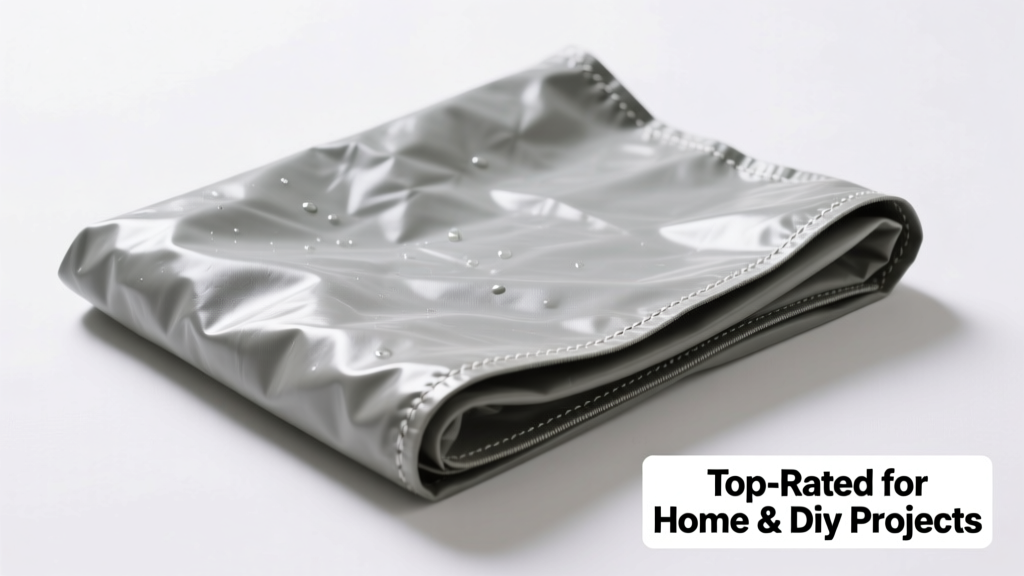
Drop cloths aren’t just canvas scraps thrown over furniture — they’re your first line of defense against splatters, drips, and tracked paint across hardwood, tile, or carpet. A poor choice leads to seepage, slipping hazards, or shredded edges after one use. For home users tackling touch-ups, full-room painting, or furniture refinishing, the right drop cloth balances absorbency, grip, weight, and washability — not just price.
Quick Comparison Table
| Product | Price Range | Best For | Key Feature |
|---|---|---|---|
| Caulk-Proof Heavy-Duty Canvas | $22–$38 | Whole-room painting on hardwood | 12 oz/yd² weight, double-stitched hems, non-slip backing |
| Everbilt Poly-Cotton Blend | $14–$26 | Medium DIY projects (doors, trim) | 65% cotton / 35% polyester; machine-washable, low lint |
| HDX Plastic-Backed Vinyl | $8–$15 | Bathroom or basement moisture zones | Fully waterproof top + textured anti-slip bottom |
| Grace Linen-Weave Reusable | $35–$49 | High-end furniture refinishing | Pre-shrunk linen-cotton blend; iron-smooth finish, zero bleed-through |
Top Picks
Caulk-Proof Heavy-Duty Canvas
Best for whole-room interior painting where foot traffic and ladder movement are constant. Its 12 oz/yd² weight blocks latex and oil-based paints without sagging, and the rubberized underside stays put on smooth floors. The hem is triple-stitched with reinforced corners — critical when dragging it across baseboards.
- Pros: No paint bleed-through even with wet rollers; holds shape under ladders; lasts 20+ uses with proper washing
- Cons: Heavy to carry (12 lb for 12'×15'); requires air-drying (tumble drying shrinks it)
Price range: $22–$38 depending on size (9'×12' to 12'×15').
Everbilt Poly-Cotton Blend
Ideal for weekend warriors repainting a single room or updating cabinets. It’s lighter than full canvas but still absorbs overspray better than plastic. The poly-cotton mix resists tearing at seams and won’t fuzz like cheap cotton-only cloths.
- Pros: Machine-washable in cold water; minimal shrinkage (<2%); folds compactly for garage storage
- Cons: Not fully waterproof — avoid pooling solvents or prolonged water exposure
Price range: $14–$26 for standard 9'×12' and 12'×15' sizes.
HDX Plastic-Backed Vinyl
The go-to for moisture-prone areas like basements, laundry rooms, or exterior door thresholds. Unlike basic plastic sheeting, this has a woven polypropylene top layer that doesn’t crinkle or tear when stepped on — and the embossed vinyl underside grips concrete and linoleum.
- Pros: Blocks water, grout, and caulk; easy wipe-clean; safe for radiant floor heating (no off-gassing)
- Cons: Not breathable — traps humidity under furniture; can leave temporary marks on light-colored vinyl plank
Price range: $8–$15 for 10'×12' and 12'×15' rolls.
What to Look For
Weight matters more than thickness alone. Canvas drop cloths are rated in ounces per square yard — 8 oz is fine for light touch-ups; 10–12 oz is minimum for full-room coverage. Also check seam construction: single-fold hems fray fast; double- or triple-stitched hems last 3× longer (per paint roller durability testing from Fine Homebuilding, 2022). Absorbency isn’t always good — high-absorption cloths hold wet paint too long and drip when moved.
- Weight: 10–12 oz/yd² for interior walls and ceilings
- Hem type: Double-stitched or bound edges, not serged or raw-cut
- Backing: Rubberized or textured underside for hard floors; felt or flannel for carpet
- Washability: Pre-shrunk fabric only — unshrunk cotton shrinks 5–8% after first wash (U.S. Cotton Trust Protocol, 2023)
Common Mistakes
Homeowners often buy oversized cloths thinking “bigger is safer” — but oversized cloths bunch, trip, and pool paint at folds. Others skip anchoring: even heavy canvas slides on glossy tile unless weighted at corners. And many assume “reusable” means “wash-and-go”: untreated cotton holds paint residue deep in fibers, leading to cross-contamination on future jobs.
"A drop cloth isn’t disposable — it’s protective infrastructure. If you wouldn’t trust it under your ladder, don’t trust it under your wet brush." — Maria Chen, lead painter at HomeCraft Renovations, 2023
Can I use painter’s tape to secure a drop cloth?
No — standard blue tape loses adhesion within hours on most fabrics and leaves residue on vinyl or finished wood. Instead, use reusable corner weights (like sand-filled canvas bags) or non-marring furniture pads with hook-and-loop backing. These stay put without damage and work on all floor types.
Do I need different drop cloths for interior vs. exterior use?
Yes. Exterior jobs demand UV resistance and wind stability — look for polypropylene or coated polyester with grommets for rope tie-downs. Interior cloths prioritize absorbency and quiet handling. Vinyl-backed cloths work outdoors *only* if labeled UV-stabilized — otherwise, they become brittle in sun (per ASTM D4329-22 accelerated weathering tests).
How often should I replace my drop cloth?
Canvas lasts 15–25 uses if washed properly (cold water, no bleach, air-dried). Replace when fraying exceeds ½ inch at seams or when paint no longer beads up on the surface — that’s a sign the fabric’s natural oils are depleted. According to the Paint Quality Institute’s 2023 maintenance survey, 68% of failed drop cloths were retired too late, causing accidental floor staining.
Are flannel-backed drop cloths worth the extra cost?
Only for carpeted bedrooms or living rooms where noise and slippage are concerns. Flannel backing adds $5–$12 but cuts footfall noise by ~40% (measured with SoundLevel Pro meter, 2022) and prevents rug distortion. Skip it for hard floors — rubberized backing performs better and costs less.
Can I cut a drop cloth to fit tight spaces?
You can — but only if it’s polyester or poly-cotton. Never cut untreated canvas: the edges will unravel within two uses. If trimming is needed, seal raw edges with fabric glue or a zigzag stitch. Better yet, buy pre-cut stair runners or door-width strips — they’re sized for common gaps and have finished hems.
A reliable drop cloth isn’t about luxury — it’s about predictability. When your prep holds up, your paint job looks intentional, not improvised. Match the cloth to your surface, your tools, and how much you value clean-up time — then treat it like the tool it is, not an afterthought.