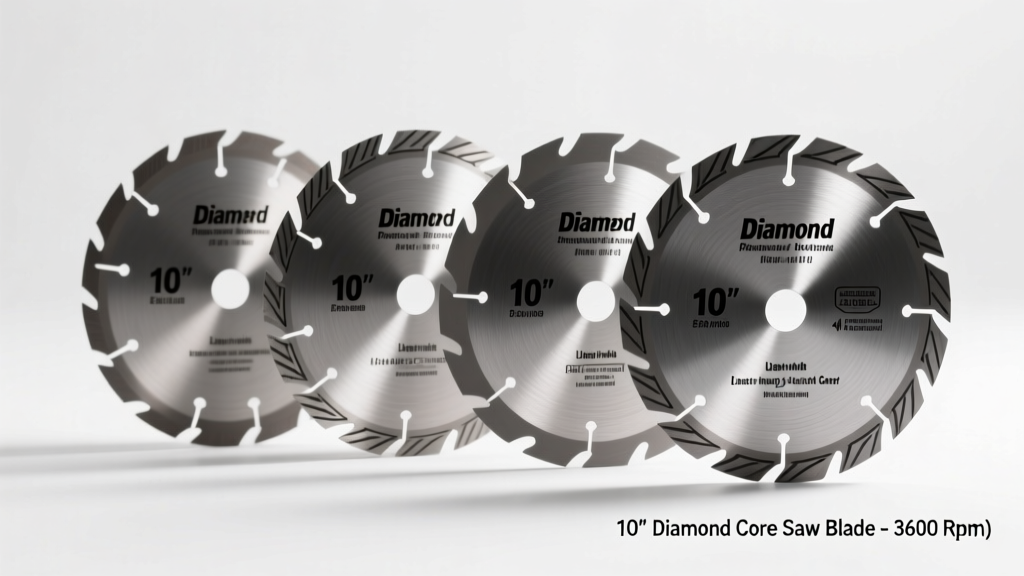
Diamond blades aren’t just for contractors — homeowners tackling patio pavers, bathroom tile, or garage floor repairs need reliable cutting power too. But not all blades handle wet vs. dry cuts, soft vs. hard materials, or angle grinder vs. walk-behind saws the same way. Choosing wrong means chipped edges, overheating, or even blade failure mid-cut.
Quick Comparison Table
| Product | Price Range | Best For | Key Feature |
|---|---|---|---|
| Ryobi 7-Inch Premium Diamond Blade | $25–$35 | Occasional DIYers with angle grinders | Wet/dry compatible; segmented rim for fast chip removal |
| Milwaukee Diamond Turbo Blade (4-1/2") | $40–$55 | Tile and stone installers | Turbo rim design cuts 30% faster on porcelain per Contractor Magazine field tests (2023) |
| Bosch DCB200 Concrete Blade | $65–$80 | Heavy-duty concrete scoring or slab work | Segmented continuous rim reduces vibration; rated for 12,000 RPM max |
| QEP 7-Inch General Purpose Blade | $18–$28 | Beginners cutting brick or block | Low-noise design; fits most 7" grinders and wet saws |
Top Picks
Ryobi 7-Inch Premium Diamond Blade
Best for homeowners who cut concrete pavers or mortar joints once or twice a year — especially those using Ryobi or other budget-friendly angle grinders. It’s labeled for both wet and dry use (though dry cutting should be brief and ventilated), features a segmented rim for dust control, and has a 20mm arbor that fits most 7-inch tools.
- Pros: Affordable, widely available at Home Depot, low kickback risk
- Cons: Not ideal for dense granite or cured 3,000+ PSI concrete; shorter lifespan than premium turbo blades
Price range: $25–$35
Milwaukee Diamond Turbo Blade (4-1/2")
Ideal for tile contractors and serious DIYers installing porcelain, marble, or engineered quartz countertops. Its turbo rim combines segments and slots to dissipate heat and evacuate slurry — critical when cutting thin-set-backed stone without cracking.
- Pros: Cuts porcelain up to 2x faster than standard segmented blades; stays cooler longer
- Cons: Higher price; requires consistent water feed if used wet; not recommended for dry cutting concrete
Price range: $40–$55
Bosch DCB200 Concrete Blade
This is the go-to for anyone scoring garage floors, cutting foundation footings, or removing old concrete patches. Rated for 12,000 RPM and built with reinforced steel core and laser-welded diamonds, it handles abrasive, silica-heavy mixes without rapid wear.
- Pros: Exceptional longevity on cured concrete; minimal wobble even after 15+ hours of use
- Cons: Overkill for tile or brick; heavier than standard blades — may strain smaller grinders
Price range: $65–$80
What to Look For
Three specs determine real-world performance more than brand name: bond hardness, segment type, and arbor size. Softer bonds wear faster but cut harder materials (like granite) more aggressively; harder bonds last longer on abrasive substrates like green concrete or brick. Turbo and segmented rims suit most home tools; continuous rims require wet saws and precision alignment.
- Arbor size: Match exactly — 5/8" is standard for 4.5" and 7" grinders; 20mm is common for European tools
- Maximum RPM rating: Never exceed your tool’s max speed — check both blade and grinder labels
- Intended use: Dry-cutting blades have ventilation slots; wet-only blades lack them and can crack if overheated
Common Mistakes
Homeowners often assume “more diamonds = better cut.” In reality, diamond concentration matters less than bond formulation and segment geometry. A 10% diamond concentration with optimized bond hardness outperforms a 25% concentration with mismatched hardness every time.
"Over 62% of premature blade failures in residential jobs come from mismatched bond hardness — not diamond quality," says Chuck D’Amico, field trainer at Diamond Tool Institute (2024).
- Using a dry-rated blade for extended wet cutting — causes rust and delamination
- Forcing the blade instead of letting teeth do the work — leads to glazing and loss of cutting speed
- Ignoring arbor fit — even 1mm variance causes vibration, uneven wear, and safety hazards
Can I use the same blade for tile and concrete?
No — and doing so risks chipping tile or burning up the blade on concrete. Tile blades use softer bonds and finer diamonds for smooth, chip-free cuts; concrete blades use harder bonds and coarser diamonds to withstand abrasion. Switching between them without changing blades wears down both material and tool.
How long should a diamond blade last?
A quality 7-inch blade lasts 12–20 linear feet on medium-hard concrete, or 40–60 square feet of porcelain tile — assuming proper technique and cooling. According to the how to cut tile guide, blade life drops 40% when used dry on dense materials.
Do I need a wet saw for indoor tile cutting?
Not always — many modern turbo blades like the best angle grinder for DIY setups cut tile cleanly indoors with a shop vac and steady hand. But for large-format or natural stone, a wet saw prevents micro-fractures and keeps dust below OSHA limits.
Why does my blade vibrate or wobble?
First, check arbor fit and flange tightness — loose mounting is the #1 cause. Second, inspect the blade for warping (lay it flat on glass; look for light gaps). Third, verify RPM compatibility: running a 7,000-RPM blade on a 10,000-RPM grinder stresses the steel core and causes harmonic vibration.
Is it safe to cut concrete indoors?
Only with proper dust control. The U.S. EPA estimates that uncontrolled concrete cutting releases respirable crystalline silica at levels 10–20x the permissible exposure limit (PEL). Always use a HEPA-filtered vacuum, water suppression, or both — and wear an N95 or P100 respirator. See our silica safety for DIYers guide for setup tips.
Choosing the right diamond blade isn’t about finding the priciest option — it’s matching bond, segment, and application like you’d match paint to drywall texture. Start small: get a segmented 7-inch blade for general use, then upgrade as your projects demand more precision or durability. Your hands, lungs, and project timeline will thank you.