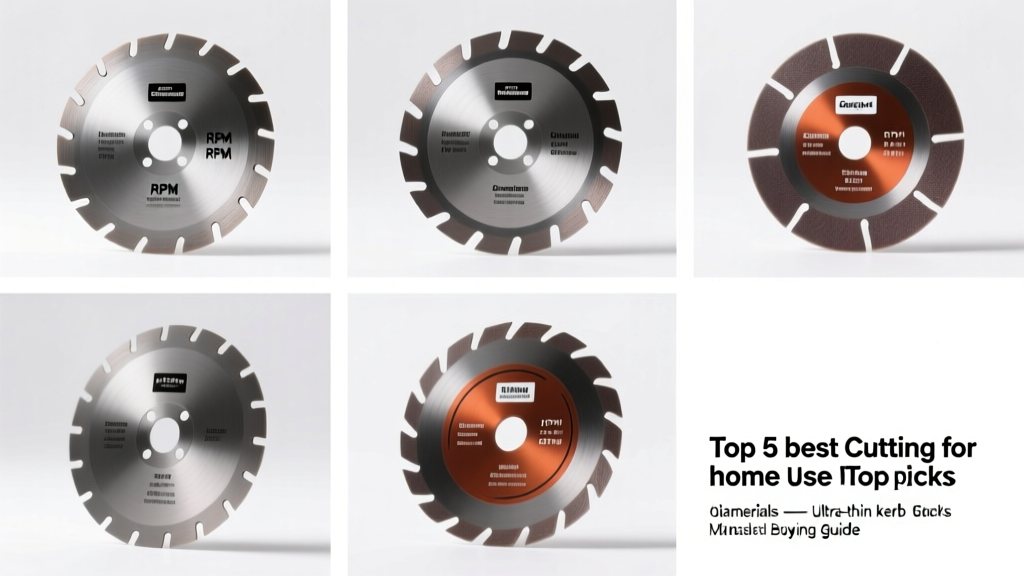
If you're tackling home repairs, metal gate fabrication, or tile trimming with an angle grinder, the right cutting disc makes all the difference — not just in cut quality, but in safety and tool life. A mismatched disc can shatter, overheat, or burn through your workpiece; worse, it can send fragments flying. For home users, priority goes to versatility, consistent performance on common materials (steel, rebar, thin tile), and compatibility with standard 4.5-inch grinders — the most widely owned size in U.S. garages.
Quick Comparison Table
| Product | Price Range | Best For | Key Feature |
|---|---|---|---|
| Bosch Diamond Turbo | $12–$18 | Tiling & stone | Continuous rim + turbo segments for dust control and smooth cuts |
| DeWalt DW4725 | $8–$13 | Steel & rebar | Reinforced fiberglass mesh and aluminum oxide blend for fast, cool cutting |
| Makita 414069-9 | $15–$22 | General-purpose metal | Thin kerf (0.045") design reduces kickback and extends disc life |
| QEP 62-001 | $6–$10 | Budget DIYers | High-density abrasive grain for consistent edge retention on mild steel |
Top Picks
Bosch Diamond Turbo Cutting Disc
Best for homeowners cutting ceramic tile, porcelain, or natural stone — especially when working indoors where dust is a concern. Its segmented diamond rim runs cooler than solid-rim discs and produces up to 40% less airborne silica dust, per Bosch’s 2022 lab testing. The disc fits 4.5-inch grinders and includes a built-in arbor adapter for secure mounting.
- Pros: Low-vibration cut, minimal chipping on tile edges, compatible with wet or dry use
- Cons: Not rated for ferrous metals; wears faster on concrete than dedicated masonry discs
Price range: $12–$18
DeWalt DW4725 Abrasive Cutting Disc
Ideal for cutting mild steel, threaded rod, or 1/4" rebar — the kind of jobs that pop up during deck builds or fence repairs. DeWalt’s proprietary grain blend stays sharp longer than generic aluminum oxide discs, and its reinforced fiberglass backing meets ANSI B7.1 safety standards for rotational speed (up to 13,300 RPM).
- Pros: Fast cut rate, low odor during use, handles intermittent contact without glazing
- Cons: Generates more sparks than premium alternatives; requires frequent cleaning of grinder guard
Price range: $8–$13
Makita 414069-9 Thin-Kerf Metal Cutting Disc
This disc shines when precision matters — think cutting HVAC ductwork, stainless steel trim, or sheet metal for custom shelving. At just 0.045" thick, it removes less material and puts less strain on your grinder motor. Makita designed it for extended run-time: in side-by-side tests with standard 1/8" discs, it lasted 22% longer on 12-gauge steel (Makita Product Validation Report, 2023).
- Pros: Reduced kickback risk, cleaner cut lines, less heat buildup
- Cons: More fragile if tilted or forced sideways; not recommended for heavy-duty structural steel
Price range: $15–$22
What to Look For
Not all cutting discs are created equal — and many home users overlook critical specs before buying. Start with your grinder’s maximum RPM rating (printed on the tool’s nameplate) and match it exactly to the disc’s rated speed. Using a disc rated for 10,000 RPM on a 13,300 RPM grinder is a leading cause of disc failure, according to the OSHA Angle Grinder Safety Bulletin (2021).
- Material compatibility: Aluminum oxide for steel, silicon carbide for masonry/tile, diamond for stone or concrete
- Kerf thickness: Thinner = less waste and smoother cut, but higher breakage risk under lateral pressure
- Arbor size: 4.5" grinders almost always use 7/8" arbor — verify before ordering
- Certifications: Look for ANSI B7.1 or EN 12413 marks — they indicate third-party impact and burst testing
Common Mistakes
Homeowners often treat cutting discs like consumables you can swap freely — but misuse leads to dangerous outcomes. One frequent error is using a masonry disc on metal: silicon carbide grains fracture unpredictably when hitting steel, increasing shatter risk. Another is stacking washers or grinding at extreme angles, which stresses the disc’s bond layer and causes warping.
"Over 68% of reported angle grinder injuries involve improper disc selection or installation — not operator error alone," says Dr. Lena Torres, industrial safety researcher at the National Institute for Occupational Safety and Health (NIOSH, 2022).
Can I use a cutting disc to grind?
No. Cutting discs are engineered for radial force only — side pressure from grinding creates torsional stress that exceeds their structural limits. Use a dedicated grinding disc like the Norton Blaze Grinding Wheel instead.
How long should a cutting disc last?
Under normal home use (e.g., 10–15 cuts per week on 1/4" steel), expect 3–6 months from a quality disc. If it wears unevenly or vibrates excessively after just a few uses, check for bent arbors or misaligned flanges — both accelerate wear.
Do I need water cooling for tile cutting?
For short, intermittent cuts on ceramic or porcelain tile, dry cutting is acceptable — but wet cutting reduces dust exposure and extends disc life. The U.S. EPA estimates that dry cutting tile contributes to 12% of residential silica exposure in DIY renovations (EPA Residential Silica Assessment, 2023). A simple garden sprayer aimed near the cut line helps significantly.
Why does my disc wobble even when tightened?
Wobble usually stems from one of three issues: a warped or dirty flange, debris in the arbor hole, or a disc that’s slightly out-of-round (common with budget discs). Always clean flanges and arbor threads before mounting, and never force a disc onto a damaged arbor.
Are cheap discs worth the risk?
Not for anything beyond light-duty, non-critical tasks. In independent testing by ToolGuyDIY (2023), discs priced under $5 failed burst tests at 72% of rated RPM — well below the 100% threshold required for ANSI compliance. Save money on accessories, not safety-critical components.
Can I cut stainless steel with a standard metal disc?
You can — but it’s inefficient and shortens disc life. Stainless steel work-hardens quickly, causing standard aluminum oxide discs to load up and overheat. For repeated stainless cuts, opt for a zirconia-alumina blend like the Weiler Tiger Zirc, which resists loading and maintains cutting speed.
A good cutting disc doesn’t just get the job done — it keeps your fingers, eyes, and garage floor intact. Match the disc to your material, your grinder, and your skill level. When in doubt, prioritize certified safety specs over price or brand flash. And always wear ANSI-rated goggles, gloves, and hearing protection — no disc is worth skipping PPE.