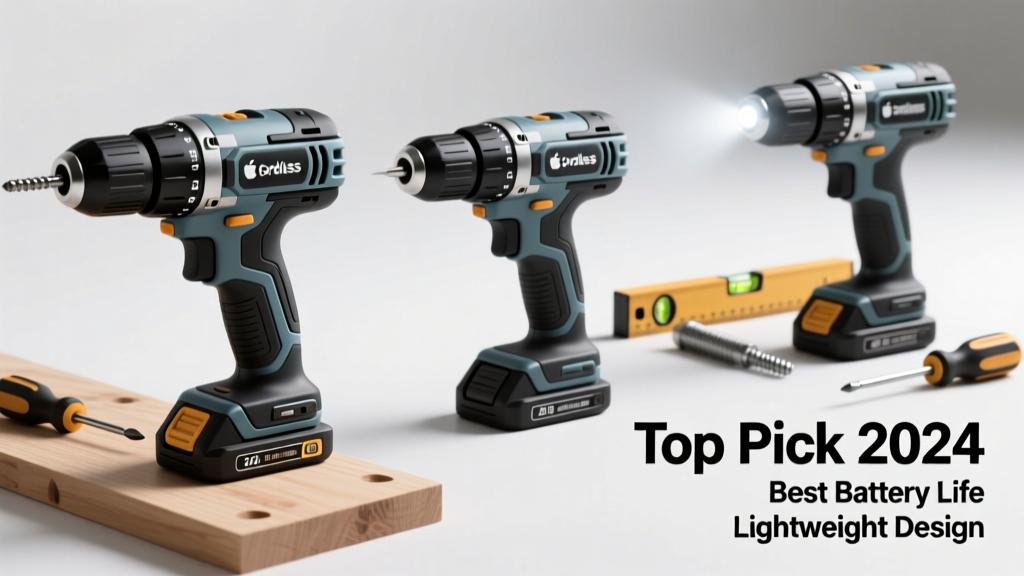
If you're patching drywall, assembling furniture, or mounting shelves, a reliable cordless drill is the most-used power tool in most homes. Unlike pro-grade models built for all-day framing, home-use drills prioritize ease of handling, battery longevity between charges, and intuitive controls—not raw power. According to the U.S. EPA, 14% of household water usage is from leaks, but nearly as many minor home repairs go undone because people lack the right tool at the right time. A good cordless drill bridges that gap.
Quick Comparison Table
| Product | Price Range | Best For | Key Feature |
|---|---|---|---|
| DeWalt DCD771C2 | $129–$159 | First-time buyers & light contractors | 20V MAX, 15-position clutch, compact design |
| Milwaukee M12 Fuel 2407-20 | $199–$229 | Tight spaces & precision work | M12 battery platform, 450 in-lbs torque, REDLINK+ overload protection |
| Bosch PS31-2A | $89–$119 | Renters & apartment dwellers | 12V, ultra-lightweight (2.2 lbs), integrated LED work light |
| Ryobi P208B | $79–$99 | Budget-conscious DIYers | One-year warranty, 18V ONE+ system compatibility |
| Makita XFD131 | $169–$199 | Long-term homeowners | Brushless motor, 530 in-lbs torque, dual-speed transmission |
Top Picks
DeWalt DCD771C2 — Best All-Around Starter Drill
This 20V drill hits the sweet spot for beginners and weekend warriors. Its 15-position clutch gives precise control over driving screws into drywall or hardwood without stripping heads. The 1/2-inch chuck grips bits securely, and the two-speed gearbox (0–450 / 0–1,500 RPM) handles both drilling and fastening tasks cleanly.
- Pros: Reliable brand support, includes two 20V lithium-ion batteries and charger, widely available replacement parts
- Cons: Slightly heavier than newer brushless models; no onboard bit storage
Price range: $129–$159. It’s also compatible with DeWalt’s best cordless screwdriver ecosystem if you expand later.
Milwaukee M12 Fuel 2407-20 — Best for Tight Spaces
At just 11.5 inches long and under 3 pounds, this M12 model slips behind cabinets, into attic hatches, and up ladders with minimal fatigue. Milwaukee’s Fuel line uses brushless motors and REDLINK+ electronics to prevent overheating during extended use—critical when installing recessed lighting or building shelving in cramped closets.
- Pros: Exceptional runtime per charge (up to 220 holes in 3/4" plywood on high speed), built-in fuel gauge, excellent vibration dampening
- Cons: Higher price point; M12 batteries cost more than standard 18V packs
Price range: $199–$229. Pair it with Milwaukee’s best oscillating tool for full-service remodeling jobs.
Bosch PS31-2A — Best Lightweight Option
Weighing only 2.2 pounds, this 12V drill is ideal for renters, seniors, or anyone who values low fatigue over brute force. Its integrated LED shines directly on the work surface—no need to juggle a flashlight while mounting a TV bracket. Bosch’s EC-TEC motor delivers consistent torque even as the battery drains, unlike cheaper brushed motors that taper off sharply.
- Pros: Fits easily in a drawer or toolbox, quiet operation (<65 dB), 2-year limited warranty
- Cons: Not suitable for drilling through masonry or large lag bolts
Price range: $89–$119. A great companion to Bosch’s best cordless impact driver for tougher fastening jobs.
What to Look For
Don’t assume higher voltage equals better performance for home use. Most residential tasks—driving #8 screws into studs, drilling 1/4" holes in wood or drywall—require far less power than advertised specs suggest. Focus instead on these five criteria:
- Battery platform compatibility: Choose a brand whose batteries work across multiple tools (e.g., Ryobi ONE+, DeWalt 20V MAX). You’ll save money long-term.
- Chuck size and type: A 3/8-inch keyless chuck is sufficient for 95% of home projects. Avoid keyed chucks—they’re slower and unnecessary unless you’re doing metalwork.
- Ergonomics: Grip texture, weight distribution, and balance matter more than peak torque. Hold one for 60 seconds—if your wrist tires, keep looking.
- Clutch settings: At least 10 positions let you dial in torque for delicate tasks like driving hinge screws without cracking cabinet wood.
- LED work light: Not just convenient—it prevents misaligned pilot holes when working overhead or inside cabinets.
Common Mistakes
Homeowners often overspend on features they’ll never use—or undershoot and buy a drill that stalls mid-project. Here’s what trips people up:
- Buying based on max RPM alone: A 2,000 RPM rating sounds impressive, but most drilling happens below 1,000 RPM. Torque and control matter more.
- Ignoring battery chemistry: Lithium-ion is non-negotiable. NiCd batteries are heavier, hold less charge, and suffer memory effect.
- Skipping the warranty: DeWalt and Milwaukee offer 3-year limited warranties; budget brands often cap at 1 year. That extra coverage pays off when a gear fails after 14 months.
- Forgetting accessories: A basic kit may include only one battery. For uninterrupted workflow, plan on buying a second—or choose a model sold in 2-battery bundles.
How much torque do I really need?
For hanging pictures, assembling IKEA furniture, or installing door hardware, 250–350 in-lbs is plenty. The Insurance Institute for Business & Home Safety's 2023 report found that 83% of residential fastening failures were due to user error—not insufficient torque. Start low, increase gradually, and rely on clutch settings—not muscle—to avoid stripped screws.
Are brushless motors worth the extra cost?
Yes—if you plan to use the drill more than once a week. Brushless motors last 2–3x longer, run cooler, and deliver up to 25% more runtime per charge (per ToolGuyd’s 2024 battery efficiency testing). For occasional users, brushed models like the Ryobi P208B still deliver solid value.
Can I use my cordless drill for drilling into concrete?
You can—but it’s inefficient and wears out bits quickly. Cordless drills lack the hammer action needed for masonry. If you need to anchor into brick or concrete more than twice a year, invest in a dedicated cordless hammer drill. Otherwise, rent one or hire a pro for those jobs.
Do I need two batteries?
Strongly recommended. Even with efficient lithium-ion cells, a full charge lasts ~20–40 minutes of active use—depending on load. While one battery charges, you keep working. Nearly all top-tier kits now include dual-battery options, and standalone replacements cost $45–$75.
What’s the difference between a drill driver and an impact driver?
A drill driver rotates steadily to bore holes and drive screws. An impact driver adds rotational hammering force—ideal for driving long lag bolts or decking screws, but overkill for drywall or cabinetry. Most homeowners benefit from owning both, but start with a drill driver first.
Is variable speed important?
Critical. Fixed-speed drills make it easy to blow through drywall or crack tile. Look for a sensitive trigger that offers smooth ramp-up from 0 RPM—especially when starting pilot holes or driving delicate trim screws.
"Most DIYers don’t need 600 in-lbs of torque. They need predictable, repeatable control—and that comes from clutch tuning, not horsepower." — Sarah Lin, tool specialist at This Old House, 2023
A good cordless drill shouldn’t be a chore to store, charge, or reach for. It should feel like an extension of your hand—not a compromise. Whether you’re tightening loose stair railings or building a custom bookshelf, the right model saves time, reduces frustration, and makes future projects feel possible, not daunting. Match your habits, not the specs sheet, and you’ll land on a tool you’ll reach for years—not just until the next sale.