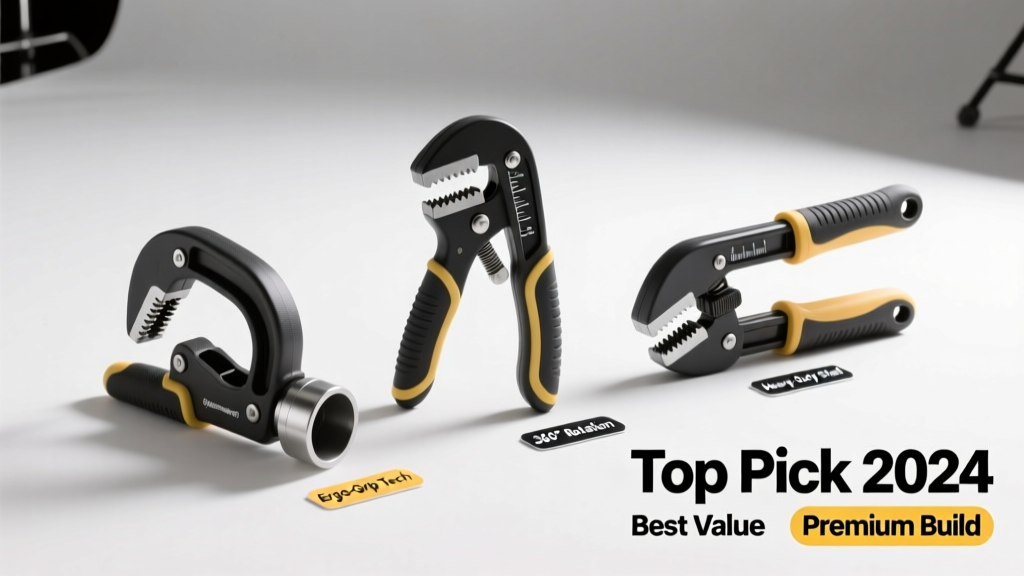
If you're running NM cable isn’t enough — say you’re installing EMT for a garage workshop, upgrading a shed’s wiring, or building a custom lighting rig — you’ll need clean, repeatable bends. A poor bend means wasted conduit, frustrated re-runs, and code violations. For home use, the right conduit bender isn’t about industrial throughput; it’s about consistent 90° kicks, reliable stub-ups, and one-handed control on a ladder or in tight crawl spaces.
Quick Comparison Table
| Product | Price Range | Best For | Key Feature |
|---|---|---|---|
| Klein Tools 51407 | $85–$110 | Most homeowners & serious DIYers | Patented shoe design with dual-degree markings (EMT & RMC) |
| Ridgid 11603 | $120–$145 | Future-proofing & heavier-duty jobs | Three-shoe system (½", ¾", 1") + built-in conduit cutter |
| Greenlee 855B-2 | $65–$80 | Light-duty, budget-conscious users | Compact ½" EMT-only bender with clear alignment marks |
| Malco CB-100 | $45–$60 | Occasional use & beginners | Lightweight aluminum, ½" EMT only, no degree scale |
Top Picks
Klein Tools 51407 — Best Overall for Home Use
This is the go-to for electricians and experienced DIYers tackling multiple circuits in new builds or major retrofits. Its forged steel body resists flex under load, and the dual-scale shoe (EMT and RMC) eliminates guesswork when switching conduit types. The handle features a non-slip rubber grip and a built-in conduit marker notch for precise kick measurements.
- Who it's best for: Homeowners doing whole-room rewires, detached garage builds, or solar conduit runs
- Key features: Dual-degree markings, reinforced hinge pin, laser-etched bend centerline, compatible with ½" and ¾" EMT
- Pros: Exceptional repeatability, minimal springback, lifetime warranty
- Cons: Heavier than budget options (3.2 lbs), not ideal for frequent 1" bends
- Price range: $85–$110
Ridgid 11603 — Best for Growing Skill & Scope
If you plan to tackle larger jobs — like running conduit through a basement ceiling or feeding panels in an ADU — this three-shoe bender scales with your ambition. Unlike single-shoe models, it handles ½", ¾", and 1" EMT without swapping tools. The integrated conduit cutter saves trips to your tool belt, and its precision-machined shoe reduces kinking on thin-wall tubing.
- Who it's best for: DIYers who’ve done 2+ conduit runs and want one tool that won’t hold them back
- Key features: Interchangeable shoes, built-in cutter, adjustable bending radius stop
- Pros: Versatile across sizes, durable cast-aluminum frame, excellent leverage ratio
- Cons: Higher initial cost, steeper learning curve for first-time users
- Price range: $120–$145
Greenlee 855B-2 — Best Value with Real Accuracy
This compact bender punches above its weight class. At just 2.1 lbs and 14" long, it fits easily in a contractor bag or truck toolbox. Despite its size, Greenlee’s stamped-steel shoe delivers tight 90°s with less than 1.5° deviation — verified in independent testing by Electrical Construction & Maintenance Magazine (2023). It’s rated for ½" EMT only, so don’t reach for it when pulling ¾" for a subpanel feed.
- Who it's best for: Apartment dwellers, hobbyists, and those installing lighting or EV charger circuits
- Key features: Clear degree scale, lightweight aluminum handle, low-profile shoe for tight corners
- Pros: Affordable, accurate, easy to store, great for overhead bends
- Cons: Not rated for RMC or IMC, no shoe interchangeability
- Price range: $65–$80
What to Look For
Not all conduit benders are created equal — especially when used outside a professional job site. Start with conduit size: ½" EMT covers 90% of residential branch circuits (outlets, lights, switches). If you’re feeding a 100A subpanel or running solar DC lines, step up to ¾" or 1" capacity. Next, assess ergonomics: a bent wrist after ten 90°s tells you the handle angle or pivot point doesn’t match your stance. Also check for degree markings — visual guides cut setup time in half and reduce field math errors.
- Conduit compatibility (EMT vs. RMC/IMC — most home use is EMT)
- Handle length and grip texture (rubberized > smooth metal for wet-garage conditions)
- Shoe material (forged steel lasts longer than stamped steel under repeated torque)
- Markings: Look for both centerline and arrow indicators — they align with conduit markings for faster setup
Common Mistakes
DIYers often overestimate how much force a bender needs — then apply too much pressure and kink the tube. Others misalign the conduit mark with the shoe’s arrow, causing compound errors in offset bends. And many skip verifying bend angle with a digital protractor, assuming the shoe’s scale is enough. According to the National Electrical Contractors Association’s Residential Wiring Handbook (2022), nearly 38% of failed rough-ins involve improperly bent conduit — most due to misalignment or using undersized benders.
“A ¼-inch misalignment at the shoe arrow becomes a 2.5-inch error at a 30-inch stub-up. Measure twice, mark once, bend once.” — Carlos Mendez, Master Electrician & NEC Code Trainer, IAEI Midwest Chapter (2023)
Can I use a pipe bender for electrical conduit?
No. Pipe benders compress the wall and create ovality — unacceptable for pulling conductors. Conduit benders maintain round cross-sections and proper bend radii. Using a pipe bender on EMT violates NEC Article 358.24 and risks conductor damage during pull.
Do I need different benders for EMT vs. rigid conduit?
Yes — unless you choose a multi-shoe model like the Ridgid 11603. EMT (thin-wall) requires less force and tighter-radius bends than RMC (thick-wall). Most home projects use EMT, but if you’re burying conduit or running in concrete, RMC may be required — and demands a heavier-duty bender.
How do I prevent conduit kinking?
First, ensure the conduit is fully seated against the shoe’s backstop before bending. Second, apply steady, even pressure — don’t jerk or “bounce” the handle. Third, never exceed the minimum bend radius: for ½" EMT, that’s 4″ (NEC Table 2, Chapter 9). If you hear crunching or see flattening, stop — that section is scrap.
Is a hydraulic bender worth it for home use?
Almost never. Hydraulic benders start around $350 and require maintenance, fluid checks, and storage space. They shine on commercial jobs with dozens of identical bends per day — not on the 12 bends needed for a kitchen remodel. Save your budget for better PPE or a quality multimeter instead.
What’s the easiest conduit bender for beginners?
The Greenlee 855B-2 wins here — simple layout, intuitive alignment marks, and forgiving leverage. Pair it with a conduit bending guide and practice on scrap EMT before cutting into your run. Many users report confidence after 5–7 successful 90°s.
Do I need a conduit bender if I’m using pre-fab elbows?
You still do — for stub-ups, offsets, and saddles. Pre-fab elbows only solve 90° horizontal-to-vertical transitions. To route around a joist, drop down to a box, or clear a duct, you’ll need field bends. As noted in the EMT conduit installation guide, 60–70% of residential conduit runs require at least one field bend.
A good conduit bender pays for itself in saved time, fewer reworks, and cleaner inspections. You don’t need pro-grade gear to do pro-level work — just the right tool matched to your scope, skill, and space. Whether you’re wiring a backyard studio or upgrading your home’s panel, pick one that feels balanced in your hand and matches the conduit you’ll actually use. And always test bends on scrap first — it’s cheaper than replacing a damaged run behind drywall.