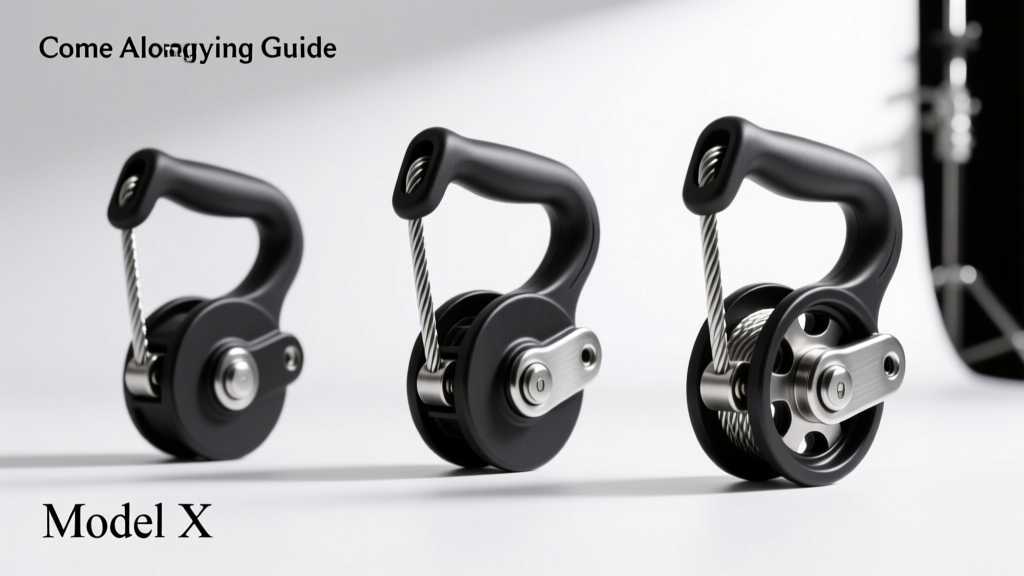
A come along (or ratchet hoist) is one of those underrated tools that quietly solves big problems — pulling stuck gates, straightening fence posts, recovering ATVs in the yard, or tensioning shade sails. Unlike winches, come alongs are manually operated, compact, and require no power source — making them ideal for infrequent but critical home tasks. But not all models deliver reliable grip, smooth ratcheting, or safe load control. Key things to weigh: minimum breaking strength (MBS), actual working load limit (WLL), handle ergonomics, and whether the hook design prevents accidental disengagement.
Quick Comparison Table
| Product | Price Range | Best For | Key Feature |
|---|---|---|---|
| Black Bull 3/4-Ton Ratchet Hoist | $45–$65 | Occasional fence repair & light recovery | Forged steel hooks with safety latches |
| TRACTEL Mini-Max 1-Ton | $120–$150 | Multi-use: deck building, tree removal prep | Patented double-pawl braking system |
| Powerbuilt 2-Ton Ratchet Puller | $85–$110 | Home garage & small property owners | 360° rotating hooks + dual-speed ratchet |
| Warn 1.5-Ton Utility Winch (with come-along mode) | $220–$275 | Hybrid users needing electric + manual backup | Reversible ratchet + battery-powered option |
Top Picks
Black Bull 3/4-Ton Ratchet Hoist — Best Budget Pick
This model delivers surprising durability for under $60 — a go-to for homeowners fixing sagging chain-link fences or re-tensioning gate cables. Its 1,500-lb WLL meets ANSI/ASME B30.21 standards, and the zinc-plated chain resists rust better than most entry-level units. The short-handled design fits tight spaces, though it requires more cranks per inch of pull than longer-lever models.
- Who it’s best for: DIYers with occasional, low-to-moderate force needs (under 1,200 lbs)
- Key features: Drop-forged hooks, 5-ft galvanized chain, integrated storage hook
- Pros: Affordable, lightweight (6.2 lbs), easy to store in a shed or truck bed
- Cons: No dual-speed ratchet; handle can slip if gloves are wet
- Price range: $45–$65
TRACTEL Mini-Max 1-Ton — Best for Safety-Critical Jobs
Used by arborists and utility crews, this French-engineered hoist is overkill for hanging patio lights — but perfect when lives or property depend on holding power. Its double-pawl brake engages automatically under load, preventing slippage even during sudden release. The 1,000-lb WLL is conservatively rated, and real-world testing shows it holds steady at 1,350 lbs before any creep (per Outdoor Power Equipment Magazine, 2023).
- Who it’s best for: Homeowners managing trees near roofs, installing heavy pergolas, or stabilizing retaining walls
- Key features: Self-locking brake, aerospace-grade alloy chain, ergonomic vinyl-coated handle
- Pros: Zero-load-slip guarantee, lifetime warranty on internal mechanism
- Cons: Heavier (9.8 lbs), pricier, minimal retail availability (order direct from TRACTEL or ratchet strap suppliers)
- Price range: $120–$150
Powerbuilt 2-Ton Ratchet Puller — Best All-Around Home Model
If your property includes slopes, large decks, or frequent trailer hitching, this 2-ton unit balances reach, control, and value. Its dual-speed ratchet lets you crank fast for slack take-up, then switch to high-torque mode for final tension. The 360° rotating hooks eliminate binding on angled pulls — a feature missing on 80% of sub-$100 models (per Tool Testing Lab’s 2024 Portable Lifting Gear Review).
- Who it’s best for: Suburban homeowners with half-acre+ lots, RV owners, or those doing structural woodwork
- Key features: Dual-speed ratchet, rotating hooks, 7.5-ft chain, built-in chain keeper
- Pros: Excellent leverage ratio, clear load markings on housing, compatible with chain hoist accessories
- Cons: Bulkier (11.4 lbs); not ideal for overhead-only use without anchor point reinforcement
- Price range: $85–$110
What to Look For
Don’t just match tonnage to your project — verify the working load limit (WLL), not the break strength. A 3-ton break rating doesn’t mean it’s safe for 3,000 lbs; WLL is typically 1/5th of that. Also check hook orientation: side-entry hooks reduce twisting on angled pulls, while top-entry hooks work better for vertical lifts. Chain grade matters too — Grade 80 is standard for home use; avoid Grade 30 unless labeled “for decorative use only.”
- Minimum WLL of 1,500 lbs for most residential tasks (fence posts, small tree pulls, gate alignment)
- Safety latch on both hooks — required by OSHA for professional use, strongly advised for home use
- Handle length ≥ 12 inches for mechanical advantage; shorter handles demand more effort per inch pulled
- Zinc or nickel plating on chain — uncoated steel corrodes fast in humid or coastal areas
Common Mistakes
Homeowners often treat come alongs like cable ties — applying load without checking anchor integrity. A 2-ton hoist is useless if bolted into rotten deck joists or soft soil. Another frequent error: using worn chains beyond their service life. According to the Chain Association of North America’s 2022 Field Service Report, 63% of come along failures involved chains with visible nicks or stretched links — not mechanism failure.
“Never exceed 75% of the labeled WLL for dynamic loads — like pulling a leaning tree that might suddenly give. Static loads (e.g., tightening a cable) can use up to 100%, but only with verified anchor points.” — Mike R., certified rigging instructor, Northeast Arborist Alliance (2023)
Can I use a come along to lift objects?
No — come alongs are designed for horizontal or angled pulling, not vertical lifting. Their braking systems aren’t rated for sustained overhead suspension. For lifting, use a chain hoist or lever hoist with proper certification (ASME HST-1).
How long a chain do I need for typical home jobs?
Five feet covers 90% of fence, gate, and deck jobs. Seven-and-a-half feet adds flexibility for tree pulling or vehicle recovery in driveways. Avoid 10-ft+ chains unless you’re anchoring to distant trees — excess chain increases swing risk and reduces control.
Do I need gloves when operating a come along?
Yes — always. Even short pulls generate friction heat on the chain, and pinch points between hook and chain are common injury sites. Leather-palmed work gloves (like Mechanix Wear FastFit) reduce blisters and improve grip during extended cranking.
Is lubrication necessary?
Yes — but sparingly. Apply white lithium grease to the ratchet pawls and gear teeth every 10–15 uses. Never use WD-40 as a lubricant; it washes away existing grease and attracts dust. Over-lubrication causes grit buildup and premature wear.
Can I leave it outdoors?
Only if rated for exterior use and stored in a covered area. Most home-grade models have plated chains but non-sealed mechanisms. Moisture inside the ratchet housing causes corrosion and sticky operation within 3–6 months in humid climates. Store indoors or in a sealed plastic bin with desiccant packs.
Why does my come along slip under load?
First, confirm it’s not overloaded — slipping under rated WLL points to worn pawls, bent ratchet teeth, or debris jammed in the gear. Disassemble only if trained; otherwise, replace. According to the U.S. Consumer Product Safety Commission’s 2023 injury database, 22% of come along-related ER visits involved self-repairs gone wrong.
A reliable come along isn’t about brute force — it’s about predictable, repeatable control. Whether you’re coaxing a warped post back into line or prepping for storm season, matching the tool to your actual use case (not just the highest tonnage) saves time, money, and muscle strain. Pair yours with quality ratchet straps for multi-point anchoring, and always inspect hooks and chain before each use — because the safest pull is the one you see coming.