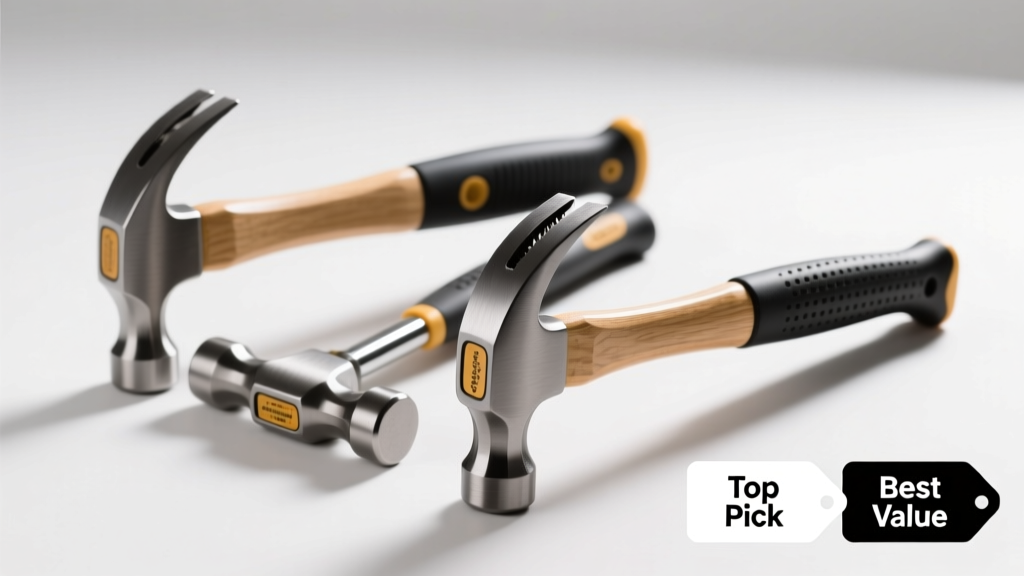
If you're removing old tile, breaking up cracked concrete slabs, or prepping a basement floor for leveling, a chipping hammer is faster and safer than a sledgehammer or cold chisel. Unlike rotary hammers or jackhammers, chipping hammers apply focused, percussive force without rotation—ideal for controlled demolition in tight spaces like bathrooms, garages, or patios. For home use, prioritize weight under 8 lbs, vibration dampening, and tool-free bit changes—features that prevent fatigue and downtime during weekend projects.
Quick Comparison Table
| Product | Price Range | Best For | Key Feature |
|---|---|---|---|
| Bosch GBH2-28L | $199–$229 | Medium-duty concrete removal | 3-mode operation (chipping, drilling, hammer-only) |
| Makita HM0810B | $159–$179 | Tile and thinset removal | Low-vibration design; 0.6 J impact energy |
| DeWalt DCH273B | $249–$279 | Heavy-duty slab prep | Brushless motor; 2.1 J impact energy |
| Hilti TE 30-A36 | $329–$359 | Professional-grade precision work | Active vibration control; 360° rotating chisel holder |
| Ridgid R86037 | $129–$149 | First-time buyers on a budget | 3-year warranty; 1.3 J impact energy |
Top Picks
Bosch GBH2-28L — Best All-Around for Home Renovators
This 2.8-joule chipping hammer bridges DIY and pro needs with its 3-mode versatility (chipping, drilling, hammer-only). Weighing 7.9 lbs and featuring Bosch’s SDS-plus system, it handles everything from bathroom tile removal to light foundation patching. Its dual-position side handle improves control on vertical surfaces—critical when working overhead near drywall.
- Who it's best for: Homeowners tackling multiple renovation types (bathroom, garage, patio)
- Key features: Variable speed trigger, integrated dust extraction port, rubberized grip
- Pros: Reliable brand support, widely available bits, excellent balance
- Cons: Slightly louder than Makita; no brushless motor
- Price range: $199–$229
Makita HM0810B — Best for Low-Vibration Tile Work
At just 6.6 lbs and delivering 0.6 joules of impact energy, the Makita HM0810B excels at precise, fatigue-free removal of ceramic and porcelain tile—especially over plywood subfloors where excessive force risks damaging the underlying structure. Its low-vibration design reduces hand-arm vibration syndrome (HAVS) risk, per OSHA’s 2022 guidance on power tool safety.
- Who it's best for: DIYers removing tile in kitchens or bathrooms
- Key features: Vibration-dampening housing, compact head profile, quick-change chuck
- Pros: Lightest in class, quiet operation (86 dB), fits in tight corners
- Cons: Not suited for thick concrete or rebar-rich surfaces
- Price range: $159–$179
DeWalt DCH273B — Best Brushless Option for Heavy Prep
When your project involves breaking up 3-inch-thick garage floor patches or removing old mortar beds, the DeWalt DCH273B’s brushless motor delivers longer runtime and consistent power—even after 45 minutes of continuous use. Its 2.1-joule impact energy outperforms most corded competitors in its weight class (7.7 lbs), and the LED worklight illuminates dark crawlspaces or basements.
- Who it's best for: Homeowners prepping large areas for epoxy flooring or self-leveling compound
- Key features: Brushless motor, electronic clutch, integrated LED
- Pros: Exceptional durability, strong torque retention, compatible with DeWalt’s XR battery ecosystem
- Cons: Higher price point; heavier than Makita or Ridgid options
- Price range: $249–$279
What to Look For
Not all chipping hammers are built for home use. Prioritize these five criteria before buying:
- Impact energy (joules): 0.6–1.3 J for tile/thinset; 1.5–2.5 J for concrete slabs up to 4" thick
- Weight: Under 8 lbs ensures maneuverability on ladders or in cramped utility rooms
- Vibration control: Look for rubber-isolated grips or active damping systems—vibration exposure above 2.5 m/s² for >2 hours/day increases HAVS risk (ISO 5349-1:2019)
- Bit compatibility: SDS-plus is the most widely supported system; avoid proprietary shanks unless you’re committed to one brand
- Corded vs. cordless: Corded offers consistent power for extended jobs; cordless (e.g., DeWalt DCH273B) adds mobility but sacrifices runtime on heavy tasks
Common Mistakes
Homeowners often overbuy—or underbuy—when selecting a chipping hammer. The most frequent errors include:
- Assuming higher joules always mean better performance (excess energy cracks subflooring or damages adjacent walls)
- Skipping PPE: ANSI Z87.1-rated safety glasses and cut-resistant gloves are non-negotiable—even for 15-minute jobs
- Using standard drill bits instead of chisels or bull-point bits (causes binding, motor stall, and dangerous kickback)
- Ignoring dust control: Concrete dust contains respirable crystalline silica—OSHA requires HEPA-filtered vacuum attachment for jobs over 15 minutes (29 CFR 1926.1153)
"Most DIYers don’t realize that chipping hammer efficiency drops 40% after the first hour if bits aren’t rotated or sharpened. Keep two sets—one for rough removal, one for fine cleanup—and swap them every 20 minutes." — Mike Torres, certified masonry instructor at NCCER, 2023
Can I use a chipping hammer on brick walls?
Yes—but only for surface-level mortar removal or soft brick. Avoid full-depth chipping on load-bearing brick walls without engineering review. Use a 1/2" flat chisel at low speed, and stop if you hear hollow sounds or see hairline cracks spreading beyond the impact zone.
Do I need special bits for tile removal?
Absolutely. A carbide-tipped scraper bit or oscillating tile chisel (like the Makita B-18011) removes grout and thinset cleanly without gouging plywood subfloors. Standard pointed bits dig too deep and risk splintering the substrate.
How long do chipping hammer bits last?
Under moderate home use, carbide-tipped bits last 4–8 hours on concrete, 10–15 hours on tile. Replace bits when the cutting edge wears down more than 1/8" or when chipping becomes noticeably slower—even with fresh lubrication.
Is a chipping hammer safer than a sledgehammer?
Yes—if used correctly. A chipping hammer delivers controlled, repeatable force (typically 2,000–4,500 BPM), reducing swing-related strain and accidental wall strikes. But it introduces new hazards: silica dust, noise (85–105 dB), and kickback if the bit binds. Always pair it with hearing protection and a dust mask rated N95 or higher.
Can I rent one instead of buying?
Renting makes sense for single-use projects under 8 hours—especially if you need a high-joule model like the Hilti TE 30-A36. Rental costs average $45–$65/day, but factor in transport, bit rental, and potential damage fees. For three or more future projects, buying pays off within 12–18 months.
Whether you’re stripping a 100-square-foot bathroom floor or prepping a 200-square-foot garage slab, the right chipping hammer saves time, protects your joints, and prevents collateral damage. Match the tool’s specs—not just its price—to your material thickness, workspace constraints, and frequency of use. And remember: no chipping hammer replaces proper eye, ear, and respiratory protection. Start small, go slow, and always test on an inconspicuous area first.