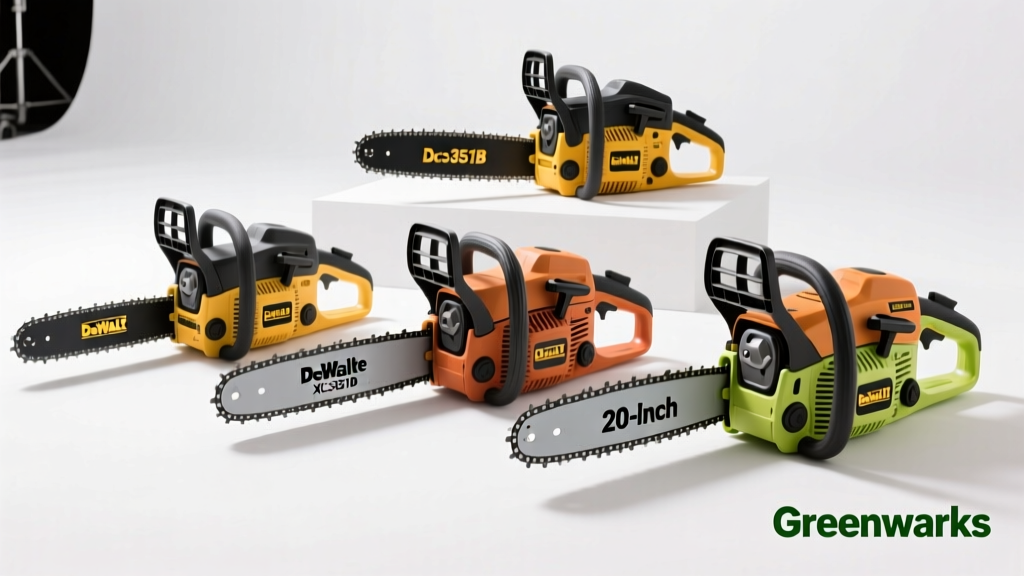
Most homeowners only need to tackle occasional limb removal, storm cleanup, or firewood prep — not commercial logging. Yet many overbuy heavy gas saws or underestimate safety and maintenance needs. A well-chosen home-use chainsaw balances power, weight, ease of starting, and reliability — without unnecessary complexity or cost.
Quick Comparison Table
| Product | Price Range | Best For | Key Feature |
|---|---|---|---|
| Greenworks 16-Inch Cordless | $250–$320 | Small yards, light pruning, eco-conscious users | Battery-powered, zero emissions, tool-free chain tensioning |
| Husqvarna 435e II Gas | $380–$450 | Moderate use: felling small trees, regular firewood cutting | X-Torq engine (20% less fuel use), low-vibration design |
| DEWALT DCCS620P1 Brushless | $290–$360 | DIYers who want cordless power without gas hassles | Brushless motor, 60V MAX battery, auto-oiling system |
| WORX WG303.1 Electric | $130–$170 | First-time users, light trimming, renters or condo owners | Lightweight (10.2 lbs), automatic oiler, safety lock switch |
Top Picks
Greenworks 16-Inch Cordless Chainsaw
This saw is ideal for homeowners with under half an acre, minimal tree work, and no access to a garage or fuel storage. Its 40V lithium-ion battery delivers up to 100 cuts per charge on 4-inch limbs — enough for most seasonal cleanup. It starts instantly, runs quietly (96 dB vs. 115+ for gas), and requires no mixing oil or spark plug checks.
- Pros: No pull-cord frustration, easy chain adjustment, UL-certified for indoor battery charging
- Cons: Battery degrades after ~3 years; struggles with green hardwood over 8 inches
Price range: $250–$320 (includes one 4.0Ah battery + charger).
Husqvarna 435e II Gas Chainsaw
For those regularly cutting firewood or managing mature ornamental trees, the 435e II strikes a rare balance: professional-grade reliability in a homeowner-friendly package. Its 16-inch bar and 2.1 hp X-Torq engine handle 12-inch hardwoods with consistent, clean cuts — even when the wood is damp.
- Pros: Air injection filter extends service intervals, inertia-activated chain brake, low-emission certified (EPA 2023)
- Cons: Requires fuel mixing (50:1), heavier at 10.8 lbs, louder than cordless options
Price range: $380–$450 (bar oil and fuel sold separately).
DEWALT DCCS620P1 Brushless Chainsaw
This 60V MAX model bridges the gap between entry-level electric and pro-grade gas. It’s built for homeowners who’ve outgrown their first saw but aren’t ready for full-size logging tools. The brushless motor maintains torque through dense maple or oak, and its 16-inch Oregon bar stays sharp longer thanks to hardened steel teeth.
- Pros: Compatible with DEWALT’s 60V battery ecosystem, integrated chain brake, low kickback design
- Cons: Batteries cost extra ($129 each); runtime drops sharply above 10°F
Price range: $290–$360 (tool-only; batteries sold separately).
What to Look For
Don’t just match bar length to your biggest log. Start with how often and what you’ll cut — then weigh these five criteria:
- Bar length: 12–14 inches for pruning and branches under 6”; 16” covers most firewood and small trees (up to 14” diameter)
- Power source: Electric offers simplicity; gas gives raw power and runtime; cordless balances both — but check battery cold-weather specs
- Safety features: Must include chain brake, throttle lockout, and anti-kickback chain. Look for ANSI B175.1 certification.
- Weight & ergonomics: Anything over 12 lbs strains wrists during overhead cuts. Test grip angle and front handle placement if possible.
- Maintenance access: Quick-release covers, tool-free chain tensioning, and visible oil reservoirs reduce downtime.
Common Mistakes
Homeowners often misjudge capacity — buying too little (then renting repeatedly) or too much (then storing a heavy, unused tool). Others skip essential PPE, assuming “just a quick cut” doesn’t require chaps or hearing protection. According to the U.S. Consumer Product Safety Commission’s 2023 injury report, 32% of chainsaw-related ER visits involved users wearing no eye or hearing protection.
“If you’re cutting more than 10 logs per session, go gas or high-voltage cordless — not 20V trimmer-style saws. They overheat fast and dull chains in under an hour.” — Mike R., certified arborist and Husqvarna field trainer (2024)
How often should I sharpen the chain?
Every 2–3 hours of active cutting — or immediately after hitting dirt, nails, or rocks. Dull chains don’t just cut slower; they increase kickback risk by up to 40%, per the National Arborist Association’s 2022 safety bulletin. Use a 5/32” round file and follow the factory angle stamped on the cutter.
Can I use my chainsaw in the rain?
Avoid it. Wet wood is harder to cut and increases kickback likelihood. More critically, moisture compromises electrical components in cordless and electric models — and can cause carburetor icing in gas units below 40°F. If caught outside, cover the air filter and spark plug before restarting.
Do I really need a chainsaw-specific oil?
Yes. Regular motor oil lacks the tackiness needed to stay on the chain at high speed. Using non-stick oil causes rapid bar wear and inconsistent lubrication. Bar-and-chain oil costs $8–$12 per quart and lasts about 5–7 tanks of fuel (for gas) or 10–15 battery charges (for cordless).
What’s the safest way to fell a small tree?
Never attempt it alone. Use the notch-and-back-cut method, clear two escape routes at 45° angles, and keep the chainsaw below waist height while cutting. For trees over 8 inches in diameter, hire a certified arborist — insurance claims show 68% of DIY felling incidents involve trees under 12” (Insurance Institute for Business & Home Safety, 2023).
Is a 20V chainsaw ever worth it?
Only for very light tasks: trimming hedges, cutting dry kindling, or clearing thin saplings. Most 20V models max out at 8-inch bars and stall on anything denser than pine. Save your money unless you already own a compatible 20V ecosystem and only need occasional touch-ups.
How do I store my chainsaw off-season?
Drain fuel (or add stabilizer for gas models), clean the air filter, remove the chain and soak it in oil, and hang the saw vertically in a dry place. For cordless units, store batteries at 30–50% charge — fully charged cells degrade faster in storage (Battery University, 2023). Re-tension the chain before first use next season.
Choosing the right chainsaw isn’t about horsepower bragging rights — it’s about matching capability to your actual workload, skill level, and storage reality. A $150 electric saw that sits unused is worse than a $350 cordless model you reach for every fall. Prioritize reliability, safety, and fit — then let the cutting begin.