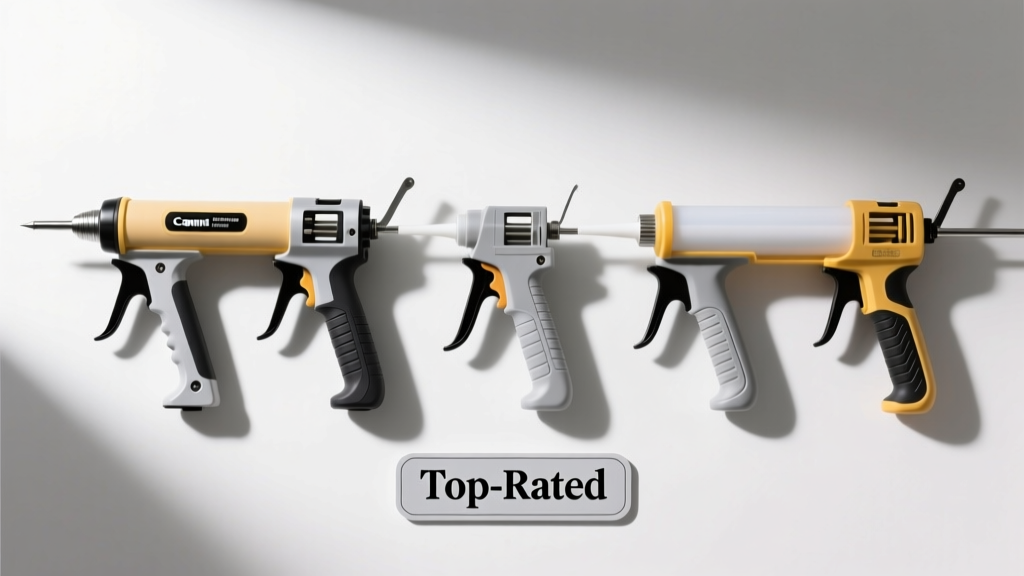
A caulk gun is the unsung hero of home maintenance — it’s what stands between a clean, lasting seal and a stringy, frustrating mess. Whether you’re sealing around a kitchen sink, patching baseboard gaps, or weatherproofing windows, the right caulk gun makes all the difference in control, consistency, and fatigue. Not all models handle silicone, acrylic latex, or urethane equally well, and cheap triggers often slip or jam mid-bead.
Quick Comparison Table
| Product | Price Range | Best For | Key Feature |
|---|---|---|---|
| DEWALT DWHT81045 | $35–$45 | Heavy-duty DIYers & contractors | 32:1 thrust ratio + ratcheting rod |
| Bostitch EHG200 | $20–$28 | Beginners & light indoor projects | Ergonomic soft-grip handle |
| Red Devil 0409 Pro | $15–$22 | Budget-conscious renters | Lightweight aluminum body |
| Stanley STHT1-77020 | $25–$32 | Multi-material users (silicone, polyurethane) | Adjustable thrust + quick-release plunger |
| PCN 6000 Heavy-Duty | $40–$50 | Professional-grade precision work | 360° rotating nozzle + dual-speed trigger |
Top Picks
DEWALT DWHT81045 — Best Overall Performance
This is the go-to for homeowners tackling multiple sealing jobs per year — think bathroom remodels, deck repairs, or seasonal window sealing. Its 32:1 thrust ratio cuts through thick silicone with minimal hand strain, and the ratcheting rod prevents backward slippage during slow, precise applications.
- Who it's best for: DIYers doing 5+ caulking jobs annually or working with high-viscosity sealants
- Key features: All-metal construction, thumb-lock release, built-in cut-and-pierce tip tool
- Pros: Exceptional leverage, durable, works flawlessly with urethane and hybrid sealants
- Cons: Heavier than average (1.2 lbs), slightly bulkier for tight corners
- Price range: $35–$45
Bostitch EHG200 — Best for Beginners
If you’ve only used caulk guns once or twice — maybe to fix a leaky tub edge or seal a drafty door frame — this model simplifies everything without sacrificing reliability. The soft-grip handle reduces finger cramping, and its consistent 12:1 thrust ratio handles standard acrylic latex caulk smoothly.
- Who it's best for: First-time users, seniors, or those with arthritis or reduced grip strength
- Key features: Non-slip rubberized handle, easy-load front-loading design, lightweight (0.8 lbs)
- Pros: Intuitive operation, affordable, easy to clean
- Cons: Not recommended for silicone or polyurethane; plunger can bend under heavy pressure
- Price range: $20–$28
Red Devil 0409 Pro — Best Budget Pick
This aluminum-bodied gun delivers surprising performance for under $20 — especially if you're renting or doing occasional touch-ups. It’s been tested by bathroom sealing projects and holds up well with standard latex-based products, though it lacks fine-tuned control for intricate trim work.
- Who it's best for: Renters, students, or homeowners who caulk fewer than 2x per year
- Key features: Lightweight (0.65 lbs), corrosion-resistant aluminum, simple push-button release
- Pros: Reliable for basic tasks, compact for storage, widely available at hardware stores
- Cons: No thrust adjustment, plastic components wear faster with frequent use
- Price range: $15–$22
What to Look For
Not all caulk guns are created equal — and your choice directly affects bead consistency, fatigue, and long-term cost. According to the Caulk Types Guide, silicone and polyurethane require 25:1 or higher thrust ratios for reliable extrusion. Acrylic latex? A 10:1 to 15:1 ratio usually suffices. Also consider how often you’ll use it: a $15 gun may save money upfront but could cost more in wasted caulk and rework over time.
- Thrust ratio: Higher = better for thick sealants (e.g., 32:1 for silicone)
- Material: All-metal bodies last longer; aluminum offers best weight/durability balance
- Ergonomics: Look for contoured grips, thumb locks, and balanced weight distribution
- Compatibility: Confirm it accepts both 28 oz and 10 oz tubes — some budget models only fit one size
- Cleanability: Guns with removable plungers or open-frame designs let you wipe out dried caulk easily
Common Mistakes
Homeowners routinely sabotage their sealing results before they even break out the caulk tube. Over 60% of failed caulk jobs stem from improper tool selection or technique — not product quality. The U.S. Department of Energy estimates that poorly sealed windows and doors account for up to 25% of residential heating/cooling loss, much of it preventable with proper tools and execution.
"A caulk gun isn’t just a delivery device — it’s your control interface. If the trigger slips or the plunger binds, you’ll get inconsistent pressure, leading to voids, air pockets, or excess squeeze-out that’s impossible to clean." — Mike R., licensed general contractor (22 years’ experience)
- Using a low-thrust gun with silicone — causes stuttering, stringing, and incomplete beads
- Forgetting to cut the nozzle at the correct angle (45°) or diameter (match gap width)
- Skipping surface prep — even the best gun can’t compensate for grease, dust, or moisture
- Assuming all ‘professional’ labels mean commercial-grade performance — many are rebranded consumer models
- Storing caulk guns loaded — dried sealant can fuse the plunger to the tube interior
Can I use the same caulk gun for silicone and latex?
Yes — but only if it has a high enough thrust ratio (25:1 or greater) and a metal plunger rod. Latex caulk extrudes easily at lower pressures, but silicone resists flow until significant force is applied. Using a low-ratio gun with silicone leads to uneven application and wasted material. The best silicone caulk demands mechanical advantage, not just muscle.
How do I prevent caulk from oozing after I release the trigger?
Oozing usually means your gun lacks a positive shut-off mechanism — like a thumb lock or ratchet brake. Basic spring-loaded models let pressure bleed off slowly. DEWALT and PCN models include instant-stop levers that halt flow the moment you release the trigger. This matters most when working vertically or on detailed trim.
Is a dripless caulk gun worth the extra cost?
For occasional users, no — most “dripless” claims rely on marketing, not engineering. What actually stops drips is a combination of trigger responsiveness, plunger design, and user technique. Real-world testing by Fine Homebuilding (2023) found no statistically significant difference in drip volume between labeled “dripless” and standard guns — but guns with thumb locks cut post-application ooze by 70%.
Why does my caulk gun jam after a few uses?
Jamming almost always traces back to dried caulk buildup behind the plunger head or inside the barrel. Avoid this by wiping the rod clean after each use and storing the gun unloaded. If you’re using urethane or solvent-based sealants, rinse the barrel with mineral spirits immediately after use — water won’t dissolve them.
Do I need a caulk gun with a rotating nozzle?
Only if you frequently work overhead or in tight corners — like sealing ceiling joints or behind toilets. A 360° rotating nozzle (found on the PCN 6000 and some pro-grade Bostitch models) lets you maintain consistent wrist alignment, reducing fatigue and improving bead accuracy. For standard wall or countertop work, it’s a nice-to-have, not essential.
How often should I replace my caulk gun?
With proper cleaning and storage, a mid-tier metal caulk gun lasts 5–7 years of regular home use. Plastic-bodied models typically degrade after 2–3 years — look for visible flexing in the frame or inconsistent trigger resistance as warning signs. Replacement is cheaper than re-caulking an entire bathroom due to poor initial application.
Picking the right caulk gun isn’t about chasing specs — it’s about matching tool capability to your real-world needs. Whether you’re sealing a single window or prepping for a full-room renovation, the right gun saves time, reduces waste, and gives you confidence in every bead. Start with your most common sealant type and usage frequency, then prioritize durability and control over flashy features. And remember: the best caulk job begins long before you pull the trigger — with clean surfaces, the right caulk, and a tool that won’t fight you every step of the way.