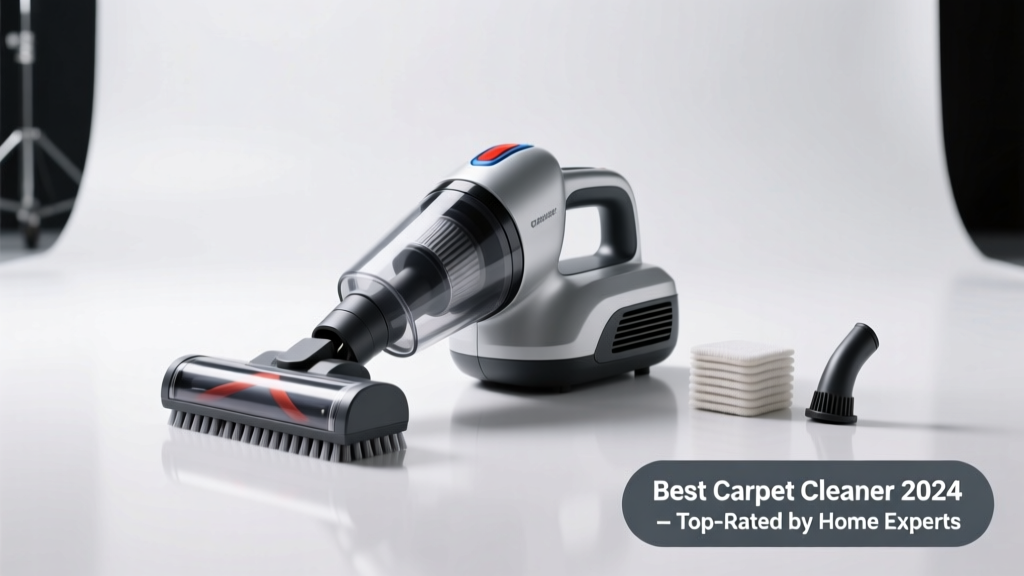
A good carpet cleaner isn’t just about removing stains—it’s about extending the life of your carpets, improving indoor air quality, and avoiding costly professional cleanings. According to the U.S. EPA, indoor air can be 2–5 times more polluted than outdoor air, and dirty carpets trap dust mites, pet dander, and mold spores. For most homeowners, a reliable machine that balances cleaning power, maneuverability, and maintenance is far more valuable than raw horsepower alone.
Quick Comparison Table
| Product | Price Range | Best For | Key Feature |
|---|---|---|---|
| Bissell ProHeat 2X Revolution Pet | $250–$320 | Pet owners with heavy shedding or accidents | Two-tank system + pet-enzyme formula compatibility |
| Hoover PowerDash Pet Compact | $130–$170 | Small spaces & quick spot cleaning | Lightweight (12.5 lbs) + 12-amp motor |
| Rug Doctor Portable Spot Cleaner | $180–$220 | Spot treatment & upholstery | Handheld + 6-foot hose + upholstery tool |
| Shark NV751 Rotator Powered Lift-Away | $300–$380 | Hardwood-carpet hybrids & allergy sufferers | Lift-Away canister + HEPA filtration |
| Eureka Mighty Mite 3670G | $80–$110 | First-time buyers on a tight budget | Compact upright design + 12-amp motor |
Top Picks
Bissell ProHeat 2X Revolution Pet
This is the go-to for households with dogs, cats, or kids—especially where odors and deep-set stains are routine. Its dual-tank system separates clean water from dirty, and its HeatWave technology maintains 130°F water temperature through the entire cleaning cycle. It also accepts Bissell’s proprietary pet-enzyme formulas, which break down organic matter at the source—not just mask it.
- Pros: Strongest suction in its class (up to 1200W), built-in stair tool, easy-to-empty tanks
- Cons: Heavy (22 lbs), noisy (82 dB), requires frequent filter cleaning
Price range: $250–$320. Best paired with carpet stain removers for tough set-in messes.
Hoover PowerDash Pet Compact
If your home has mostly low-pile carpet or area rugs—and you’re cleaning once every 4–6 weeks—this compact unit delivers surprising performance without the bulk. At just 12.5 pounds, it’s easy to carry up stairs or store in a closet. The SpinScrub brushes rotate at 3,000 RPM, loosening embedded dirt faster than standard scrubbers.
- Pros: Affordable, quiet (74 dB), fits under most vanities
- Cons: Smaller 1-quart tank means refills mid-room, no upholstery attachments included
Price range: $130–$170. A smart upgrade over rental machines—especially when factoring in $35–$50 per rental plus solution costs.
Rug Doctor Portable Spot Cleaner
This handheld unit shines where larger machines struggle: car interiors, stairs, pet beds, and furniture. Its 6-foot hose and flexible wand let you reach behind sofas or into crevices. Unlike many portables, it uses real hot water extraction—not just spray-and-vacuum—so it pulls out moisture and soil instead of leaving residue.
- Pros: Corded for consistent power, includes upholstery brush and crevice tool
- Cons: Not designed for full-room cleaning, manual trigger operation gets tiring on large jobs
Price range: $180–$220. Works well alongside a steam mop for homes with mixed flooring.
What to Look For
Not all carpet cleaners extract equally—and many fail on critical metrics like dwell time, water recovery rate, and drying speed. Here’s what actually moves the needle:
- Suction power (measured in AW or air watts): Aim for ≥100 AW for deep cleaning; below 70 AW often leaves carpets damp and prone to mildew.
- Tank capacity: Full-size uprights typically hold 1–1.5 gallons clean / 0.75–1 gallon dirty. Anything smaller demands constant refilling.
- Drying time: Machines with strong vacuum recovery and heat-assisted drying cut dry time from 12+ hours to under 6.
- Filtration: HEPA filters capture 99.97% of particles ≥0.3 microns—critical if anyone in your home has asthma or allergies.
According to the Carpet and Rug Institute’s 2023 Performance Testing Protocol, units scoring “Platinum” or “Gold” certification remove ≥90% of embedded soil and recover ≥85% of moisture—look for these labels.
Common Mistakes
Homeowners routinely overpay for features they won’t use—or underinvest in durability. Here’s what trips people up:
- Buying a rental-grade machine (like older Rug Doctor models) thinking it’s “good enough.” These lack proper filtration and leave excessive moisture.
- Skipping pre-vacuuming—even high-end cleaners struggle with surface debris first.
- Using too much cleaning solution: oversaturation leads to sticky residue and re-soiling within days.
- Ignoring maintenance: clogged filters and dirty brushes cut suction by up to 40%, per Vacuum Institute’s 2022 maintenance study.
"Most carpet failures aren’t from wear—they’re from chronic moisture retention. If your carpet stays damp longer than 6 hours after cleaning, your machine isn’t recovering enough water." — Dr. Lena Torres, textile engineer, CRI-certified lab, 2023
How often should I clean my carpets?
High-traffic areas (living rooms, hallways) benefit from deep cleaning every 6–12 months. Pet-heavy or allergy-prone homes should aim for every 4–6 months. Light-use bedrooms? Every 12–18 months is sufficient—assuming regular vacuuming (2x/week minimum).
Can I use vinegar or homemade solutions?
You can—but cautiously. White vinegar (diluted 1:4 with water) works for light deodorizing, but it’s ineffective against protein-based stains and can degrade some carpet backings over time. Never mix vinegar with commercial cleaners: reactions can produce chlorine gas. Stick to pH-neutral, CRI-approved formulas for safety and warranty compliance.
Do carpet cleaners damage hardwood floors?
Only if misused. Most upright carpet cleaners have rubberized wheels and sealed bases that won’t scratch finished hardwood—but never run one on bare wood. If you own a hybrid home, consider a vacuum with adjustable height settings or a dedicated hard-surface mode.
Is hot water extraction the same as steam cleaning?
No. True steam cleaning uses vaporized water above 212°F—great for sanitizing but too harsh for most carpets. Hot water extraction (what most “carpet cleaners” do) sprays heated water (120–150°F) and immediately vacuums it back. That’s safer, more effective for soil removal, and recommended by the Institute of Inspection, Cleaning and Restoration Certification (IICRC) since 2021.
Why does my carpet smell worse after cleaning?
That odor usually signals incomplete drying or bacterial growth in trapped moisture. It’s not the cleaner—it’s the process. Always ventilate the room, use fans, and avoid walking on damp carpet. If odor persists beyond 24 hours, check for padding saturation or underlying leaks.
Do I need a separate upholstery cleaner?
Not necessarily. Many full-size carpet cleaners include attachments for couches, car seats, and stairs—but portable units like the Rug Doctor Spot Cleaner offer more flexibility and better ergonomics for vertical surfaces. For occasional use, a multi-tool model saves space and money.
Choosing the right carpet cleaner comes down to matching machine capability to your household’s real-world needs—not marketing claims. Prioritize water recovery, ease of maintenance, and compatibility with your carpet type (e.g., wool, nylon, olefin). And remember: even the best cleaner won’t compensate for skipping weekly vacuuming or delaying spills. Pair your purchase with a solid carpet care routine, and you’ll get years of deeper clean and longer carpet life.