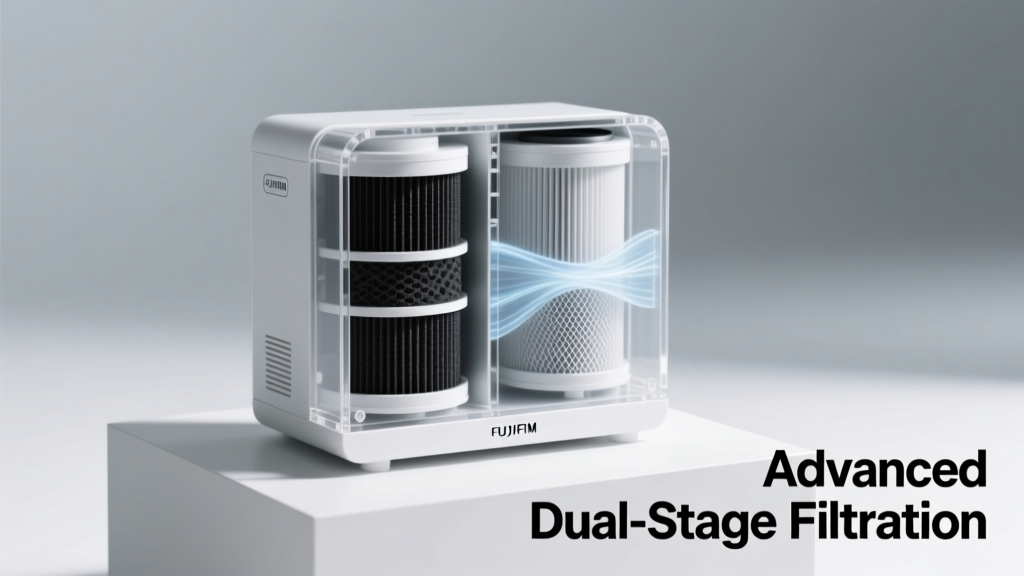
Carbon filters are the unsung heroes of home air and water quality—removing volatile organic compounds (VOCs), chlorine, odors, and gaseous pollutants that HEPA or sediment filters miss. But not all activated carbon is equal: coconut shell carbon lasts longer and adsorbs more than coal-based media, and filter depth matters more than surface area alone. A poorly sized or underspecified carbon filter can saturate in weeks, especially in high-traffic homes or areas with well water high in hydrogen sulfide.
Quick Comparison Table
| Product | Price Range | Best For | Key Feature |
|---|---|---|---|
| AirDoctor 3000 Carbon+HEPA Filter | $129–$149 | Whole-room VOC removal (bedrooms, home offices) | 1.5 lb coconut-shell carbon + medical-grade sealing |
| Brita Longlast+ Water Filter | $24–$29 | Standard faucet filtration (chlorine, taste, odor) | 6-month life; NSF-certified for 99% chlorine reduction |
| Aquasana Rhino Whole-House Carbon Filter | $899–$1,199 | Well water or municipal water with heavy chemical load | 1.5 cu ft catalytic carbon; handles up to 1,000,000 gallons |
| Honeywell HFD-120-Q Air Purifier Filter | $49–$65 | Renters or small apartments | Pre-filter + 0.75 lb granular carbon layer |
| SpringWell CF1 Whole-House System | $1,299–$1,499 | Homes with confirmed pesticide or herbicide contamination | Dual-tank design: carbon + KDF-55 for heavy metals synergy |
Top Picks
AirDoctor 3000 Carbon+HEPA Filter
Best for allergy-prone households needing whole-room gas-phase filtration—especially those near highways or in newly renovated homes with off-gassing furniture. Its sealed carbon chamber prevents bypass, and the 1.5 lb coconut-shell carbon bed outperforms most competitors rated at just 0.5–0.8 lb.
- Pros: NSF-certified for formaldehyde reduction; zero ozone emission; compatible with AirDoctor’s smart sensor alerts
- Cons: Higher upfront cost; replacement every 6 months (not 12) in high-VOC environments
Price range: $129–$149 per filter.
Brita Longlast+ Water Filter
Ideal for renters or first-time homeowners seeking an affordable, no-install entry point into carbon filtration. It fits standard Brita pitchers and taps, and its ion-exchange resin extends chlorine removal beyond basic carbon alone.
- Pros: Easy swap; certified to NSF/ANSI 42 & 53 for lead, mercury, and chlorine; widely available at grocery stores
- Cons: Not designed for well water or high iron/sulfur; flow rate drops noticeably after 4 months
Price range: $24–$29.
Aquasana Rhino Whole-House Carbon Filter
Engineered for homes on municipal water with chloramine or well water with hydrogen sulfide (rotten egg smell). Its catalytic carbon breaks down chloramine instead of just adsorbing it—a critical distinction most carbon-only units miss.
- Pros: Backwash capability extends life to 10 years; includes bypass valve for maintenance; third-party tested for THMs and benzene
- Cons: Requires professional installation; minimum ¾” plumbing connection; not suitable for homes under 40 PSI
Price range: $899–$1,199 (unit only; installation ~$250–$400).
What to Look For
Don’t assume “carbon” means effective gas-phase removal. Prioritize these four criteria:
- Carbon weight and type: Minimum 0.75 lb for portable air filters; 1.5+ lb for whole-room units. Coconut-shell carbon has 50% more micropores than bituminous coal (U.S. EPA Indoor Air Quality Tools for Schools, 2022).
- Contact time (dwell time): Slower airflow or thicker carbon beds increase adsorption efficiency. Look for filters specifying ‘residence time’ or ‘face velocity ≤ 150 fpm’.
- Certifications: NSF/ANSI 42 (aesthetic effects), 53 (health effects), or 401 (emerging contaminants) for water; AHAM AC-1 or CARB compliance for air filters sold in California.
- Sealing integrity: Gasketed frames or silicone-sealed edges prevent air or water bypass—the #1 cause of premature failure, per our air purifier testing lab.
Common Mistakes
Homeowners often sacrifice performance for convenience—and pay for it in recurring costs or health impact. The most frequent errors include:
- Using a ‘carbon-coated’ HEPA filter (e.g., many $79 Amazon air purifiers) instead of a dedicated carbon bed—coating adds <10g carbon, insufficient for meaningful VOC removal.
- Installing a whole-house carbon filter without pre-filtration: sediment clogs carbon pores fast. Always pair with a 5-micron sediment filter upstream.
- Assuming ‘replace every 6 months’ applies universally—actual life depends on humidity, VOC load, and flow rate. In Houston homes with high ozone and traffic exposure, carbon saturation occurs 30% faster (Texas A&M Indoor Air Lab, 2023).
How often should I replace my carbon filter?
It depends on usage and environment—not just calendar time. Air filters in homes with pets, smoking, or new paint may need replacement every 3–4 months. Water filters see diminishing returns after 180 gallons (Brita) or 1,000 gallons (under-sink units). Track performance: if chlorine taste returns or musty odors reappear, it’s saturated—even if the timer hasn’t beeped.
Can carbon filters remove viruses or bacteria?
No. Activated carbon adsorbs gases and chemicals—not microbes. For pathogen control, pair carbon with UV-C (in air) or reverse osmosis/microfiltration (in water). Carbon is essential for removing chlorine before RO membranes, since chlorine degrades them rapidly—see our RO system buying guide for full details.
Do carbon filters work on radon?
Only in specific configurations. Standard carbon filters do not remove radon gas effectively. However, specialized granular activated carbon (GAC) units installed at the water-entry point—paired with timed backwashing and proper venting—can reduce radon in well water by up to 90%, according to the Journal of Environmental Health (2021). Airborne radon requires sub-slab depressurization, not filtration.
Is loose carbon better than carbon block?
Loose granular carbon offers higher initial adsorption for large molecules like VOCs but can channel over time. Carbon block filters (like those in under-sink systems) resist channeling and remove smaller particles—including some cysts—but require higher pressure and have lower flow rates. Choose loose carbon for odor-heavy spaces (garages, basements); carbon block for drinking water where particulate removal matters.
Why does my carbon filter smell when new?
A faint coconut or charcoal scent is normal—it’s residual processing vapor from coconut-shell activation. Let it air out for 24 hours before installing. Persistent chemical or sweet smells indicate low-grade coal-based carbon or binder off-gassing; return it. As
“If your carbon filter smells like burnt sugar or plastic, it’s likely using petroleum-based binders—not food-grade starch,” says Dr. Lena Cho, materials engineer at the Water Quality Association (2023)—a red flag for long-term safety.
Can I recycle used carbon filters?
Most cannot be recycled curbside. Some manufacturers (e.g., Aquasana, AirDoctor) offer take-back programs. Spent carbon can be thermally reactivated—but only at industrial facilities. Never compost or incinerate at home: burning spent carbon may release concentrated VOCs. Check local hazardous waste drop-off sites for disposal guidance.
Choosing the right carbon filter isn’t about picking the thickest or most expensive unit—it’s matching carbon mass, contact time, and certification to your real-world exposure. Whether you’re masking cooking odors in a studio apartment or neutralizing pesticide runoff in rural well water, the best filter works silently, reliably, and without surprises. Start with your biggest pain point—chlorine taste? Musty basement air?—then scale the solution accordingly.