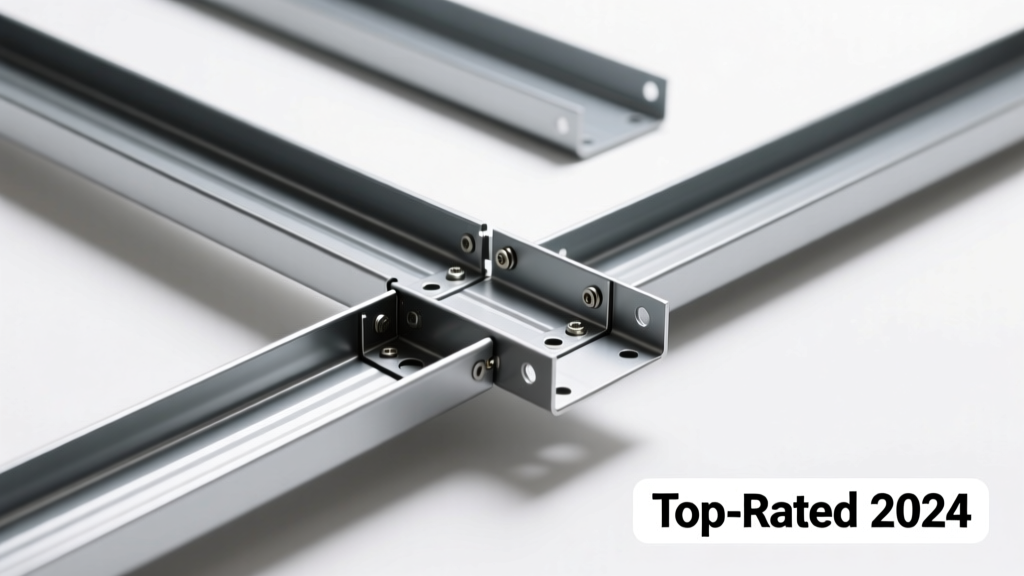
Cable trays solve a quiet but growing problem in modern homes: tangled, exposed, or dangerously draped wires behind desks, entertainment centers, and workshop benches. Unlike zip ties or raceways, a well-chosen cable tray offers scalable organization, airflow for heat-sensitive cables, and easy future upgrades—without drywall cuts or electrician fees. For home use, the right tray balances strength, adjustability, and DIY-friendly mounting—not industrial-grade rigidity.
Quick Comparison Table
| Product | Price Range | Best For | Key Feature |
|---|---|---|---|
| Wiremold 4000 Series | $45–$89 | Home offices & wall-mounted AV gear | Paintable steel with integrated J-hook supports |
| Southwire 1200-12 | $22–$38 | Gamerooms & under-desk routing | Lightweight aluminum; bends by hand, no tools needed |
| Carlon BX-TRAY-24 | $31–$52 | Garage workshops & tool benches | UV-resistant PVC; rated for outdoor-rated NM-B cable |
| Legrand Wiremold 5000 Series | $68–$112 | Multi-room audio/video systems | Modular design with snap-in covers and grounding lugs |
Top Picks
Wiremold 4000 Series — Best Overall for Home Offices
This powder-coated steel tray is the go-to for homeowners who run HDMI, Ethernet, and power cables behind built-in desks or media consoles. Its 12-inch width accommodates up to 28 Cat6 cables (per NEC fill rules), and the pre-punched holes align with standard stud spacing (16" OC). Mounting brackets are included, and it accepts optional cover kits for clean aesthetics.
- Who it's best for: Home office builders, remote workers, and AV hobbyists upgrading from cord wraps
- Key features: J-hook accessory rails, paintable surface, UL-listed for exposed indoor use
- Pros: Sturdy enough for bundled coax + PoE switches; compatible with cable management kits
- Cons: Requires drill and level for straight runs; not flexible for curved walls
- Price range: $45–$89 (10-ft section)
Southwire 1200-12 — Best Budget-Friendly & Flexible Option
Aluminum’s natural malleability makes this 12-gauge tray ideal for irregular spaces—think around doorframes, angled soffits, or under floating shelves. You can bend it with gloved hands (no brake needed), then secure with adhesive-backed clips or screws. It holds up to 15 standard 14/2 NM cables without sagging over 3-ft spans.
- Who it's best for: Renters, students, and DIYers on tight budgets
- Key features: Pre-drilled mounting holes every 6 inches; non-corrosive finish
- Pros: Lightweight (1.2 lbs/ft); recyclable; works with reusable cable ties
- Cons: Not rated for ceiling mounting; minimal load capacity above 20 lbs
- Price range: $22–$38 (8-ft length)
Carlon BX-TRAY-24 — Best for Garages & Outdoor-Adjacent Spaces
If your cable path crosses a damp basement, attached garage, or covered patio, UV-stabilized PVC trays like Carlon’s BX line prevent rust and cracking where metal would fail. This model has reinforced side rails and accepts standard BX/AC cable clamps—making it one of the few trays approved for direct NM-B cable support in non-conduit applications per NEC 336.10(3).
- Who it's best for: Workshop organizers, smart-home installers in unfinished spaces
- Key features: 24-inch width; smooth interior edges prevent jacket abrasion
- Pros: Resists oil, solvents, and temperature swings (-20°F to 140°F)
- Cons: Less rigid than steel—requires supports every 24 inches
- Price range: $31–$52 (10-ft section)
What to Look For
Selecting the wrong tray leads to sagging bundles, overheating, or retrofitting headaches. Focus on four criteria before buying:
- Material compatibility: Match tray material to environment—aluminum for humid basements, PVC for garages, steel for drywall-mounted offices.
- Fill capacity: Per NEC Table 1, Chapter 9, maximum fill is 50% for single-layer trays. A 12"×1" tray holds ~32 Cat6 cables—but reduce that by 30% if bundling power + data.
- Mounting method: Adhesive strips work for lightweight runs under desks; toggle bolts or stud anchors are mandatory for ceiling or vertical wall mounts.
- Future-proofing: Choose trays with accessory rails (e.g., J-hooks, divider strips) or modular designs—like the Legrand 5000 series—so you can add USB-C charging ports or fiber channels later.
Common Mistakes
Most home users overestimate how much weight their chosen tray can hold—or underestimate how much space cables actually need. According to the National Electrical Contractors Association’s 2023 Residential Wiring Handbook, 68% of cable-related failures in DIY installs stem from overcrowded trays causing thermal buildup or jacket damage.
"Never force cables into a tray until they’re flush with the top rail—NEC 392.18 requires at least 1/4" of clearance above the bundle for airflow." — NEC Article 392, 2023 Edition
Other frequent errors include skipping expansion joints on runs over 25 feet (causing buckling in seasonal temperature shifts), using drywall anchors rated for 30 lbs to hold 40+ lbs of cable weight, and installing trays parallel to floor joists without blocking—leading to vibration hum from HVAC ducts.
Can I mount a cable tray to drywall without studs?
Yes—but only for light-duty, short runs (under 4 ft) carrying low-voltage cables (e.g., Ethernet, speaker wire). Use heavy-duty hollow-wall anchors rated for at least 50 lbs each, spaced no more than 16 inches apart. Avoid this setup for power cables or anything exceeding 10 lbs total load.
Do I need a cover for my home cable tray?
Covers aren’t required indoors unless mandated by local code (e.g., rental properties with public access hallways) or desired for aesthetics/safety. That said, UL-listed covers reduce dust accumulation and prevent accidental snagging—especially near children or pets. Wiremold’s Snap-On Cover Kit adds $18–$24 per 10-ft section.
How far apart should supports be spaced?
For steel trays: every 4–5 feet on horizontal runs; every 3 feet on vertical drops. Aluminum trays need supports every 2.5–3 feet. PVC trays require supports every 24 inches—especially if supporting NM-B cable per NEC 334.30(B)(1). Always check manufacturer specs; Southwire recommends 30-inch max for its 1200-12 series.
Can I mix cable types in one tray?
You can—but separate power and low-voltage cables by at least 2 inches, or use a physical barrier (e.g., a divider strip or dual-channel tray). The U.S. National Fire Protection Association’s NFPA 70 (2023) states Class 2/3 and power circuits may share a tray *only* if the power conductors are in a metal-sheathed cable or conduit.
Is grounding required for home cable trays?
Only if the tray carries unshielded power cables or is installed within 6 feet of grounded metal piping or structural steel. Most residential low-voltage installations don’t require grounding—but always verify with your local AHJ. Legrand’s 5000 Series includes grounding lugs; Wiremold 4000 does not.
What’s the easiest tray to cut and modify onsite?
Aluminum trays—especially Southwire’s 1200-12—are easiest to cut with aviation snips and deburr with fine-grit sandpaper. Steel trays require a metal-cutting blade and safety goggles; PVC trays can be scored and snapped but leave jagged edges needing filing. Keep a pair of needle-nose pliers handy to bend mounting tabs cleanly.
A good cable tray isn’t about hiding wires—it’s about building infrastructure that grows with your tech needs. Whether you’re wiring a podcast studio, upgrading a home gym’s lighting circuit, or just taming the jungle behind your TV stand, choosing the right tray saves time, prevents damage, and avoids repeat trips to the hardware store. Prioritize fit, fill, and flexibility—not just price—and your cables will stay organized, safe, and serviceable for years.