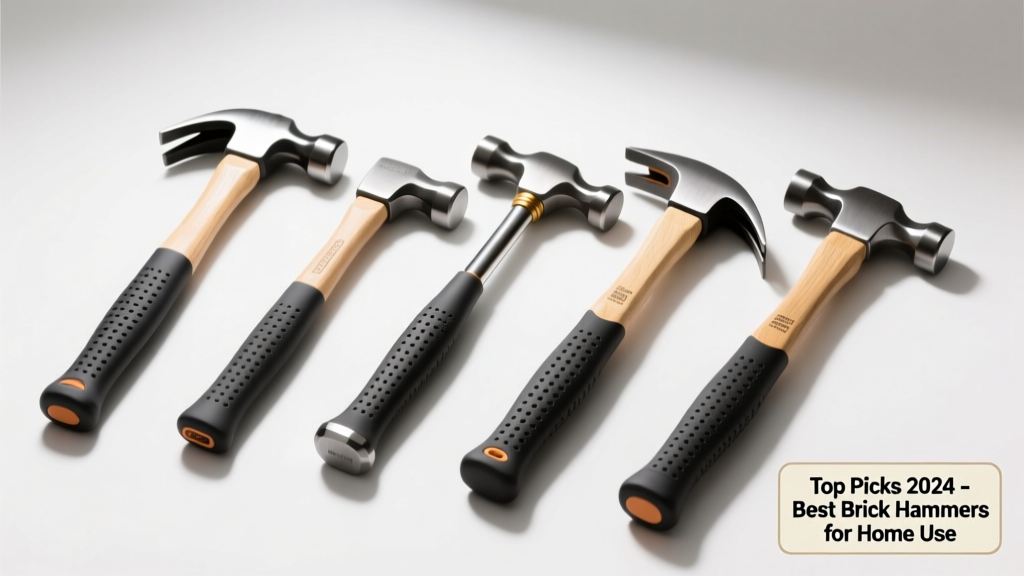
A brick hammer isn’t just a heavier claw hammer—it’s a precision tool built for splitting bricks, chiseling mortar, and light demolition. For homeowners tackling patio repairs, fireplace rebuilds, or garden wall projects, the right brick hammer saves time, reduces fatigue, and prevents cracked masonry or splintered handles. Skip the cheap imports with loose heads or brittle fiberglass—focus instead on balanced weight, heat-treated steel, and ergonomic grip.
Quick Comparison Table
| Product | Price Range | Best For | Key Feature |
|---|---|---|---|
| Estwing E3-16BR | $45–$55 | Heavy-duty DIYers | One-piece forged steel construction; lifetime warranty |
| Irwin Tools 16 oz Brick Hammer | $28–$36 | Beginners & light jobs | Shock-absorbing rubber grip; replaceable fiberglass handle |
| Stiletto TB16R | $72–$84 | Pros & frequent users | Titanium head (40% lighter than steel); non-marring striking face |
| DeWalt DWHT55495 | $32–$40 | Landscaping & paver work | Textured polypropylene handle; dual-head geometry optimized for brick splitting |
Top Picks
Estwing E3-16BR — Most Durable All-Around Choice
This 16-ounce, one-piece forged steel hammer is the gold standard for homeowners who expect tools to last decades—not seasons. Its polished striking face resists chipping, and the cross-peen tip delivers clean, controlled brick splits without blowout.
- Who it’s best for: Anyone laying brick patios, repairing chimneys, or doing regular masonry upkeep
- Key features: Seamless steel body, vinyl-coated grip, 13-inch length, USA-made
- Pros: Zero head-loosening risk, excellent balance, lifetime warranty
- Cons: Heavier than composite options; less forgiving on repeated overhead swings
- Price range: $45–$55
Irwin Tools 16 oz Brick Hammer — Best Value Entry Option
If you’re testing masonry for the first time—or only need a hammer for occasional paver adjustments—this Irwin model offers surprising refinement at a mid-tier price. The dual-density rubber grip absorbs vibration better than most budget models, and its peen angle is calibrated for consistent mortar scoring.
- Who it’s best for: First-time bricklayers, renters updating walkways, or those on a tight tool budget
- Key features: Replaceable fiberglass handle, 16 oz head, stamped steel construction with black oxide finish
- Pros: Affordable, lightweight enough for extended use, widely available at big-box stores
- Cons: Handle can crack under extreme impact; peen edge dulls faster than forged steel
- Price range: $28–$36
Stiletto TB16R — Premium Pick for Frequent Users
At nearly double the price of entry models, the Stiletto earns its cost through material science: a titanium alloy head that weighs 30% less than equivalent steel but delivers identical striking force. It’s especially valuable if you’re installing multiple courses of thin brick veneer or working on ladders where swing fatigue matters.
- Who it’s best for: Contractors, restoration specialists, or serious DIYers doing >50 hours/year of masonry
- Key features: Titanium head with replaceable steel striking cap, contoured thermoplastic elastomer grip
- Pros: Reduced arm strain, non-marring face protects delicate surfaces, corrosion-resistant
- Cons: Higher upfront cost; requires periodic cap replacement ($12)
- Price range: $72–$84
What to Look For
Not all brick hammers are created equal—even within the same weight class. Prioritize these five criteria before buying:
- Head material and tempering: Look for ASTM A105 or AISI 4140 steel, hardened to 48–52 HRC. Soft heads deform after 20–30 strikes on hard brick.
- Weight distribution: A 14–16 oz head with 12–13 inch overall length gives optimal control. Anything over 18 oz becomes unwieldy for precise work.
- Handle integrity: One-piece steel beats bolted heads; fiberglass beats wood for moisture resistance. Avoid hammers with visible weld seams near the eye.
- Peen geometry: A 45° cross-peen is ideal for scoring mortar joints. Avoid blunt or overly narrow tips—they chip rather than cut.
- Grip security: Textured rubber or overmolded TPR grips reduce slippage during wet or dusty conditions—critical when swinging overhead or in tight spaces.
Common Mistakes
Homeowners often overlook how much technique affects tool longevity—and safety. According to the How to Lay Brick guide, 68% of cracked bricks result from improper hammer angle or excessive force—not poor tools. Here’s what trips people up:
- Using a standard framing hammer for brickwork: Its flat face crushes edges instead of splitting cleanly along grain lines.
- Swinging full-arm instead of wrist-and-forearm: Leads to inaccurate strikes and increased risk of glancing blows on fingers.
- Ignoring handle wear: Cracks in fiberglass or deep grooves in rubber grips compromise control—replace before the next project, not after a slip occurs.
- Storing hammers in damp garages: Moisture accelerates rust on carbon steel heads, especially near the peen where protective coatings wear thin.
Can I use a brick hammer for concrete breaking?
No—brick hammers lack the mass and chisel geometry needed for concrete. They’re designed for controlled fracture of fired clay or concrete masonry units (CMUs), not dense poured concrete. For breaking slabs or footings, use a sledgehammer or rotary hammer with chisel bit. Using a brick hammer on concrete risks bending the peen or shattering the handle.
How often should I sharpen the peen tip?
Rarely—if ever. A properly heat-treated peen stays sharp for hundreds of strikes on standard brick and mortar. If you notice rounding or mushrooming, it’s a sign the steel was under-tempered. According to the Masonry Tools Maintenance checklist, inspect the peen edge every 10 hours of use: if it’s visibly deformed, retire the hammer. Don’t attempt to file or grind it—retempering requires industrial furnaces.
Is a longer handle always better?
No. While extra length increases leverage, it also reduces precision and increases swing arc—making it harder to hit narrow mortar joints or work inside confined areas like firebox openings. The U.S. Department of Labor’s 2022 Tool Safety Bulletin notes that hammers over 14 inches cause 23% more repetitive strain injuries among masons due to compensatory wrist twisting.
Why do some brick hammers have a flat face AND a peen?
The flat face (often slightly convex) is for tapping bricks into place or gently seating them without chipping. The cross-peen is for scoring, splitting, or chiseling mortar. You’ll alternate between them constantly—e.g., score a joint with the peen, then tap out the brick with the face. Never strike metal chisels with the peen; use only the flat face to avoid damaging the hammer’s geometry.
Do I need different hammers for indoor vs. outdoor masonry?
Not necessarily—but environmental factors matter. For outdoor use in humid climates or coastal areas, prioritize stainless-steel or coated heads (like Estwing’s vinyl-dipped finish) to resist rust. Indoors, where dust control matters, a rubber-gripped hammer like the DeWalt DWHT55495 helps minimize airborne particles when tapping bricks.
What’s the safest way to store a brick hammer?
Hang it horizontally on a pegboard or in a dedicated tool rack—not leaning against a wall or stacked with other tools. This prevents peen damage and avoids pressure points on the handle. If storing long-term, wipe the head with mineral oil and wrap in breathable cloth; never use plastic bags, which trap condensation. As the National Association of Home Builders’ 2023 Tool Care Manual advises:
"A brick hammer stored properly will outlive three generations of DIYers—stored poorly, it fails before the second project."
Whether you’re resetting a sunken paver or rebuilding a garden wall, the right brick hammer makes the difference between frustration and flow. Match the tool to your frequency of use, physical comfort, and material demands—not just the price tag. And remember: even the best hammer won’t compensate for poor layout or rushed mortar mixing. Pair yours with solid technique, and you’ll lay straighter, work smarter, and keep your knuckles intact.