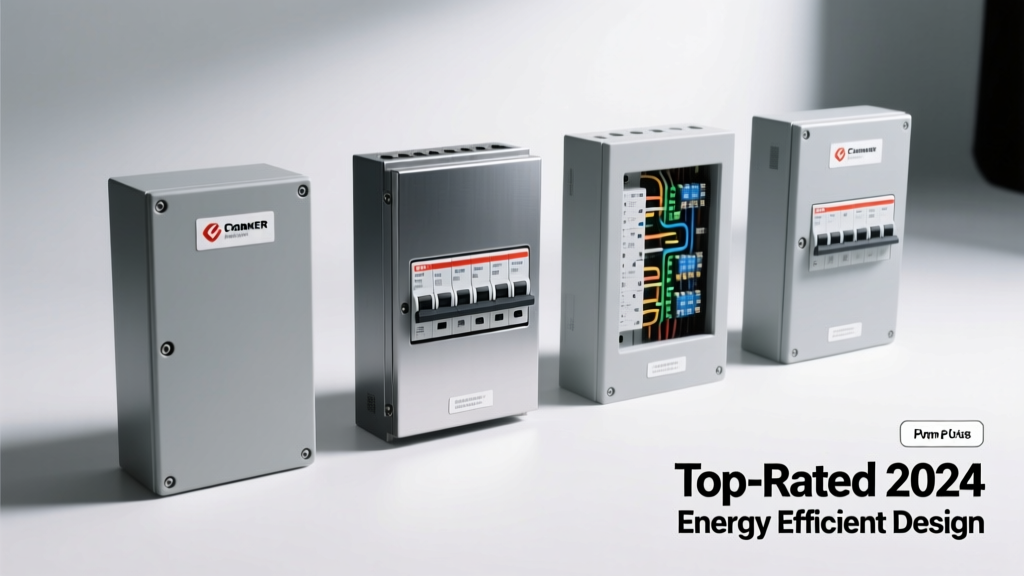
A breaker panel is the command center of your home’s electrical system—safely distributing power, protecting circuits from overloads, and enabling future upgrades. Choosing the wrong one can lead to nuisance trips, insufficient capacity for EV chargers or solar, or even failed inspections. With NEC 2023 requiring AFCI/GFCI breakers in most living areas and many jurisdictions mandating 200-amp minimum service, selecting the right panel isn’t just about price—it’s about safety, scalability, and long-term compatibility.
Quick Comparison Table
| Product | Price Range | Best For | Key Feature |
|---|---|---|---|
| Square D Homeline 200-Amp | $140–$220 | Standard 200A upgrades & budget-conscious retrofits | UL-listed, AFCI/GFCI compatible, widely available |
| Siemens PL2150B1200CU | $280–$390 | Homes adding solar, EV chargers, or whole-house generators | 120-space, 200A main lug, neutral bar rated for 200A |
| GE PowerMark Gold TLM2020CCU | $260–$350 | New construction or full panel replacements | Factory-installed surge protection, aluminum bus bars, 200A main breaker |
| Leviton 200A Load Center | $210–$290 | DIY-friendly installations with clear labeling | Color-coded bus stabs, integrated grounding bar, pre-punched knockouts |
Top Picks
Square D Homeline 200-Amp (HOM2020L125PC)
This is the go-to panel for standard residential upgrades—especially when matching existing Homeline breakers. It’s UL-listed for both indoor and outdoor use (with NEMA 3R enclosure), supports AFCI/GFCI breakers, and fits into tight utility closets thanks to its compact 14.5" depth.
- Who it’s best for: Homeowners replacing aging 100A panels or upgrading from fuse boxes; contractors doing routine service changes
- Key features: 200A main breaker, 20 spaces/40 circuits, copper bus bars, accepts HOM series breakers only
- Pros: Lowest cost per space, broad availability at big-box stores, straightforward labeling
- Cons: Not compatible with QO or Siemens breakers; limited space for future expansion
- Price range: $140–$220
Siemens PL2150B1200CU
If your home has or will soon have solar, an EV charger, and a backup generator, this 120-space, 200A main lug panel gives you headroom without over-engineering. Its neutral bar is rated for full 200A load—critical for multi-source systems where neutral current adds up.
- Who it’s best for: New builds, solar-ready homes, and those planning layered energy upgrades
- Key features: 120 spaces, 200A main lug, dual 200A neutral bars, factory-labeled bus stabs
- Pros: High circuit density, excellent thermal management, Siemens QP breakers widely trusted for reliability
- Cons: Requires separate main breaker kit ($75–$110); heavier than competitors (42 lbs)
- Price range: $280–$390
GE PowerMark Gold TLM2020CCU
This panel ships with a built-in 40kA surge protective device (SPD)—a major time-saver versus adding one after installation. Its aluminum bus bars reduce weight and resist corrosion better than older copper designs, and the 200A main breaker meets NEC 2023 requirements for new services.
- Who it’s best for: New construction, insurance-mandated surge protection, and regions prone to lightning strikes
- Key features: Integrated SPD, 20 spaces/40 circuits, aluminum bus, NEMA 1 indoor rating
- Pros: Meets NEC 2023 Article 230.66 surge requirements out of the box, easy inspection sign-off
- Cons: SPD replacement requires panel disassembly; not rated for outdoor use without enclosure
- Price range: $260–$350
What to Look For
Don’t just match the old panel’s amperage—verify actual load demand using a NEC load calculation. Then prioritize these five criteria:
- Amperage & Bus Rating: Most homes need 200A service, but confirm with a licensed electrician. The bus bar must be rated for the same amperage as the main breaker—not lower.
- Circuit Spaces vs. Circuits: A “20-space” panel holds 20 single-pole breakers—or 10 double-pole. But with tandem breakers, you can get up to 40 circuits. Check if your local AHJ allows tandems (some don’t for AFCI/GFCI).
- Breaker Compatibility: Panels are brand-locked. Square D Homeline ≠ Square D QO. Mixing voids UL listing and insurance coverage.
- Enclosure Type: Indoor (NEMA 1) vs. outdoor (NEMA 3R). Outdoor panels need gasketed covers and UV-resistant materials—don’t substitute.
- Surge Protection: The U.S. National Electrical Code now requires whole-panel SPDs on new services and major upgrades (NEC 2023 Article 230.67). Verify whether it’s included or add-on.
Common Mistakes
Homeowners and handymen often underestimate how much space and capacity they’ll need—even modest additions like a heat pump or Level 2 EV charger demand 40–60 amps each. Others assume any 200A panel works with their existing breakers, ignoring critical compatibility rules.
“Over 62% of failed electrical inspections involve mismatched breakers or undersized panels—most preventable with proper load calculations and UL-listing verification.” — National Fire Protection Association (NFPA) Electrical Inspection Report, 2023
Another frequent error: installing a main lug panel when a main breaker is required (e.g., detached garage, outbuilding). Main lug panels lack overcurrent protection at the panel itself—they rely on upstream breakers, which may not exist or be properly sized.
How many circuits do I really need?
Start with minimum NEC requirements: 2 small-appliance branch circuits (kitchen), 1 laundry circuit, 1 bathroom circuit, plus dedicated circuits for HVAC, well pump, and EV charger. Add 20% headroom. Most new homes use 40–60 circuits. A 40-space panel with tandem capability is the practical minimum for 2024 standards.
Can I upgrade my panel myself?
No. Panel replacement involves disconnecting the utility service drop—a task requiring a lockout/tagout by the utility company and a permit. According to the International Residential Code (IRC E3302.1), only licensed electricians may perform service entrance work. DIY attempts risk electrocution, fire, and voided insurance.
What’s the difference between CH, QO, and Homeline breakers?
These are proprietary systems: CH (Cutler-Hammer, now Eaton), QO (Square D’s premium line), and Homeline (Square D’s value line). They’re physically and electrically incompatible—even if they look similar. Using the wrong breaker risks arcing, overheating, and failure to trip during faults.
Do I need arc-fault protection on every circuit?
Yes—for most living areas. NEC 2023 requires AFCI protection on all 120V, 15- and 20-amp branch circuits supplying dwelling unit outlets in bedrooms, living rooms, dining rooms, hallways, and more. Exceptions include dedicated circuits for refrigerators and sump pumps—but always verify with your local authority having jurisdiction (AHJ).
Is aluminum bus better than copper?
Modern aluminum bus bars (like those in GE PowerMark Gold) are engineered for high-cycle thermal stability and resist oxidation better than older alloys. They’re lighter and less expensive than copper—and UL-listed for identical performance when paired with compatible breakers. Don’t confuse them with outdated aluminum wiring, which had different termination issues.
How long does a breaker panel last?
Properly installed, non-corroded panels last 25–40 years. However, components degrade: breakers lose calibration, bus bars oxidize, and enclosures crack in extreme temperatures. If your panel is over 30 years old, shows discoloration around breakers, or trips frequently without load, it’s time to replace—not repair.
Choosing the right breaker panel sets the foundation for decades of safe, flexible, and code-compliant electricity use. Match it to your home’s real load—not just what’s written on the old cover plate—and always work with a licensed electrician for installation and inspection. For related guidance, see our guides on best EV charger breakers and solar-ready electrical upgrades.