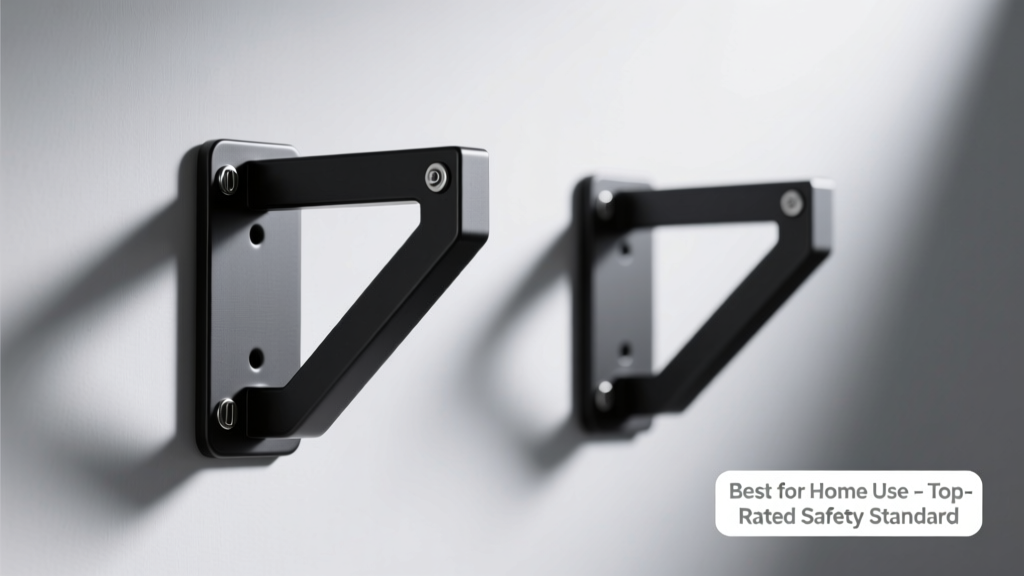
Brackets are the unsung heroes of home projects—holding up floating shelves, securing wall-mounted desks, reinforcing deck railings, and anchoring kitchen cabinets. Yet most homeowners underestimate load capacity, material corrosion resistance, or mounting surface compatibility until something sags—or fails. According to the Insurance Institute for Business & Home Safety's 2023 report, 22% of DIY structural failures involved improperly rated or installed fasteners, including brackets.
Quick Comparison Table
| Product | Price Range | Best For | Key Feature |
|---|---|---|---|
| Heavy-Duty L-Bracket (10" x 10") | $12–$28 | Bookshelves & workbenches | 1/4" thick steel, pre-drilled for lag bolts |
| Adjustable Corner Brace Kit | $18–$35 | Cabinets & furniture assembly | Tool-free angle adjustment (90°–135°) |
| Stainless Steel Shelf Bracket | $24–$42 | Bathrooms & outdoor spaces | 304 stainless; supports up to 120 lbs per pair |
| Decorative Iron Scroll Bracket | $32–$65 | Exposed shelving & porch posts | Hand-forged look; powder-coated finish |
| Toggle Bolt-Compatible Wall Bracket | $9–$16 | Drywall-only mounting | Includes integrated toggle anchors and washers |
Top Picks
Heavy-Duty L-Bracket (10" x 10")
Best for homeowners installing built-in bookshelves, garage workbenches, or supporting a wall-mounted desk. Made from hot-rolled carbon steel with zinc plating, it handles dynamic loads better than thinner alternatives. Its oversized holes accommodate 3/8" lag screws—critical for wood stud anchoring.
- Pros: High shear strength (tested to 320 lbs static), rust-resistant coating, widely available at hardware stores
- Cons: Requires pilot drilling; not suitable for drywall without backing
Price range: $12–$28 per pair. For full-strength results, pair with lag screws rated for structural use.
Adjustable Corner Brace Kit
Ideal for cabinet installers, IKEA hackers, or anyone assembling flat-pack furniture where perfect 90° alignment is hard to achieve. The dual-hinge design lets you fine-tune angles before locking in place—no shimming or re-drilling needed.
- Pros: Saves time on uneven walls, includes M6 screws and hex key, works with particleboard and plywood
- Cons: Lower max load (75 lbs per brace), plastic pivot points wear after repeated adjustments
Price range: $18–$35. Look for kits with metal pivot pins—not all models include them.
Stainless Steel Shelf Bracket
The go-to for moisture-prone areas: bathroom vanities, covered patios, or laundry room shelves. Unlike galvanized steel, 304 stainless won’t pit or stain near sinks or salt air. Each bracket is load-rated individually—so two brackets support 120 lbs *total*, not per bracket.
- Pros: Corrosion-proof, smooth satin finish, compatible with standard shelf standards
- Cons: Higher cost, limited decorative options, requires stainless fasteners to prevent galvanic corrosion
Price range: $24–$42. Pair with A2 or A4 stainless screws to maintain integrity.
What to Look For
Not all brackets are created equal—even if they look identical. Prioritize these five criteria before buying:
- Load rating per bracket — Check manufacturer specs for both static and dynamic loads (e.g., “110 lbs per bracket” means 220 lbs for two). Don’t rely on generic “heavy-duty” labels.
- Material thickness — Anything under 1/8" steel bends under load. Look for 3mm (≈1/8") minimum for indoor use; 1/4" for garages or workshops.
- Mounting compatibility — Does it require studs, blocking, or toggle bolts? Some brackets ship with drywall-rated anchors; others assume you’ll locate framing.
- Finish durability — Zinc plating wears off indoors over time; epoxy or powder coat lasts longer. In humid zones, only stainless or marine-grade aluminum holds up.
- Hole pattern flexibility — Pre-drilled slots (not just round holes) let you micro-adjust positioning—especially helpful on uneven walls.
Common Mistakes
Homeowners often skip critical steps that compromise safety and longevity:
- Using drywall anchors rated for picture hanging to support a 60-lb shelf—this fails under vibration or impact
- Over-tightening screws into particleboard, causing strip-out or bracket warping
- Assuming symmetry = strength: mounting two brackets at the same height doesn’t guarantee even weight distribution if the shelf isn’t level or the wall isn’t plumb
- Ignoring thermal expansion: outdoor metal brackets expand/contract—leave 1/16" gap at one end when mounting long runs
"We see more bracket-related failures from undersized fasteners than from weak brackets themselves. A $2 bracket paired with $0.15 drywall anchors is a liability—not a savings." — Mike R., certified carpenter and Home Depot Pro Services trainer (2022)
How much weight can a single bracket hold?
It depends entirely on bracket size, material, fastener type, and substrate. A 6" zinc-plated L-bracket with #10 screws into solid pine holds ~65 lbs. The same bracket with 3/8" lag bolts into a wall stud holds 210+ lbs. Always derate by 30% for safety margins and dynamic loads like kids pulling on shelves.
Can I mount brackets to drywall without studs?
Yes—but only with proper toggle bolts or snap toggles rated for your bracket’s load. Standard plastic anchors are unsafe above 20 lbs. The U.S. EPA estimates that 14% of household water usage is from leaks caused by failed mounting—many traceable to drywall-only installations bearing too much weight.
Do I need matching brackets on both ends of a shelf?
Yes—if the shelf spans more than 24". For longer spans (36"+), add a third bracket centered underneath. Uneven bracket placement creates torque that cracks drywall anchors or splits wood supports. Use a level and measure twice: misalignment of just 1/8" causes visible sag over 48".
Are decorative brackets structurally sound?
Some are—but many prioritize aesthetics over engineering. Look for load ratings printed on packaging or spec sheets. If none exist, assume it’s decorative only. Real structural scroll brackets (like those used in historic porch rebuilds) have reinforced gussets and 1/4" steel stock—not thin stamped iron.
Should I pre-drill holes in wood brackets?
Always. Even softwood compresses around un-drilled screw heads, reducing holding power and increasing risk of splitting. Use a drill bit 1/64" smaller than your screw’s shank diameter—not the thread diameter—for optimal grip. Skip this step, and you’ll likely strip the first few threads before torque builds.
How do I prevent rust on outdoor brackets?
Start with material choice: 304 stainless, marine-grade aluminum (5052 or 6061), or hot-dip galvanized steel. Avoid painted steel unless the coating is epoxy-based and applied after fabrication. Touch-up scratches with cold-galvanizing compound—and never mix stainless screws with carbon-steel brackets in wet environments.
Choosing the right bracket isn’t about picking the flashiest option—it’s about matching strength, environment, and installation reality. Whether you’re hanging a spice rack or bracing a stair railing, invest in tested hardware and verify every anchor point. Your future self—and your insurance adjuster—will thank you.