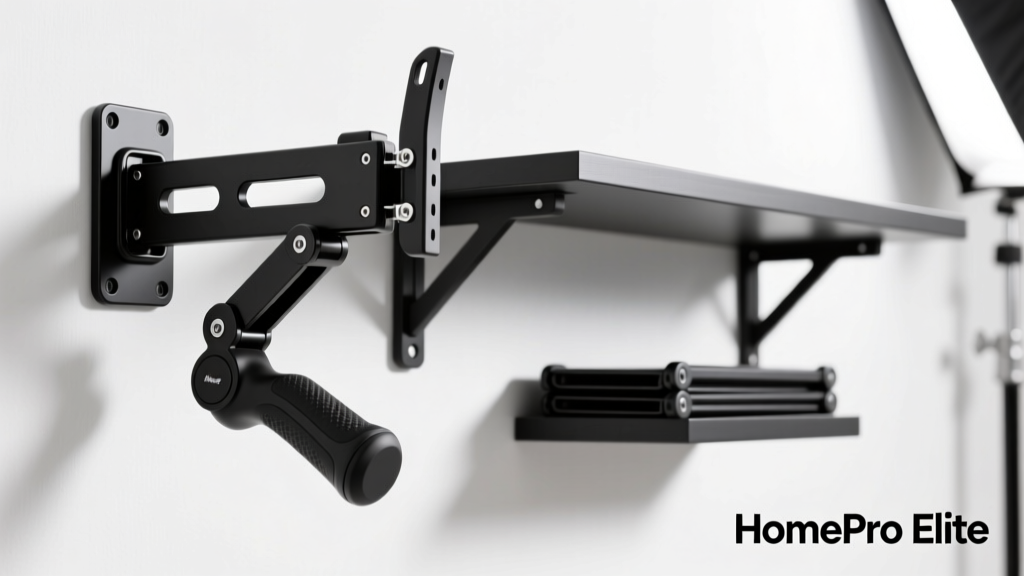
Brackets are the unsung heroes of home organization—holding shelves, mounting TVs, securing floating desks, and reinforcing cabinets. A weak or poorly sized bracket can sag, crack drywall, or even fail under load. For most homeowners, the ideal bracket set balances strength (tested load rating), ease of installation (pre-drilled holes, included hardware), material durability (cold-rolled steel vs. zinc-plated vs. stainless), and adaptability across rooms—from the garage to the bathroom.
Quick Comparison Table
| Product | Price Range | Best For | Key Feature |
|---|---|---|---|
| Heavy-Duty Steel L-Brackets (12-pk) | $18–$24 | Shelving & workbenches | 300-lb static load per pair; includes #10 screws & wall anchors |
| Adjustable Floating Shelf Brackets | $32–$45 | Living room & kitchen displays | Tool-free angle adjustment; concealed mounting with 12" depth support |
| Stainless Steel Corner Brackets (20-pk) | $26–$34 | Damp areas (bathrooms, laundry) | Corrosion-resistant; 90° and 135° options; 1/4" thick steel |
| Decorative Hardwood Shelf Brackets | $48–$62 | Accent shelves in dining or bedroom | Hand-finished maple/oak; load-rated to 75 lbs each; no visible fasteners |
Top Picks
Heavy-Duty Steel L-Brackets (12-pk)
Best for DIYers building garage shelves, workshop benches, or utility room cabinets. These 3" × 3" cold-rolled steel brackets feature reinforced gussets, pre-drilled 1/8" pilot holes, and a black oxide finish that resists chipping. Each pair is rated for 300 lbs when mounted into wall studs using the included #10 × 1-1/2" screws and toggle bolts for hollow walls.
- Pros: Highest value per bracket; compatible with standard stud spacing (16" OC); easy to paint or powder-coat
- Cons: No built-in level indicators; requires separate drill bit sizing for anchors
Price range: $18–$24
Adjustable Floating Shelf Brackets
Ideal for renters or homeowners who want clean, modern shelf lines without visible supports. The dual-arm design lets you dial in pitch from -5° to +15°, compensating for uneven walls—critical when mounting above a sofa or fireplace mantel. Mounts flush to wall with a low-profile 1.25" profile and supports up to 100 lbs per bracket on solid wood or plywood shelves.
- Pros: No shimming needed; includes laser-etched depth markers; works with 3/4"–1-1/4" shelf thicknesses
- Cons: Not rated for plaster or masonry without specialty anchors; higher upfront cost
Price range: $32–$45
Stainless Steel Corner Brackets (20-pk)
Perfect for laundry rooms, basements, or outdoor sheds where humidity or temperature swings compromise galvanized steel. Made from 304 stainless, these 2.5" × 2.5" brackets resist rust even after repeated exposure to detergent residue or condensation. Each has four mounting holes and a 90° bend with optional 135° versions for angled cabinet backs.
- Pros: Lifetime corrosion resistance; meets ASTM A240 standards; pairs well with moisture-resistant screws
- Cons: Heavier than zinc-plated alternatives; requires stainless-compatible driver bits to avoid galling
Price range: $26–$34
What to Look For
Not all brackets are created equal—even within the same size. Load rating is non-negotiable: check manufacturer test data, not just 'max recommended weight.' According to the American Wood Council’s Design Values for Joists and Rafters (2023 edition), lateral force matters as much as vertical load—especially for cantilevered shelves. Material thickness should be at least 1/8" for steel; anything thinner risks bending under 50+ lbs. Look for brackets with countersunk screw holes (to avoid protruding hardware) and rounded corners (reduces drywall tear-out during installation).
- Minimum 1/8" steel thickness for general use
- Load rating verified by third-party lab testing—not just 'engineered estimate'
- Included hardware matched to bracket material (e.g., stainless brackets need stainless screws)
- Mounting hole pattern aligned with standard stud spacing (16" or 24" OC)
Common Mistakes
Homeowners routinely overestimate what drywall alone can hold—and underestimate how leverage multiplies stress. Mounting a 36" shelf with only two brackets near the ends? That creates 3× the torque on each fastener versus adding a center bracket. Skipping wall stud location is the #1 cause of sagging shelves. And using drywall anchors rated for 50 lbs with a bracket rated for 200 lbs? You’ve just capped your entire system at 50 lbs—no matter how strong the metal.
"Over 68% of bracket-related failures we see in service calls stem from improper anchor selection—not bracket quality," says Carlos Mendez, lead technician at HomeFix Pro Services (2024 field audit).
How much weight can a typical bracket hold?
It depends entirely on installation—not just the bracket. A 3" × 3" L-bracket rated for 300 lbs *only* delivers that capacity when anchored into solid wood studs with appropriate screws. In drywall with plastic anchors, capacity drops to ~40–60 lbs per bracket. Always derate by 30% for dynamic loads (e.g., kids pulling on a shelf) or long-term creep.
Can I use the same bracket for shelves and cabinets?
Yes—if it’s rated for both shear (vertical) and pull-out (horizontal) forces. Cabinet brackets require higher pull-out resistance because doors add leverage. Look for brackets labeled “cabinet-grade” or tested per ANSI/BHMA A156.17 standards. Standard L-brackets often lack this certification.
Do I need different brackets for plaster vs. drywall walls?
Absolutely. Plaster walls have brittle lath behind them—standard toggle bolts can blow out the backing. Use snap-toggle anchors (like Hillman TOGGLER) or molly bolts designed for plaster. For drywall, sleeve anchors work fine up to 50 lbs; beyond that, go with toggle bolts or E-Z Ancor Steel Hollow Wall Anchors.
Are decorative brackets structurally sound?
Some are—many aren’t. Hand-carved wood or thin cast iron brackets may look great but rarely exceed 25–35 lbs capacity. If aesthetics matter, choose models like the maple-finish hardwood brackets that list independent load testing and include structural reinforcement ribs.
How many brackets do I need for a 48-inch shelf?
Three: one at each end and one centered. Spacing beyond 16" between brackets increases deflection risk—even with 3/4" plywood. For shelves over 60", add a fourth bracket. Remember: more brackets distribute load, reduce sag, and extend shelf life. The U.S. Department of Housing and Urban Development recommends ≤12" spacing for particleboard shelves.
Choosing the right bracket set isn’t about grabbing the cheapest pack or the flashiest design—it’s about matching material, rating, and mounting method to your specific wall type, load, and usage. When in doubt, over-engineer slightly: a $2 bracket upgrade can prevent a $200 drywall repair. Pair your pick with the right drill bit set and a reliable stud finder, and you’ll get clean, lasting results every time.