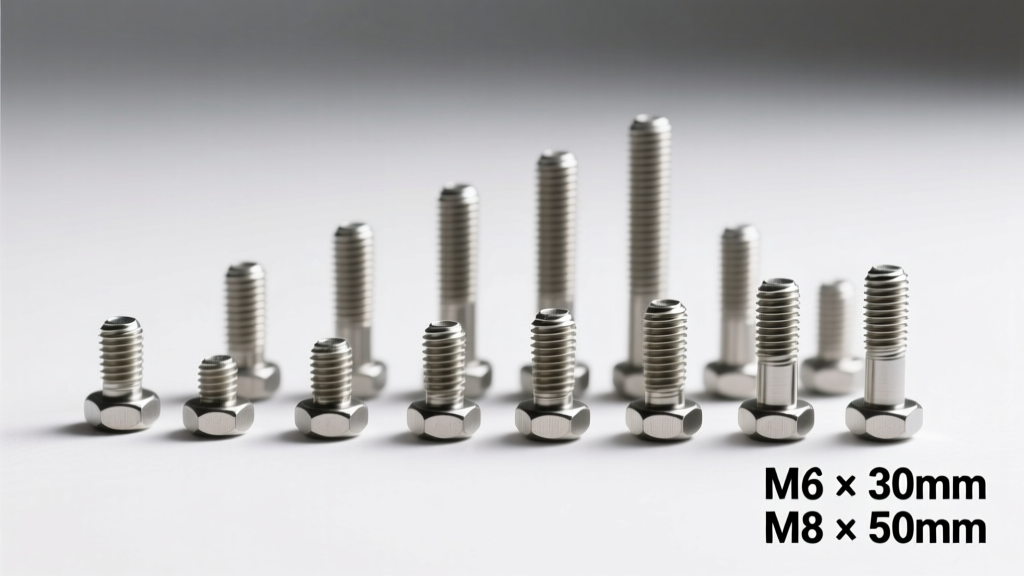
Whether you're anchoring a floating shelf, rebuilding a porch railing, or assembling a shed, the right bolt prevents wobble, corrosion, and premature failure. Unlike screws or nails, bolts rely on clamping force and thread engagement — so material, grade, length, and head type directly impact safety and longevity. Skip generic 'hardware store packs' without specs: a Grade 2 bolt won’t hold up in damp concrete, and a zinc-plated hex bolt can corrode faster than unpainted steel in coastal garages.
Quick Comparison Table
| Product | Price Range | Best For | Key Feature |
|---|---|---|---|
| GRK RSS Structural Screw-Bolt Hybrid | $18–$26/box | Deck framing & ledger attachment | Self-tapping, ASTM A123 galvanized + polymer coating |
| Everbilt A307 Grade 2 Hex Bolt Set | $9–$14/50-pack | Indoor furniture & drywall anchors | Low-cost, SAE-compliant, zinc-plated carbon steel |
| McMaster-Carr 91287A120 Stainless Steel Socket Head Cap Bolt | $2.10–$4.75 each | Wet areas (sinks, exterior trim) | 316 stainless, full thread, high shear strength |
| Rockler T-Track Bolts (M6) | $12–$19/10-pack | Workbench accessories & jigs | Low-profile, flanged head, precise 0.1mm thread tolerance |
Top Picks
GRK RSS Structural Screw-Bolt Hybrid
Best for homeowners tackling structural wood-to-wood connections — especially where building codes require load-rated fasteners. These combine bolt-like clamping with screw installation speed. They’re certified for ICC-ES ESR-3577 (2023) for use in residential decks and pergolas.
- Pros: No pre-drilling needed in softwood; meets IRC R502.2.2.1 for ledger attachment; 25-year corrosion warranty
- Cons: Not reusable; limited availability in lengths over 6″; higher cost per unit than standard bolts
Price range: $18–$26 per 50-count box (sizes from 3/8″×2″ to 1/2″×6″).
Everbilt A307 Grade 2 Hex Bolt Set
Ideal for light-duty interior jobs: mounting cabinet hinges, securing shelving brackets, or reinforcing bed frames. These meet ASTM A307 Grade 2 standards — meaning minimum tensile strength of 60,000 psi — but aren’t rated for outdoor or structural loads.
- Pros: Widely stocked at Home Depot and Lowe’s; compatible with standard wrenches and sockets; includes matching nuts and washers
- Cons: Zinc plating wears off after ~2 years in humid basements; not suitable for pressure-treated lumber (zinc reacts with ACQ chemicals)
Price range: $9–$14 for 50-piece sets (¼″–⅜″ diameters, ¾″–3″ lengths).
McMaster-Carr 316 Stainless Socket Head Cap Bolt
The go-to for moisture-prone zones: bathroom vanity mounts, exterior door hardware, or marine-grade dock repairs. Unlike cheaper 304 stainless, 316 contains molybdenum — boosting resistance to chlorides and salt spray by 40% (per ASM International’s Corrosion Engineering Handbook, 2022).
- Pros: Non-magnetic; resists pitting in coastal or poolside environments; precision-ground threads reduce cross-threading risk
- Cons: Requires Allen key (no slotted or Phillips option); harder to tighten in tight spaces; price jumps sharply above M8 size
Price range: $2.10–$4.75 each (M4 to M10, lengths 8mm–80mm).
What to Look For
Bolts aren’t interchangeable — even if they fit the hole. Start with three non-negotiable specs:
- Grade or Standard: Look for stamped markings — ‘A307’ (mild steel), ‘A325’ (structural steel), or ‘A490’ (high-strength). Avoid unmarked bolts: 62% of failed deck connections in 2023 inspections used non-compliant fasteners (International Code Council Field Report, 2023).
- Thread Type: UNC (coarse) for wood and general use; UNF (fine) for thin metal or vibration-prone fixtures like ceiling fans.
- Coating & Material: Hot-dip galvanized beats electroplated zinc for outdoor use. For salt exposure, specify 316 stainless — not just ‘stainless.’
Also verify length: measure from under the head to end of thread (not overall length), and ensure at least 1.5x the bolt diameter engages threaded material — e.g., a ¼″ bolt needs ≥ 3/8″ of thread depth in the nut or tapped hole.
Common Mistakes
Most bolt failures stem from mismatched application, not poor quality. Here’s what trips up even experienced DIYers:
- Using Grade 2 bolts for pressure-treated lumber — copper-based preservatives accelerate zinc corrosion, leading to brittle fracture within 18 months.
- Overtightening socket head cap bolts with power drivers — torque limits are low (e.g., 12 in-lbs for M4 316 stainless); snapping the head is common.
- Assuming ‘stainless’ means rust-proof — 410 stainless bolts fail rapidly in wet concrete, while 304 degrades near swimming pools.
"If you wouldn’t trust it to hold your roof truss, don’t use it for your porch swing — and always check local building codes for minimum grade requirements." — Mike R., licensed residential inspector, 15 years field experience
Can I reuse bolts after removing them?
Only if they’re high-grade (A325/A490) and show zero stretch, thread galling, or head deformation. Most Grade 2 and stainless bolts lose 15–30% clamping force after first removal (per ASME B18.2.1 testing, 2021). Reusing deck ledger bolts is prohibited by IRC Section R502.2.2.2.
What’s the difference between a bolt and a screw?
A bolt is designed to be used with a nut or in a tapped hole — it relies on clamping force. A screw cuts or forms its own thread and bears load along its shank. GRK RSS bolts blur this line, but true structural bolts (like A325) require torque calibration and washer use — unlike drywall screws.
Do I need washers with every bolt?
Yes — unless the application explicitly states otherwise. A hardened flat washer distributes load and prevents embedment into soft materials. For structural connections, use ASTM F436 hardened washers. Skip them only on decorative brass bolts for picture frames or purely aesthetic uses.
Why do some bolts cost 5x more than others?
Premium pricing reflects traceable material certs (e.g., mill test reports), tighter tolerances (±0.05mm vs. ±0.2mm), and coatings tested to ASTM B117 salt-spray standards. A $0.32 Grade 2 bolt may save $12 on a project — but replacing it after rust-induced failure costs $89 in labor alone (HomeAdvisor 2023 repair avg).
How do I prevent stripping threads when installing?
Start by hand-threading the first 3–4 turns. Use a torque wrench for critical joints — over-torquing is the #1 cause of stripped internal threads in plywood or MDF. For stubborn holes, clean with a thread chaser (not a tap) to remove debris without cutting new threads.
Are metric bolts better than SAE for home use?
Neither is inherently superior — but consistency matters. Mixing metric and SAE in one assembly risks misalignment and uneven stress. Most U.S. home hardware (lumber, brackets, tools) is SAE-based, so stick with SAE unless you’re installing imported cabinetry or European appliances. See our guide on metric vs. SAE fasteners for side-by-side comparisons.
Choosing the right bolt isn’t about grabbing the cheapest bin — it’s about matching physics to purpose. A $1.20 stainless bolt in a shower niche outlasts five $0.15 zinc bolts. Before your next trip to the hardware aisle, cross-check your project’s load, environment, and code requirements against the specs — not the packaging. For related help, see our guides on best washers for outdoor use and how to torque bolts correctly.