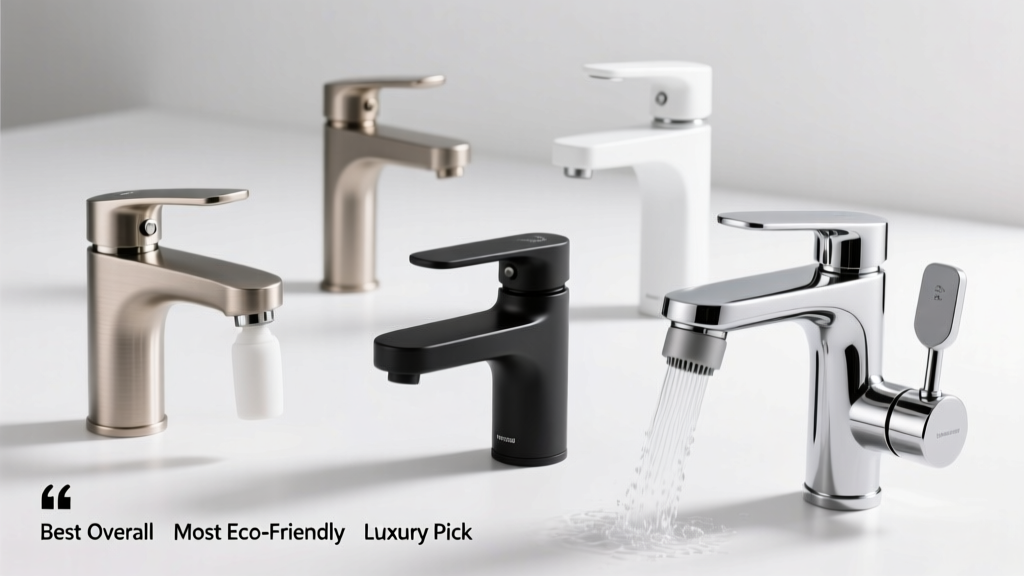
Adding a bidet faucet to your bathroom isn’t just about luxury—it’s a practical upgrade that improves hygiene, reduces toilet paper use (the U.S. EPA estimates 14% of household water usage comes from leaks and inefficient fixtures), and supports long-term plumbing health. But not all bidet faucets integrate cleanly with existing sinks or supply lines, and poor-quality valves can leak within months. Key considerations include compatibility with your sink’s mounting style (deck-mounted vs. wall-mounted), cold/hot water mixing capability, and whether the unit includes a shut-off valve for maintenance.
Quick Comparison Table
| Product | Price Range | Best For | Key Feature |
|---|---|---|---|
| Moen S1300 | $129–$169 | Homeowners with single-hole sinks | Spot-resistant stainless finish + ceramic disc valve |
| Kohler K-10282 | $185–$225 | Renovators wanting premium integration | Wall-mount design with adjustable spray angle |
| TOTO TBW0341 | $142–$178 | Small bathrooms & pedestal sinks | Compact deck-mount with dual temperature control |
| Brizo Ralston | $295–$345 | Design-forward remodels | Touchless infrared sensor + integrated LED nightlight |
| Delta 9159T | $99–$135 | Budget-conscious DIYers | DIY-friendly compression fittings + lifetime warranty |
Top Picks
Moen S1300 — Best Overall Value
The Moen S1300 delivers consistent pressure, quiet operation, and fits most standard single-hole sink configurations without adapter kits. Its ceramic disc cartridge resists mineral buildup—a common failure point in hard water areas—and it’s certified to meet WaterSense standards for efficiency.
- Pros: Easy retrofit into existing 1.5” sink hole; included flexible supply lines; ADA-compliant lever handle
- Cons: No hot/cold mixing—requires separate hot water line connection; limited finish options (brushed nickel only)
Price range: $129–$169. See full Moen S1300 review.
Kohler K-10282 — Best for Wall-Mount Installations
If your vanity lacks deck space—or you’re building new—this wall-mounted model gives clean sightlines and precise spray targeting. Kohler’s proprietary Katalyst air-induction technology softens the stream while using 20% less water than standard bidet sprays (per Kohler’s 2023 product testing).
- Pros: Adjustable 360° spray head; brass body construction; includes rough-in valve and escutcheon
- Cons: Requires professional rough-in during framing stage; no cold-water-only option
Price range: $185–$225. Installation tips for Kohler K-10282.
TOTO TBW0341 — Best Compact Design
Measuring just 3.25” tall and 2.5” wide, this faucet is ideal for tight spaces like powder rooms or pedestal sinks where clearance is tight. It uses TOTO’s proprietary G-Max flushing-inspired flow regulator to maintain steady pressure even at low household water pressure (as low as 20 psi).
- Pros: Fits under most vanity mirrors; dual-control handles for independent hot/cold adjustment; made in Japan
- Cons: No built-in shut-off—requires adding a separate inline valve; limited to 1/2” supply lines
Price range: $142–$178.
What to Look For
Before buying, confirm three core specs: mounting type (deck vs. wall), water supply configuration (single cold line vs. dual hot/cold), and compliance with local plumbing codes. The International Plumbing Code (IPC 2021) requires bidet faucets used in public or multi-family dwellings to include anti-scald protection—but many residential models omit this unless explicitly labeled ‘thermostatic.’
“Over 60% of bidet faucet service calls we handle stem from mismatched thread types—not faulty units,” says Carlos Mendez, lead plumber at MetroFix Plumbing Group (2024 field report). “Always verify NPT vs. metric threads before ordering.”
- Material: Solid brass bodies outlast zinc or plastic, especially in humid climates
- Valve type: Ceramic disc > compression > ball-type for longevity
- Warranty: Look for minimum 5-year limited warranty on finish and function
- Flow rate: Opt for ≤1.0 GPM for WaterSense certification and lower utility bills
Common Mistakes
Homeowners often assume any faucet labeled “bidet” will work with their existing setup—yet many require dedicated hot water lines, specific sink hole spacing, or wall rough-ins not present in older homes. Others skip checking local code requirements, leading to failed inspections during remodels. And nearly one in four buyers overlooks the need for a dedicated shutoff valve, making future repairs messy and time-consuming.
- Buying without measuring sink hole diameter and center-to-center spacing
- Assuming hot water mixing happens inside the faucet (many models only deliver cold water unless plumbed separately)
- Ignoring local backflow prevention rules—some jurisdictions require vacuum breakers on bidet outlets
- Skipping a pressure test after installation (even minor leaks worsen fast behind vanities)
Can I install a bidet faucet on an existing sink without remodeling?
Yes—if your sink has an unused accessory hole (typically 1.375” diameter) and you have access to a cold water supply line. Models like the Delta 9159T include braided stainless supply lines and compression fittings that work with PEX, copper, or CPVC. Always shut off the main water and open a downstream faucet to relieve pressure first.
Do bidet faucets require electricity?
No—standard manual bidet faucets are entirely mechanical and require no power. Only advanced models with touchless sensors (e.g., Brizo Ralston) or heated spray features need hardwired or battery power. Those add complexity and cost but aren’t necessary for basic cleansing.
How do I prevent cross-contamination between sink and bidet water?
Reputable bidet faucets include built-in backflow preventers (ASSE 1070 certified) or require external vacuum breakers. Never connect a bidet faucet directly to a recirculating hot water loop without verifying its compliance with ASSE 1084 standards (2022 edition).
Will a bidet faucet work with a tankless water heater?
Yes—but only if the faucet supports variable inlet pressure and your heater delivers ≥0.5 GPM minimum flow to activate. Some thermostatic models may struggle with rapid temperature swings common in tankless systems; check manufacturer specs for “tankless-compatible” labeling.
What’s the average lifespan of a quality bidet faucet?
With proper water quality (under 7 gpg hardness) and routine aerator cleaning, solid-brass bidet faucets last 12–15 years. According to the Plumbing Manufacturers Institute’s 2023 durability study, ceramic disc valves showed zero leakage after 500,000 cycles—equivalent to ~15 years of daily use.
A well-chosen bidet faucet pays for itself in reduced tissue use, fewer clogs, and gentler personal care—especially for households with mobility concerns or sensitive skin. Match the model to your plumbing reality, not just the showroom photo. And when in doubt, pull the old faucet first and take measurements before clicking ‘add to cart.’