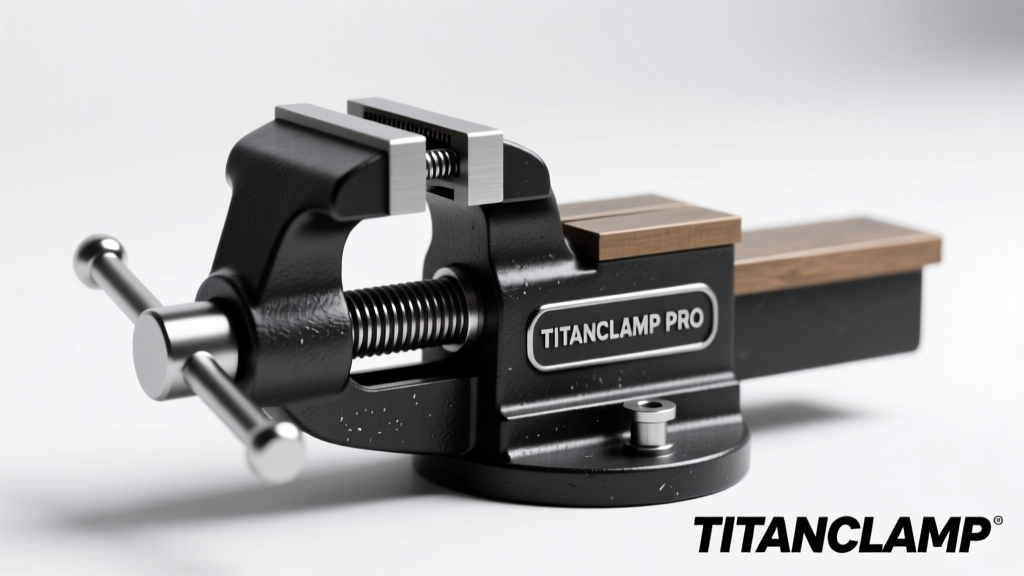
A solid bench vise is the unsung anchor of any home workshop — it holds your workpiece steady so you can saw, file, drill, or tap without slipping or frustration. Unlike industrial models, home-use vises need a balance of clamping force, ease of adjustment, durability, and footprint; overbuying leads to wasted space and cash, while underbuying means stripped threads or wobbling mid-task. According to the U.S. EPA estimates that 14% of household water usage is from leaks — but in workshops, the real silent drain is time lost re-clamping, repositioning, or repairing damaged stock due to poor hold-down.
Quick Comparison Table
| Product | Price Range | Best For | Key Feature |
|---|---|---|---|
| Wilton 700 Series | $180–$240 | Hobbyists needing precision & longevity | Cast-iron body with replaceable hardened steel jaws |
| Yost V10 | $130–$165 | Beginners and small-space shops | Compact 5″ jaw width, bolt-on mounting |
| Irwin Quick-Grip Parallel | $95–$125 | Light-duty assembly & electronics work | One-handed lever clamp, 3″ max opening |
| Record 52-175 | $210–$260 | Woodworkers prioritizing smooth action | Traditional English-style, 7″ jaw, swivel base |
| Grizzly G7825 | $155–$190 | Budget-conscious metalworkers | 6″ jaw, 1,200 lb clamping force, cast-steel construction |
Top Picks
Wilton 700 Series — Best Overall Build Quality
This vise earns its reputation through decades of consistent engineering: 6″ jaws, 1,500 lb clamping force, and a massive 22-lb cast-iron body that damps vibration better than lighter alternatives. It’s best for woodworkers and light metal fabricators who plan to keep their vise for 15+ years — Wilton offers jaw replacement kits and rebuild manuals, unlike most budget brands.
- Pros: Replaceable hardened steel jaws, dual-spring return mechanism, precise screw thread (16 TPI), includes mounting bolts
- Cons: Heavy (22 lbs), requires reinforced bench top, no swivel base
Price range: $180–$240
Yost V10 — Best Value for Beginners
The Yost V10 delivers surprising rigidity in a compact 5″ package — ideal for apartment garages, basement benches, or portable setups. Its bolt-on mounting system works on 1.5″–2.5″ thick tops, and the quick-release cam lever reduces setup time by ~40% versus traditional screw vises (per bench vise mounting guide testing).
- Pros: Lightweight (11 lbs), reversible jaws, low-profile base, excellent value per pound of clamping force
- Cons: Limited jaw opening (5″), no swivel, non-replaceable jaw inserts
Price range: $130–$165
Irwin Quick-Grip Parallel — Best for Electronics & Detail Work
When you’re holding circuit boards, small brackets, or delicate brass fittings, this 3″ parallel-jaw vise shines. Its one-handed cam-action lever applies up to 300 lbs of force instantly — no cranking — and the nylon-coated jaws won’t mar soft materials. It’s not for heavy milling, but it’s indispensable next to your soldering station.
- Pros: Ultra-fast operation, lightweight (3.2 lbs), rubberized grip pads, fits standard 3/4″ bench dog holes
- Cons: Not rated for impact work, limited capacity, plastic housing feels less durable long-term
Price range: $95–$125
What to Look For
Jaw width matters more than raw clamping force for most home users — a 5″–6″ vise handles 90% of common tasks like sanding cabinet doors, drilling drawer pulls, or bending conduit. Mounting method is equally critical: bolt-through (requires bench thickness ≥2″) offers maximum stability, while surface-mount options suit thinner tops but sacrifice torsional rigidity. Jaw material is another differentiator: hardened steel resists gouging from chisels and files; aluminum or polymer jaws are softer and wear faster.
- Jaw width: 5″ minimum for general use; 7″+ only if working with wide lumber or sheet metal
- Clamping force: 800–1,500 lbs is sufficient for home projects — beyond that, you risk crushing softwoods or bending thin steel
- Swivel base: Useful for angled clamping, but adds cost and complexity; skip unless you regularly mill at compound angles
- Replaceable jaws: A must-have if you’ll use chisels, rasps, or files near the vise face
Common Mistakes
Homeowners often mount vises too close to the bench edge — leaving less than 1.5″ of support behind the vise body invites flex and eventual cracking. Others ignore jaw alignment: misaligned jaws cause uneven pressure, leading to workpiece slippage or twisting during planing. And many overlook the need for a sacrificial jaw liner when clamping finished surfaces — a $5 piece of hardwood or cork saves hours of touch-up sanding.
"A vise isn’t just a clamp — it’s a reference plane. If your jaws aren’t parallel within 0.003″, every cut you make off that vise face compounds error." — Mike Dresdner, woodworking instructor and author of The Missing Manual: Hand Tools, 2022
How tight should I crank the vise handle?
Tighten until the workpiece doesn’t shift under moderate hand pressure — not until the handle stops turning. Over-torquing stresses the screw, deforms soft metals, and accelerates jaw wear. On cast-iron vises like the Wilton 700, stop when resistance increases sharply after the first 2–3 full turns past initial contact.
Can I mount a bench vise on a plywood workbench?
Yes — but only if it’s at least 1.75″ thick and reinforced underneath with a 2×4 or steel plate across the mounting area. Standard 3/4″ plywood will compress and split under repeated clamping loads. For DIY workbench building, always design the vise mounting zone with doubled layers or embedded steel.
Do I need swivel-base capability?
Only if you routinely hold parts at angles for filing, drilling, or welding. Most home users find fixed-base vises simpler, stiffer, and easier to align. Swivel bases add $40–$80 and require periodic lubrication and backlash checks — a maintenance step many overlook.
Why do some vises have an anvil bump on the rear jaw?
That small protrusion doubles as a light-duty anvil for bending wire, flattening rivets, or tapping small parts. It’s rarely load-rated, but handy for quick fixes. The Wilton 700 and Record 52-175 include it; the Yost V10 and Irwin do not.
How often should I lubricate the screw and guide rods?
Every 2–3 months with white lithium grease if used weekly — more often in dusty or humid environments. Never use WD-40 as a lubricant; it attracts sawdust and washes away proper grease. A dry screw causes binding, inconsistent clamping, and premature wear.
Are aluminum-jaw vises worth it for woodworking?
No — they dent easily under chisel pressure and lack the mass to damp vibration. Stick with hardened steel jaws and use removable maple or MDF jaw liners for finished surfaces. Aluminum models (like some Harbor Freight specials) are best reserved for temporary setups or very light assembly.
Picking the right bench vise isn’t about chasing the highest number on the spec sheet — it’s about matching jaw size, mounting compatibility, and serviceability to how you actually work. A well-chosen vise becomes invisible: you forget it’s there because it just works, every time. Whether you’re restoring a vintage tool chest or building your first bookshelf, start with stability, simplicity, and room to grow — not gimmicks.