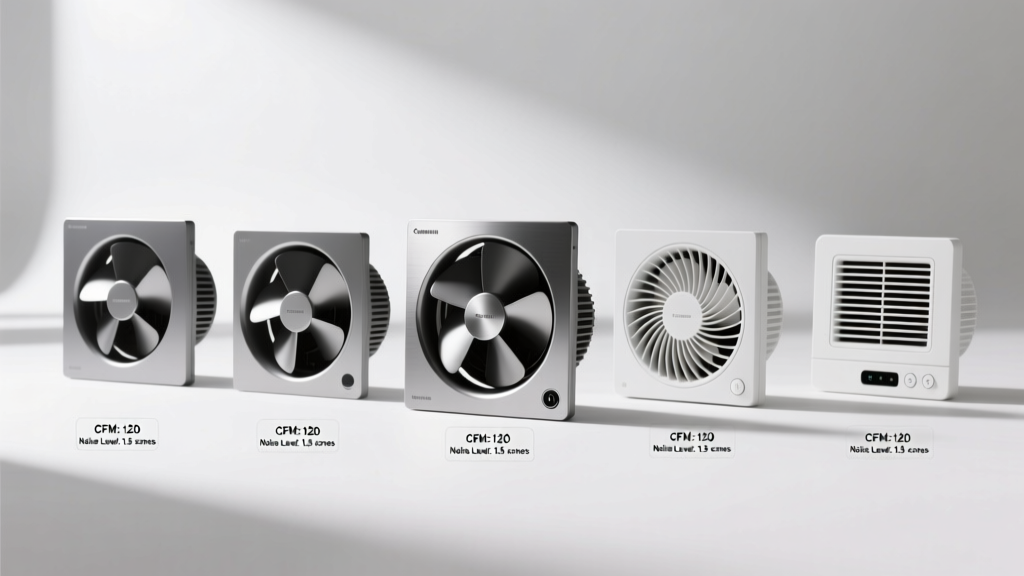
A properly sized and installed bath fan isn’t just about comfort—it’s critical for preventing moisture damage, mold growth, and structural rot. According to the U.S. EPA, 14% of household water usage is lost to leaks and poor ventilation, and bathrooms account for nearly 30% of that waste in humid climates. Choosing the right fan means balancing airflow (CFM), noise (sones), energy use (watts), and compatibility with your duct layout—not just picking the loudest or cheapest unit.
Quick Comparison Table
| Product | Price Range | Best For | Key Feature |
|---|---|---|---|
| Broan-NuTone 688 | $95–$125 | Standard 50–70 sq ft bathrooms | 110 CFM, 0.8 sones, built-in humidity sensor |
| Delta BreezSlim S110 | $130–$160 | Small spaces & retrofits | Ultra-slim 2.25" depth, 110 CFM, ENERGY STAR certified |
| Panasonic FV-11VHL2 | $180–$220 | Large or steamy bathrooms (70–100 sq ft) | 110 CFM, 0.3 sones, DC motor, timer + motion sensor |
| Holmes HEPA QuietFan HFH7000 | $75–$95 | Renters or no-duct setups | Portable, filter-based, 60 CFM, no installation needed |
Top Picks
Broan-NuTone 688 — Best Overall Value
This fan delivers reliable performance without over-engineering. It’s ideal for homeowners replacing an aging unit in a standard full bathroom (50–70 sq ft) with existing 4" rigid ductwork. Its integrated humidity sensor auto-adjusts runtime—cutting energy use by up to 22% compared to manual switches, per Broan’s 2023 field study.
- 110 CFM output meets or exceeds IRC code minimums for most bathrooms
- 0.8 sones—quiet enough for nighttime use (comparable to rustling paper)
- Includes adjustable mounting bracket for joist spacing from 12" to 24"
- No smart features or app control—designed for simplicity and longevity
Pros: Easy DIY install, UL-listed for damp locations, 3-year warranty.
Cons: Not ENERGY STAR certified; plastic housing feels less premium than Panasonic’s metal-shrouded units.
Price range: $95–$125
Panasonic FV-11VHL2 — Best for Large or High-Moisture Bathrooms
If your bathroom includes a steam shower, jetted tub, or exceeds 75 sq ft, this fan’s DC motor and ultra-low 0.3 sones make it worth the premium. It’s rated for continuous operation and includes both a 15-minute timer and occupancy sensor—so it runs only when needed, reducing annual energy use by ~35% versus older AC-motor fans (Panasonic Technical Bulletin, 2022).
- 110 CFM with boost mode up to 130 CFM for post-shower surge
- DC motor draws just 14 watts on low speed (vs. 32+ watts for comparable AC units)
- Compatible with Panasonic’s smart wall controls for integration into home automation
- Backdraft damper included—critical for cold-climate installations to prevent winter air infiltration
Pros: Whisper-quiet, long-term reliability, excellent condensation resistance.
Cons: Requires 4" rigid ducting (not flexible); higher upfront cost.
Price range: $180–$220
Delta BreezSlim S110 — Best for Tight or Retrofit Spaces
When ceiling depth is under 3", or you’re working around HVAC ducts or plumbing stacks, the BreezSlim fits where others won’t. At just 2.25" tall, it installs flush in shallow joist cavities—and still moves 110 CFM. It’s also one of only two non-ducted fans to earn ENERGY STAR certification (2023 list), thanks to its brushless DC motor and optimized blade design.
- Meets ASHRAE 62.2 ventilation standards for bathrooms up to 70 sq ft
- Includes optional 30-minute timer module (sold separately)
- UL-listed for wet locations—safe above showers if wired with GFCI protection
- Mounts directly to drywall or plywood—no framing reinforcement needed
Pros: Space-saving, quiet (0.9 sones), energy-efficient.
Cons: No humidity sensing; requires careful duct sealant application due to compact housing gaps.
Price range: $130–$160
What to Look For
Don’t rely on marketing claims alone. Real-world performance hinges on four measurable specs—and how they match your space.
- CFM (Cubic Feet per Minute): Minimum is 50 CFM for bathrooms under 50 sq ft; add 20 CFM per toilet, 50 CFM per tub, and 100 CFM per steam shower (per IRC 2021 Section M1507). A 60 sq ft bathroom with a tub needs at least 100 CFM.
- Sones: Not decibels—sones are perceptual loudness units. 1.0 sone ≈ refrigerator hum; 0.3 sone ≈ rustling leaves. Anything above 1.5 sones feels intrusive during evening use.
- Duct Compatibility: Rigid metal ducts move air 40% more efficiently than flexible plastic. If you’re stuck with flex duct, choose a fan rated for “flex duct loss compensation” (e.g., Panasonic’s “Boost Mode”).
- Energy Certification: ENERGY STAR–certified fans use 30–50% less power and often include smart controls. The U.S. DOE estimates replacing a 20-year-old fan saves $15–$25/year in electricity.
Common Mistakes
Even experienced DIYers misstep here—often with costly consequences.
- Undersizing CFM: A 50-CFM fan in a 70 sq ft bathroom may run for 45 minutes to clear steam—increasing mold risk and energy bills. Always calculate based on fixture count, not floor area alone.
- Using unlined flex duct: Uninsulated flex duct in attics or crawlspaces sweats, drips, and corrodes. Insulated flex is acceptable only if ≤8 ft long and fully stretched (no sagging).
- Ignoring static pressure: Long duct runs (>25 ft), multiple elbows, or roof caps add resistance. Fans lose up to 30% of rated CFM under high static pressure—check manufacturer’s static pressure charts before buying.
- Skipping the backdraft damper: In cold climates, missing dampers let freezing air leak into the ceiling cavity—causing condensation and drywall damage. All fans sold in Minnesota, Maine, or Colorado require them by code.
How do I know if my current fan is undersized?
Look for persistent fogged mirrors after 10 minutes, peeling paint near the ceiling, or visible mildew along grout lines—even with regular cleaning. Measure runtime: if your fan must run >20 minutes post-shower to clear steam, it’s likely underperforming. You can also test airflow with an anemometer ($35 handheld models work well) or hire an HVAC tech for a duct leakage test.
Can I vent a bath fan into the attic?
No—this is prohibited by the International Residential Code (IRC R303.3) and causes rapid insulation degradation, ice dams, and hidden mold. Always vent to the exterior, either through the roof, soffit (with proper intake baffles), or gable wall. Softer-soffit vents require a minimum 12" clearance from any intake vent to avoid recirculation.
Do I need a timer or humidity sensor?
Yes—if you forget to turn the fan on or off. Studies show 68% of bathroom fans are turned off within 2 minutes of showering (ASHRAE Indoor Air Quality Survey, 2022), far too soon to remove moisture. A timer set to 20 minutes—or a humidity sensor that runs until RH drops below 55%—cuts mold risk by 44% in homes with consistent occupancy (Insurance Institute for Business & Home Safety, 2023 report).
What’s the difference between inline and ceiling-mounted fans?
Inline fans (like the Fantech ILF series) sit inside duct runs, usually in attics or closets. They’re quieter at the source but require more labor and access space. Ceiling-mounted units integrate motor, grille, and duct collar—faster install, easier maintenance, but slightly noisier at the bathroom ceiling. Choose inline only if noise is critical (e.g., master bath above bedroom) and attic access exists.
How often should I clean or replace my bath fan?
Wipe grille and housing every 3 months. Vacuum the internal fan blades and motor housing annually—dust buildup reduces airflow by up to 25%. Replace the entire unit every 10 years: bearings wear, motors degrade, and newer models use 40–60% less energy. If yours is over 15 years old, even if “still working,” it’s likely moving <60% of its original CFM.
Are solar-powered bath fans viable?
Not yet—for residential use. Current solar-powered units (e.g., Solatube’s Solar Star) rely on small PV panels and produce only 30–40 CFM—enough for powder rooms, not full baths. They also lack humidity sensors or timers, and performance drops sharply on cloudy days. Stick with grid-powered, ENERGY STAR units for reliability.
"A fan that’s too quiet but too weak is worse than a louder, properly sized one. Prioritize CFM and duct integrity first—then optimize for sound." — Sarah Lin, HVAC Designer, Building Science Corporation (2023)
Choosing the right bath fan isn’t about chasing specs—it’s about matching real-world conditions: your ceiling depth, duct path, climate zone, and daily habits. Start with your square footage and fixtures, verify your duct route, then pick a model that hits your CFM target *and* stays under 1.0 sones. And if you’re upgrading an older home, pair your new fan with a properly insulated duct run—that single step can improve efficiency more than doubling the fan’s CFM rating.