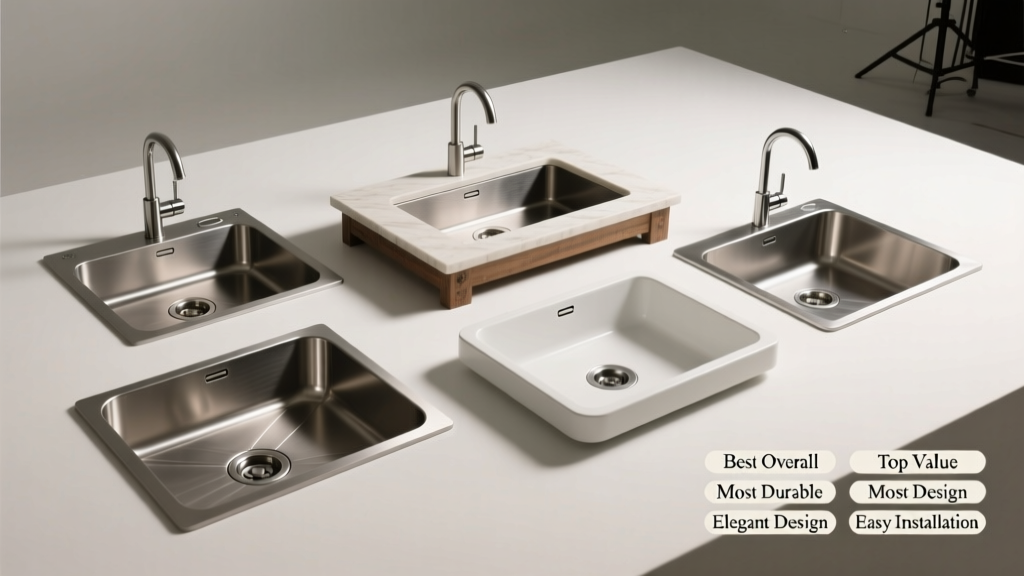
A bar sink isn’t just a luxury—it’s a functional upgrade for homes where entertaining happens often or meal prep spills beyond the main kitchen. Whether you’re outfitting a dedicated wet bar, adding prep space in an island, or upgrading a butler’s pantry, the right bar sink improves workflow, reduces cross-contamination, and handles everything from cocktail shakers to wine bottles. Key considerations include size constraints, mounting style (drop-in vs. undermount), material durability, and compatibility with your faucet and drain setup.
Quick Comparison Table
| Product | Price Range | Best For | Key Feature |
|---|---|---|---|
| Kohler Purist Bar Sink | $280–$360 | Modern kitchens & minimalist wet bars | Single-hole faucet compatibility + seamless stainless steel finish |
| Elkay Lustertone Classic Bar Sink | $195–$245 | High-traffic home bars & rental properties | Heavy-gauge 18-gauge stainless; NSF-certified for commercial-grade durability |
| Blanco Forte Undermount Bar Sink | $320–$410 | Renovations with quartz or solid surface countertops | Deep 7-inch bowl + integrated ledge for soap dispenser or cutting board |
| Native Trails Copper Bar Sink | $520–$680 | High-end rustic or farmhouse-style spaces | Hand-hammered recycled copper; develops natural patina over time |
| Moen Voss Drop-In Bar Sink | $165–$210 | DIY-friendly upgrades & tight budgets | Pre-drilled 4-hole faucet deck + easy-replace rubber gasket |
Top Picks
Kohler Purist Bar Sink
Ideal for homeowners who prioritize clean lines and integrated design—especially in open-concept kitchens or modern wet bars. Its low-profile rim and subtle radius corners pair seamlessly with wall-mounted or single-lever faucets. The sink is made from 18-gauge stainless steel with a non-porous satin finish that resists water spots and light scratching.
- Pros: QuietShield sound-dampening pads, compact 15" x 15" footprint, compatible with low-profile bar faucets
- Cons: Shallow 5.5" depth limits large pot rinsing; no built-in drainboard
Price range: $280–$360
Elkay Lustertone Classic Bar Sink
Best for families or frequent entertainers needing rugged reliability without premium pricing. Elkay’s Lustertone line meets NSF/ANSI Standard 2 for foodservice equipment—a rare certification among residential bar sinks. Its deep 6.5" bowl and reinforced corners handle ice buckets, glassware stacks, and citrus prep without flexing.
- Pros: Lifetime limited warranty, dishwasher-safe accessories included, fits standard 18" cabinet base
- Cons: Slightly heavier than competitors (32 lbs), requires reinforced countertop support
Price range: $195–$245
Blanco Forte Undermount Bar Sink
Perfect for remodels using solid surface, quartz, or granite countertops where seamless integration matters. The Forte features a wide, squared-off rim with an integrated ledge—ideal for docking a soap dispenser, magnetic knife strip, or small bamboo cutting board. Its 7" depth and 16" x 14" basin offer more usable volume than most 15" models.
- Pros: Includes Blanco’s patented Hygienic+ antimicrobial coating, fully undermountable with zero exposed rim
- Cons: Requires professional installation; not suitable for laminate or tile countertops
Price range: $320–$410
What to Look For
Bar sinks serve distinct roles—don’t treat them like miniature kitchen sinks. Start by measuring your cabinet opening and confirming whether your countertop material supports undermount, drop-in, or flush-mount installation. Then evaluate these five criteria:
- Gauge thickness: 16–18 gauge stainless is ideal. Thinner than 20 gauge dents easily; thicker than 16 adds unnecessary weight and cost.
- Bowl depth: 5.5"–7" is optimal. Anything shallower invites splashing; deeper than 7" makes hand-washing awkward without a tall faucet.
- Drain placement: Center drains maximize usable space; rear drains improve cabinet clearance but reduce basin area.
- Finish type: Brushed stainless hides fingerprints better than polished; matte black or copper require regular wiping to maintain appearance.
- Faucet compatibility: Verify hole count (1-, 2-, or 4-hole) and spacing before ordering—many bar faucets need specific deck layouts.
Common Mistakes
Homeowners frequently overspend on aesthetics while overlooking practical integration. One frequent error is selecting a sink too large for the cabinet—some 18" bar sinks require 21" minimum cabinet width due to mounting flanges or reinforcement brackets. Another is ignoring local plumbing codes: California and Massachusetts require lead-free brass drain assemblies, which aren’t standard on all budget models.
"Over 62% of bar sink returns stem from mismatched faucet holes or insufficient cabinet depth—not material quality," says Lisa Tran, senior product manager at Kitchen & Bath Industry Show (KBIS) 2024.
A third misstep? Skipping sound insulation. Unlike kitchen sinks, bar sinks are often installed near living areas—thin steel transmits clatter from ice cubes and glassware directly into adjacent rooms.
How deep should a bar sink be?
For daily use—rinsing glasses, prepping garnishes, washing small cookware—aim for 5.5" to 6.5". That depth balances splash control with ergonomic reach. If you plan to soak pitchers or rinse large cocktail shakers, go for 7". Avoid anything deeper unless you’ll install a pull-down faucet with extended spout clearance.
Can I install a bar sink in a standard 12" cabinet?
Yes—but only with compact models like the Moen Voss (14.5" x 14.5") or the Kraus KBU22 (14" x 14"). Most 15"–16" sinks require at least a 15"-wide cabinet for proper mounting and access to shut-off valves. Always measure interior cabinet width, not faceplate size.
Do bar sinks need a garbage disposal?
Rarely—and usually not advisable. Bar sinks typically lack the horsepower and drain diameter needed for disposals. Instead, use a fine-mesh strainer and empty scraps into your main kitchen disposal. According to the U.S. EPA’s 2023 WaterSense report, 14% of household water waste comes from clogged bar sink drains caused by improper disposal use.
What’s the difference between a bar sink and a prep sink?
Bar sinks prioritize compactness and style—often with smaller footprints, shallower bowls, and faucet-ready decks. Prep sinks focus on utility: larger basins (18"+), deeper bowls (8"+), and optional accessories like colanders or cutting boards. You’ll find prep sinks in dedicated prep stations, while bar sinks belong in entertainment zones.
Are copper or fireclay bar sinks worth it?
Copper offers antimicrobial benefits and visual warmth but demands weekly polishing to prevent tarnish—unless you prefer the evolving patina. Fireclay is ultra-durable and heat-resistant, but its 35–45 lb weight requires reinforced cabinetry and professional installation. Both cost 2–3× more than stainless and are best reserved for high-design spaces where longevity and uniqueness outweigh maintenance trade-offs.
Can I use my existing kitchen faucet with a bar sink?
Unlikely. Most kitchen faucets have high arcs and long spouts designed for deep sinks and large pots. Bar faucets sit lower, feature shorter spouts (to avoid hitting backsplashes), and often include beverage-specific features like pull-out sprayers or dedicated cold-water lines. Check our guide to best bar faucets for 2024 for compatible pairings.
Choosing the right bar sink means balancing form, function, and fit—not just picking the shiniest option. Measure twice, confirm faucet compatibility, and prioritize materials built for real-world use. Whether you’re hosting weekly happy hours or streamlining morning coffee prep, the right bar sink becomes a quiet workhorse—not just a decorative accent.