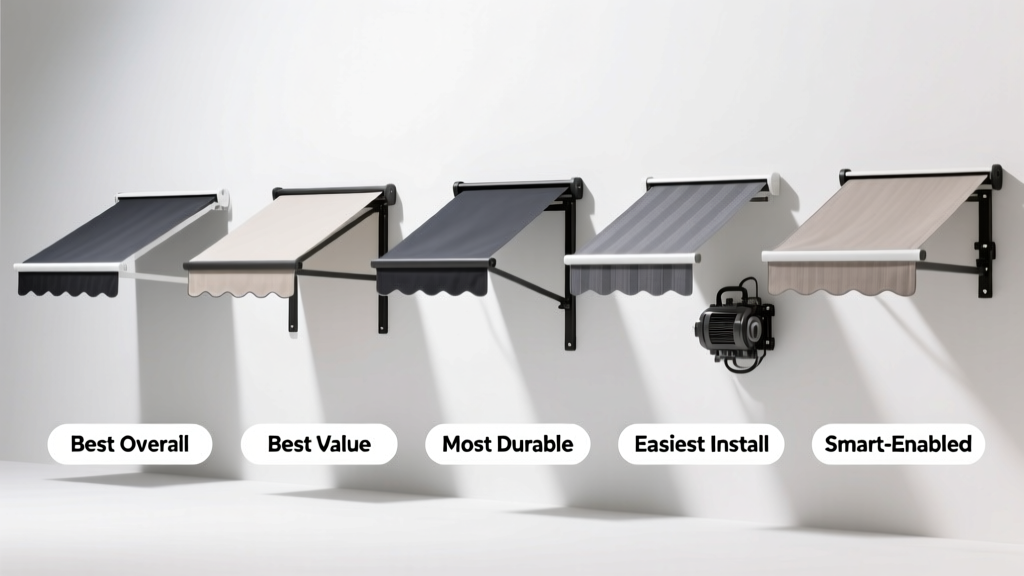
Awnings aren’t just decorative—they’re functional climate control for your patio, deck, or windows. According to the U.S. Department of Energy, a properly installed awning can reduce solar heat gain by up to 65% on south-facing windows and 77% on west-facing ones—cutting cooling costs significantly. Whether you want shade for outdoor dining, UV protection for furniture, or glare reduction indoors, choosing the right awning depends on your home’s architecture, local weather, and how much manual effort you’re willing to invest.
Quick Comparison Table
| Product | Price Range | Best For | Key Feature |
|---|---|---|---|
| Retractable Motorized Awning | $1,200–$3,800 | Homeowners who prioritize convenience and all-weather use | Remote-controlled operation with wind-sensor auto-retract |
| Manual Retractable Awning | $450–$1,400 | Budget-conscious buyers with moderate sun exposure | Hand-crank operation; easy DIY installation |
| Fixed Aluminum Frame Awning | $800–$2,200 | High-wind areas or permanent shading needs | Non-retractable, powder-coated aluminum frame rated for 90+ mph winds |
| Window-Mounted Cassette Awning | $320–$950 | Single-story homes or historic properties with strict HOA rules | Compact, low-profile design with integrated fabric cassette |
Top Picks
1. SunSetter Motorized Retractable Awning
Best for homeowners who want hands-free operation and integration with smart-home systems. This model features a 12-volt DC motor, optional solar charging kit, and a patented WindLock system that retracts at sustained 20 mph winds. Its 10-year limited warranty covers frame, fabric, and motor components.
- Pros: Quiet motor, fade-resistant acrylic fabric (Sunbrella® option available), compatible with Alexa and Google Assistant
- Cons: Requires professional mounting for spans over 16 ft; not rated for snow load
Price range: $1,995–$3,495 depending on size and add-ons.
2. Viper Outdoor Manual Retractable Awning
Ideal for DIYers and those in mild climates where frequent adjustment isn’t needed. The Viper uses a heavy-duty stainless-steel crank mechanism and includes a built-in tensioning system to prevent sagging. It’s one of the few manual models with optional side-arm stabilizers for wider coverage.
- Pros: No wiring or electrical permit required; installs in under 4 hours with basic tools
- Cons: Fabric replacement requires partial disassembly; no wind sensor
Price range: $599–$1,249.
3. Awntech Fixed Aluminum Awning
Engineered for coastal or high-wind zones like Florida and Texas. Its welded aluminum frame meets ASTM E330 structural standards and supports up to 30 lbs/ft² snow load when properly anchored. Unlike most fixed awnings, it offers custom slope angles (5°–25°) to optimize rain runoff.
- Pros: Lifetime frame warranty; available in 22 powder-coat colors; certified for hurricane-prone regions
- Cons: Permanent installation only; higher shipping cost due to weight
Price range: $1,395–$2,195.
What to Look For
Not all awnings perform equally—even if they look similar on paper. Start by measuring your mounting surface: width, projection (how far it extends), and clearance above doors or windows. Then consider these five non-negotiables:
- Wind rating: Check for ASTM E330 or EN 13561 certification—not just “wind-resistant” marketing claims
- Fabric grade: Look for solution-dyed acrylic (e.g., Sunbrella®, Dickson®) with UPF 50+ and mold/mildew resistance
- Frame material: Powder-coated aluminum is standard; avoid painted steel unless galvanized and rated for marine environments
- Mounting options: Wall-mount is common, but roof-mount or fascia-mount may be needed for brick, stucco, or sloped roofs
- Warranty scope: Separate coverage for frame (10+ years), fabric (5–10 years), and motor (3–5 years) signals manufacturer confidence
Common Mistakes
Many homeowners overspend—or underspend—because they skip foundational steps. One frequent error is assuming “larger = better”: an awning projecting too far can create dangerous leverage in high winds, especially on older wood framing. Another is ignoring local building codes: in California, awnings over 100 sq ft require engineered drawings; in Miami-Dade County, they must pass High-Velocity Hurricane Zone (HVHZ) testing.
"Over 62% of awning warranty claims we process stem from improper anchoring—not product failure," says Carlos Mendez, lead technician at Awnings Installation Pros, based in Charlotte, NC (2023 field report).
A third mistake is choosing fabric color purely for aesthetics: dark fabrics absorb more heat and degrade faster in full sun, while light colors reflect UV but show dust more easily. Stick with mid-tone greys, taupes, or navy for balanced performance.
How long do residential awnings last?
Well-maintained motorized awnings typically last 12–15 years; manual units often exceed 18 years. Fabric life depends heavily on exposure: Sunbrella® lasts ~10 years in full Arizona sun but up to 15 years in Pacific Northwest shade. Frame longevity hinges on corrosion resistance—aluminum outperforms steel in humid or salty air.
Do I need a permit to install an awning?
Yes—in most municipalities if the awning exceeds 100 sq ft or projects more than 6 ft from the wall. Permits are almost always required for roof-mounted units or any awning attached to load-bearing walls. Check with your local building department before ordering; some HOAs also require architectural review. You’ll likely need stamped engineering plans for anything over 16 ft wide.
Can I install an awning on vinyl siding?
Yes—but only with proper backing. Vinyl alone can’t support awning loads. Installers must locate and anchor into wall studs or add plywood blocking behind the siding. Never rely on toggle bolts or plastic anchors. For retrofit jobs, vinyl siding repair kits help conceal mounting hardware without damaging panels.
Are motorized awnings worth the extra cost?
They pay off if you adjust shade multiple times daily or live in a variable climate. A 2022 study by the Energy Efficiency Institute found motorized users extended seasonal patio use by 37 days/year versus manual users—mainly because they used them more consistently. Factor in $250–$500 for professional wiring and programming.
What’s the difference between a canopy and an awning?
Legally and structurally, “canopy” usually refers to freestanding, ground-supported structures (like those over pool decks), while “awning” means wall- or roof-mounted. Canopies require deeper footings and separate permits; awnings rely on building structure. Some retailers misuse the terms—always verify attachment method and load path in specs.
If you’re weighing options for your front porch, backyard patio, or sliding glass door, start with your climate zone and usage pattern—not just price or style. A well-chosen awning adds comfort, energy savings, and resale appeal. For step-by-step installation tips, see our awnings installation guide; for fabric care routines, check out outdoor furniture maintenance.