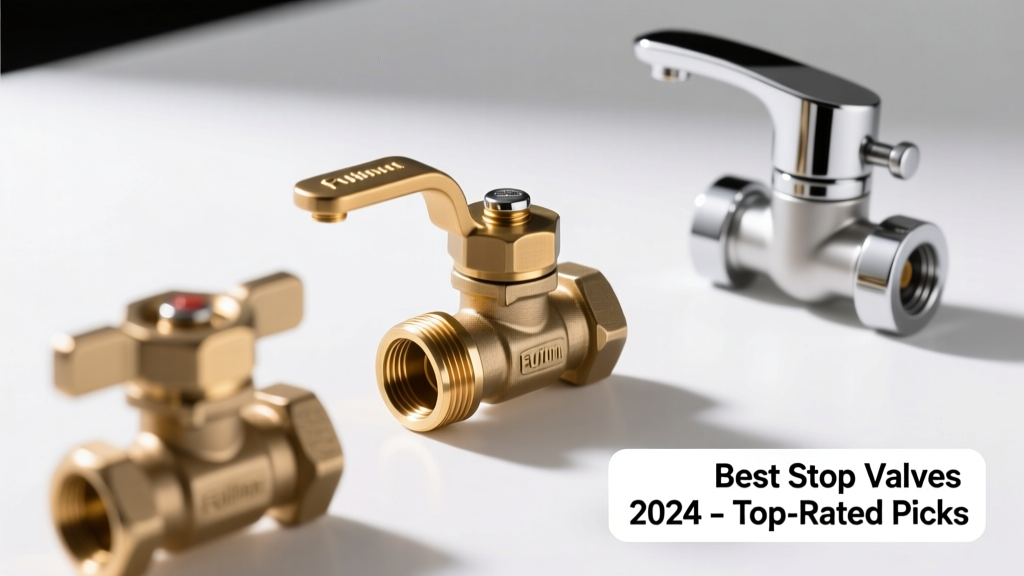
Angle stop valves control water flow to individual fixtures—sinks, toilets, dishwashers, and washing machines—and are often the first line of defense during leaks or repairs. A failing or low-quality angle stop can drip, seize up, or burst under pressure, causing water damage that costs homeowners an average of $4,000 to repair (Insurance Institute for Business & Home Safety, 2023). Choosing the right one means balancing durability, ease of operation, material compatibility, and proper sizing for your home’s plumbing system.
Quick Comparison Table
| Product | Price Range | Best For | Key Feature |
|---|---|---|---|
| BrassCraft G15-10 | $8–$14 | DIYers replacing old compression stops | Lead-free brass body with PTFE-sealed stem |
| SharkBite U3012LFA | $16–$22 | Homes with PEX or CPVC supply lines | Push-to-connect fitting; no soldering or tools needed |
| Watts LF1157F | $24–$32 | High-use bathrooms or rental properties | Quarter-turn ceramic disc; NSF/ANSI 61 certified |
| Sioux Chief 660-MC | $12–$18 | Mobile homes or tight under-sink spaces | Compact 3/8" FIP x 3/8" compression design |
Top Picks
BrassCraft G15-10 — Best Overall Value
This lead-free brass compression angle stop is the go-to replacement for standard 3/8" supply lines in kitchens and bathrooms. Its PTFE-coated stem resists seizing, and the brass body withstands repeated cycling without cracking. It installs with basic wrenches and fits most existing shutoff boxes.
- Pros: Affordable, widely available, corrosion-resistant, meets NSF/ANSI 61 standards
- Cons: Requires compression ring tightening skill; not ideal for high-vibration locations like laundry rooms
Price range: $8–$14
SharkBite U3012LFA — Best for PEX or CPVC Systems
If your home uses PEX, CPVC, or copper supply lines—and you want zero soldering or threading—this push-to-connect angle stop saves time and eliminates fitting errors. Its stainless steel grab ring and EPDM seal handle up to 200 PSI and 200°F, making it suitable for both hot and cold lines.
- Pros: Tool-free installation, compatible with multiple pipe types, leak-tested at factory
- Cons: Slightly bulkier than traditional stops; higher upfront cost
Price range: $16–$22
Watts LF1157F — Best for Heavy-Duty or Rental Use
Used by many property managers and plumbers, this quarter-turn ceramic disc valve delivers precise, drip-free control even after 50,000 cycles (per Watts’ 2022 durability testing). Its full-port design minimizes flow restriction, and the lever handle provides clear visual indication of open/closed status.
- Pros: Long service life, easy to operate, excellent for high-traffic areas
- Cons: Requires 1/2" FIP connection; not ideal for tight under-sink cabinets
Price range: $24–$32
What to Look For
Not all angle stops are interchangeable—even if they fit physically. Start by matching the inlet and outlet thread type (FIP, MIP, compression) and size (most common: 3/8" or 1/2") to your supply line and fixture. Then prioritize:
- Material: Lead-free brass is standard for potable water; avoid zinc or plastic-bodied stops in permanent installations
- Sealing technology: Ceramic disc or PTFE-sealed stems outperform rubber washers long-term
- Certifications: Look for NSF/ANSI 61 (safe for drinking water) and IAPMO listing
- Operating style: Quarter-turn levers offer faster shutoff than multi-turn stems—critical during emergencies
Common Mistakes
Homeowners often overlook simple but costly missteps when replacing angle stops. Over-tightening compression nuts cracks ferrules. Using a 1/2" stop on a 3/8" supply line causes flow restriction and premature wear. Installing a non-lead-free valve on potable lines violates local code in 42 states (U.S. EPA Lead and Copper Rule Revision, 2022).
"A seized or leaking angle stop isn’t just an inconvenience—it’s a silent precursor to slab leaks or mold growth behind walls. Replace them every 8–10 years, even if they seem fine." — Mike R., master plumber and Plumbing Maintenance Checklist contributor
How do I know what size angle stop I need?
Measure the outer diameter of your supply line where it connects to the valve. Most residential sink and toilet lines use 3/8" OD compression or 1/2" FIP. Check the existing valve’s stamped markings—or bring it to a hardware store for side-by-side comparison. When in doubt, take a photo and consult a pro via How to Read Plumbing Fittings.
Can I install an angle stop myself?
Yes—if you’re comfortable shutting off the main water supply, draining lines, and using basic wrenches or pliers. Compression-style stops require careful torque (hand-tight plus 1/4 turn with a wrench); over-tightening causes leaks. Push-to-connect models like SharkBite simplify DIY, but always test for leaks at 100 PSI before finalizing.
Why do some angle stops have two handles?
Double-handle angle stops—often called “dual outlet” or “split” valves—feed two fixtures from one supply line (e.g., a bathroom sink and toilet sharing a single shut-off box). They’re useful in older homes with limited access points but reduce flexibility if one fixture needs servicing independently.
Are quarter-turn valves better than multi-turn?
For emergency shutoff, yes. Quarter-turn valves close in 90°, reducing reaction time during leaks. Multi-turn (typically 5–7 rotations) offer finer flow control but increase risk of incomplete closure. The U.S. EPA estimates that 14% of household water usage is from undetected leaks—including those caused by partially closed or worn multi-turn stops.
Do I need to replace angle stops when upgrading faucets?
Strongly recommended. Newer faucets often demand consistent, unobstructed flow. Old, corroded, or undersized stops restrict pressure and introduce debris into new cartridges. Replacing them during faucet upgrades extends the life of your entire fixture assembly—and prevents callbacks for plumbers.
What’s the difference between an angle stop and a straight stop?
Angle stops route water at a 90° bend (ideal for vertical supply lines feeding horizontal fixtures), while straight stops run inline. Most under-sink applications use angle stops because they align with wall-mounted supply lines. Straight stops appear in toe-kick spaces or behind dishwashers where pipes run parallel to the floor.
Replacing an angle stop takes less than 20 minutes—but choosing the wrong one risks slow drips, sudden failures, or code violations. Match materials, certifications, and connection types to your home’s plumbing, not just the nearest shelf at the hardware store. For related help, see our guide to replacing a leaky faucet cartridge or locating your main water shutoff valve.