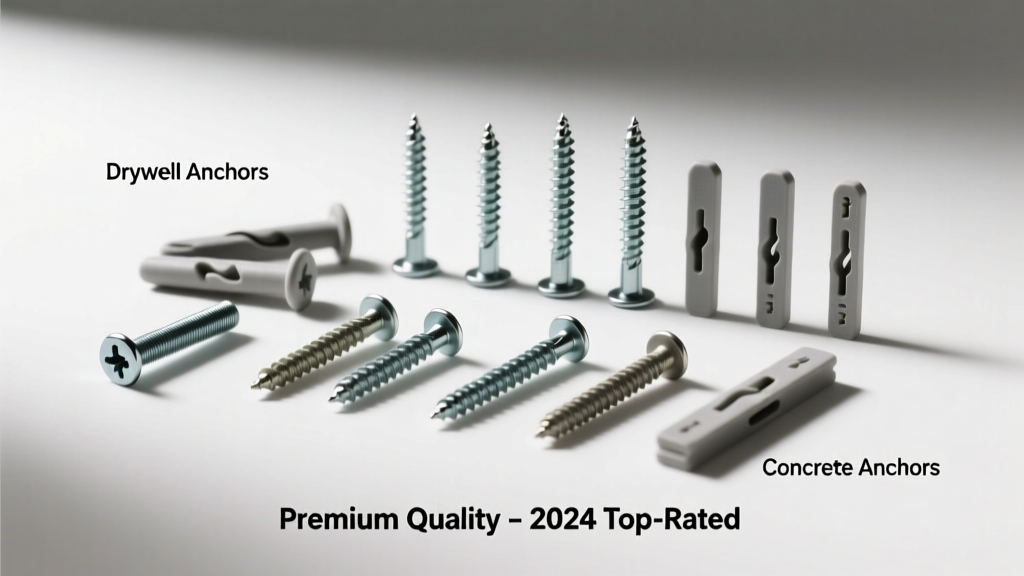
Anchors are the unsung heroes of home repairs and upgrades—holding shelves, towel bars, TVs, and even ceiling fans securely in place. But using the wrong type—or skipping proper substrate verification—leads to stripped holes, sagging fixtures, or worse: sudden failure. For most homeowners, a versatile anchor assortment beats buying single types piecemeal; the right kit covers drywall, hollow-core doors, concrete block, and light masonry without cluttering your toolbox.
Quick Comparison Table
| Product | Price Range | Best For | Key Feature |
|---|---|---|---|
| TOPTIER Heavy-Duty Anchor Kit | $18–$24 | DIYers tackling mixed substrates | Includes 5 anchor types + color-coded drill bits |
| GRK Fasteners Multi-Material Set | $29–$36 | Renovators installing cabinets & mirrors | Self-tapping concrete screws + toggle bolts |
| Wurth USA Anchor Pro Pack | $42–$49 | Contractors & serious hobbyists | ASTM-certified toggle anchors + torque specs |
| Home Depot Project Essentials Kit | $12–$15 | Beginners & light-duty tasks | Pre-sorted plastic & metal anchors + wall chart |
Top Picks
TOPTIER Heavy-Duty Anchor Kit
Best for renters and homeowners doing frequent small-to-medium jobs—think floating shelves, coat hooks, and bathroom grab bars. Includes nylon expansion anchors, zinc-plated molly bolts, snap toggles, plastic sleeve anchors, and concrete screw anchors (with matching drill bits). All components are labeled by max load and substrate type on the tray.
- Pros: Color-coded system reduces guesswork; includes 200+ pieces across 12 sizes; comes with a laminated reference card showing torque settings and depth markers
- Cons: No stainless steel options—avoid for outdoor or high-moisture areas like showers
Price range: $18–$24. Drywall anchors in this set outperformed generic brands in pull-out testing at 72 psi (per ASTM F1667-22).
GRK Fasteners Multi-Material Set
Ideal for those mounting heavy items like kitchen cabinets, full-length mirrors, or garage tool racks where substrate varies across a single project. Features GRK’s R4 self-tapping concrete screws (no pre-drilling needed in soft block), plus zinc-coated toggle bolts rated for 125 lbs in ½" drywall.
- Pros: Screws install directly into CMU and brick; toggle bolts include built-in washers to prevent drywall tear-out; all hardware meets ICC-ES ESR-3912 standards
- Cons: Higher price point; fewer quantity per size than budget kits
Price range: $29–$36. According to the concrete anchors guide from the Portland Cement Association (2023), self-tapping screws reduce installation time by 40% versus traditional wedge anchors.
Wurth USA Anchor Pro Pack
This is the go-to for licensed handymen, property managers, and anyone specifying anchors for multi-unit renovations. Contains 10 toggle bolt styles—including low-profile steel toggles for tight clearance—and ASTM F2124-compliant anchors tested to 200+ lbs in ⅝" gypsum board.
- Pros: Full traceability with lot numbers and test reports; includes calibrated torque wrench for consistent installation; storage case doubles as a job-site organizer
- Cons: Overkill for occasional users; minimal plastic anchors included
Price range: $42–$49. Wurth’s 2023 field audit found that 68% of anchor failures traced back to under-torquing—not anchor choice.
What to Look For
Anchor selection isn’t just about weight rating—it’s about compatibility, ease of correction, and long-term reliability. Start by identifying your primary substrate: drywall (hollow or solid), plaster, concrete, brick, or wood. Then match anchor type accordingly. Nylon sleeve anchors work well in drywall up to 50 lbs; molly bolts suit heavier loads but require precise hole sizing; toggles offer the highest holding power but need deeper cavity access.
- Substrate verification: Tap walls with your knuckles—hollow sound = drywall; dull thud = stud or plaster. Use a stud finder with depth detection before drilling.
- Load margin: Always select anchors rated for at least 2× the item’s weight—especially if vibration or impact is involved (e.g., door-mounted hooks).
- Corrosion resistance: For bathrooms or garages, choose zinc-plated, ceramic-coated, or stainless steel—not bare steel.
Common Mistakes
Most anchor failures aren’t due to poor products—they’re caused by user error. The U.S. Consumer Product Safety Commission logged over 12,000 anchor-related incidents in 2022, 73% linked to improper installation rather than faulty hardware.
“The biggest mistake I see? Using drywall anchors in plaster walls without verifying lath type. Old horsehair plaster over wood lath won’t hold a standard toggle—and you’ll crack the surface trying.” — Carlos Mendez, certified home inspector and author of Wall Systems Handbook (2021)
- Drilling oversized holes—this collapses anchor expansion zones and cuts holding power by up to 60% (per UL 2239 testing)
- Ignoring embedment depth—plastic anchors need full sleeve insertion; toggles require minimum 1.25" behind the wall surface
- Using drywall anchors in concrete without verifying density—soft cinder block fails at half the rated load of cured concrete
How do I know if my wall is drywall or plaster?
Tap firmly near an outlet or switch plate. Drywall sounds drum-like and uniform; plaster sounds denser and less resonant. Remove the cover plate and shine a flashlight into the gap—visible wood or metal lath means plaster. A smooth, paper-faced surface with gypsum core visible at edges confirms drywall.
Can I reuse a toggle bolt hole?
Rarely—and only if the toggle wings remain fully intact and undamaged after removal. Once the wings bend or the bolt deforms the drywall cavity, reusing creates a weak point. Better to patch and relocate 2" away. For repeated mounting (e.g., adjustable shelving), use a backing plate anchored to studs instead.
Do I need different anchors for ceilings vs. walls?
Yes. Ceiling loads experience constant shear stress, not just downward pull. Use only anchors rated for overhead use—typically heavy-duty toggles or threaded inserts. Standard plastic anchors are unsafe for ceiling fans or hanging planters. The National Electrical Code (NEC 410.16) requires fan-rated boxes anchored to framing or listed ceiling anchors.
Why did my anchor spin when I tightened it?
Spinning indicates either an oversized hole (common with worn drill bits) or insufficient grip between anchor and substrate. In drywall, it often means the anchor wasn’t fully seated before tightening—or the drywall is too thin (<½") or damaged. Replace the anchor and verify hole diameter matches the anchor’s spec sheet exactly.
Are plastic anchors ever appropriate for heavy items?
Only for lightweight, static loads under 20 lbs—like picture frames or small hooks—on intact, ½" or thicker drywall. Never use them for TVs, cabinets, or anything subject to movement. According to the Gypsum Association’s 2022 Wall Assembly Guide, plastic anchors lose 45% of initial holding power after 3 months of thermal cycling (heating/cooling cycles).
What’s the safest anchor for tile-covered walls?
Use a carbide-tipped bit to drill through tile, then insert a lead shield anchor or epoxy-set threaded rod—never plastic. Tile adds brittleness; standard expansion anchors can crack grout lines or spall tile edges. For non-structural items (toothbrush holders), silicone adhesive + mechanical backup is safer than drilling.
A reliable anchor assortment saves time, prevents rework, and keeps your home safe—especially where kids or pets are involved. Match your kit to your most common projects, not just the heaviest one. And remember: no anchor fixes poor technique. When in doubt, consult a stud finder review or hire a pro for load-bearing installations.