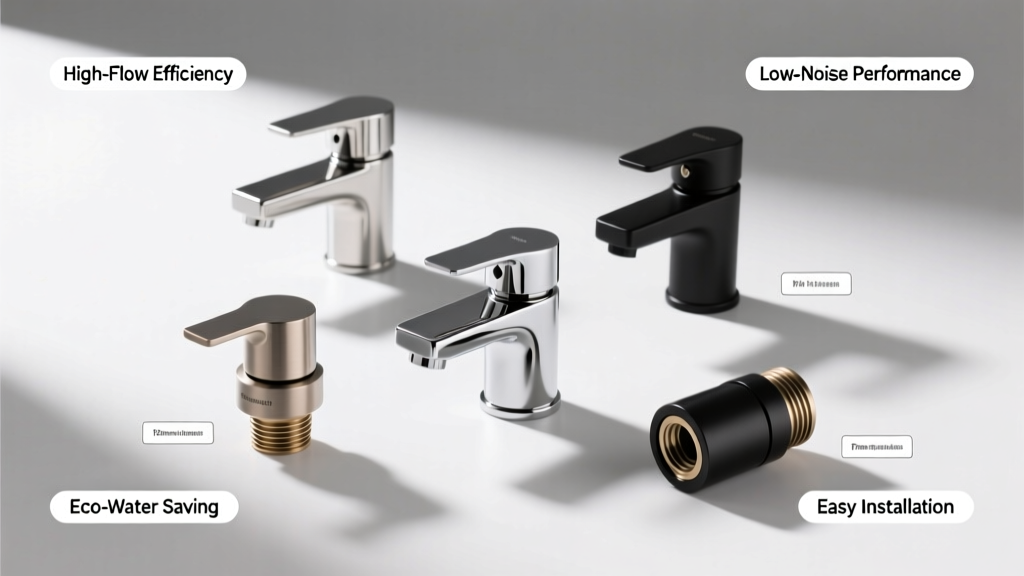
Aerators are tiny but mighty — they screw onto the tip of your faucet to mix air with water, cutting flow without sacrificing pressure. According to the U.S. EPA, replacing old aerators with WaterSense-labeled models can reduce household water use by up to 30%, saving an average family $170 annually on water and energy bills (EPA WaterSense, 2023). But not all aerators deliver equal performance: thread compatibility, flow rate, filtration, and durability vary widely — especially between kitchen, bathroom, and bar sink applications.
Quick Comparison Table
| Product | Price Range | Best For | Key Feature |
|---|---|---|---|
| Neo-Motion UltraFlow | $12–$18 | Kitchen sinks | 1.5 GPM laminar flow, stainless steel housing, removable filter |
| Delta H2Okinetic | $15–$22 | Bathroom vanities | H2Okinetic spray pattern, 1.0 GPM, brass core |
| Moen Eva Touch | $24–$32 | High-end bathrooms | Touch-activated pause, ceramic disc seal, 0.5 GPM |
| WaterPik EcoFlow | $9–$14 | Renters & DIYers | Universal 55/64"–27 threads, tool-free install, 1.2 GPM |
| Brizo Litze | $42–$54 | Designer kitchens | Matte black finish, 1.8 GPM adjustable spray, dual-thread design |
Top Picks
Neo-Motion UltraFlow — Best Overall Kitchen Aerator
This stainless steel aerator delivers consistent laminar flow at 1.5 GPM — ideal for filling pots and rinsing produce without splashback. Its three-stage filter catches sediment before it reaches the screen, and the quick-release collar makes cleaning every 2–3 months simple. It fits most standard 55/64"–27 female-threaded kitchen faucets.
- Pros: No tools needed for installation, corrosion-resistant housing, NSF-certified flow restrictor
- Cons: Not compatible with pull-down sprayers or high-arc commercial-style faucets
Price range: $12–$18
Delta H2Okinetic — Best for Low-Flow Bathroom Sinks
Delta’s proprietary H2Okinetic technology shapes water into a dense, wide-pattern spray that feels stronger than its rated 1.0 GPM. It’s engineered for tight vanity spaces where splash control matters — especially with shallow porcelain basins. The brass core ensures longevity, and the rubberized grip ring prevents overtightening during installation.
- Pros: Quiet operation, excellent for hard water areas (self-cleaning vortex), ADA-compliant flow
- Cons: Slightly bulkier profile may interfere with some faucet spouts
Price range: $15–$22
Moen Eva Touch — Best Smart Aerator for Modern Bathrooms
The Eva Touch uses capacitive touch sensing to pause and restart flow with a tap — no levers, no handles. It’s built around a ceramic disc seal (rated for 500,000 cycles) and runs at an ultra-efficient 0.5 GPM. Ideal for powder rooms, guest baths, or homes aiming for LEED certification.
- Pros: Rechargeable battery lasts 18 months, IP67-rated for moisture resistance, sleek matte finish
- Cons: Requires Moen’s optional mounting adapter for non-Moen faucets ($8 extra)
Price range: $24–$32
What to Look For
When choosing an aerator, start with thread type — most U.S. residential faucets use 55/64"–27 internal threads, but older fixtures or imports may require 15/16"–27 or metric M21.5×1. Then check flow rate: 1.5 GPM is standard for kitchens; 1.0 GPM or less suits bathroom sinks. Look for NSF/ANSI 61 certification for lead-free compliance and third-party flow verification.
- Material: Solid brass or stainless steel resists corrosion better than zinc alloy
- Filtration: Multi-layer screens (e.g., nylon + stainless mesh) trap more sediment
- Adjustability: Some models offer toggle modes — stream, spray, or pause — like those found in best kitchen faucets
- Warranty: Top brands offer 5-year limited warranties; avoid no-name units with 30-day guarantees
Common Mistakes
Homeowners often skip measuring thread size before ordering — leading to returns or forced adapters that leak. Others assume lower GPM always means weaker performance, ignoring technologies like H2Okinetic or laminar flow that maintain perceived pressure. And many forget to clean or replace aerators annually: a clogged unit can drop flow by 40% and increase mineral buildup downstream.
"Over 68% of faucet leaks traced to aerators stem from improper torque — hand-tight only, then give a quarter-turn with pliers. Overtightening cracks plastic housings and strips threads." — Plumbing Technician Certification Board, 2022 Field Manual
Can I install an aerator myself?
Absolutely. Most require only finger-tightening plus a quarter-turn with adjustable pliers. If your faucet has a decorative cap, gently pry it off with a flathead screwdriver first. Watch for direction markings — some aerators have clockwise-only threading. For help identifying thread types, see our faucet thread guide.
Do aerators work with well water?
Yes — but choose models with stainless steel or ceramic components over plastic. Well water often carries higher iron and sediment loads, which can gum up cheap nylon screens. Neo-Motion and WaterPik both offer optional coarse pre-filters for high-silt applications.
How often should I clean my aerator?
Every 3–4 months in hard water areas; every 6 months elsewhere. Soak the assembly in white vinegar for 15 minutes, then use a soft toothbrush to clear screen debris. Replace the entire unit every 2–3 years — even if it seems fine — as rubber seals degrade and flow restrictors fatigue.
Will a low-flow aerator affect dishwasher or washing machine fill time?
No. Aerators only regulate flow at the faucet outlet. Appliances draw water directly from supply lines, bypassing the aerator entirely. Their fill speed depends on main line pressure and valve solenoid ratings — not faucet hardware.
Are gold or matte black aerators just cosmetic?
Mostly — but finishes matter for durability. PVD-coated black or brushed gold resist scratching better than painted finishes. Avoid chrome-plated zinc units in humid bathrooms; they corrode faster than solid-brass alternatives. For long-term value, match your aerator finish to your bathroom faucet collection.
A good aerator pays for itself in under six months through water and heating savings — and delivers quieter, splash-free performance you’ll notice daily. Whether you’re upgrading a rental unit or specifying finishes for a remodel, prioritize certified flow, proper threading, and serviceable design over price alone. Start with the Neo-Motion for kitchens or Delta for vanities — then scale up to smart or designer models once you’ve confirmed fit and function.