When your hose runs dry before your lawn does—or your water bill spikes every July—you’re not failing at gardening. You’re just using the wrong playbook. Xeriscaping isn’t about surrendering to gravel and cacti; it’s about designing landscapes that thrive with what your region naturally provides. And it works: homes in Colorado Springs using certified xeriscape principles reduced outdoor water use by 58% over three years, per the City of Colorado Springs Water Conservation Office’s 2022 evaluation.
Start with Soil, Not Seeds
Most xeriscaping failures begin underground. Native plants suffer in compacted clay or nutrient-poor sand—not because they’re ‘tough,’ but because their roots can’t breathe or access moisture. Test your soil first (a $15 kit from soil-testing-kit-reviews covers pH, texture, and organic matter). Then amend strategically: mix 3 inches of compost into the top 6 inches for clay soils; add coarse sand and aged manure for sandy beds. Skip peat moss—it dries out irreversibly and harms carbon sequestration, per the U.S. EPA’s 2021 Soil Health Guidelines.
- For clay-heavy yards (common in Midwest suburbs), rototill compost *only* into planting holes—not the whole bed—to avoid creating a ‘bathtub effect’
- In desert Southwest soils, skip nitrogen-heavy fertilizers—native shrubs like creosote bush actually decline with excess N
- Use mulch *after* planting: 3–4 inches of shredded bark or decomposed granite suppresses weeds *and* cuts evaporation by 25%, says the Colorado State University Extension (2023)
Group Plants by Thirst Level
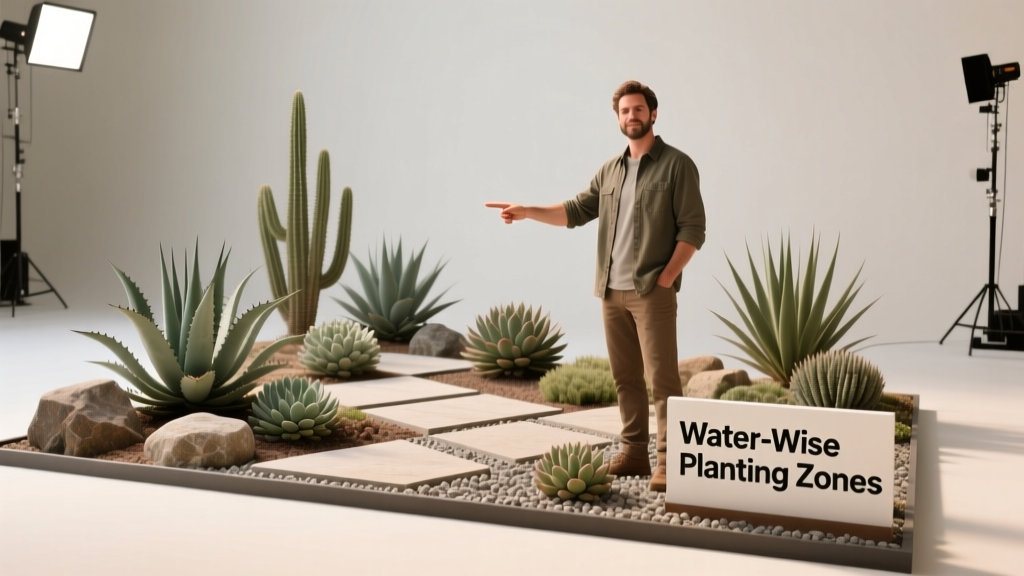
Hydrozoning isn’t optional—it’s the core logic of xeriscaping. Irrigating a lavender hedge next to a thirsty Japanese maple forces one plant to drown or the other to wilt. Map your yard into three zones: high-water (near patios or play areas, only if essential), medium-water (established perennials like penstemon), and low-water (90% of your landscape: yucca, sagebrush, blue fescue).
Here’s how hydrozoning plays out in practice:
| Zone | Max Weekly Water (inches) | Plant Examples |
|---|---|---|
| Low-water | 0–0.5 | Desert marigold, brittlebush, Apache plume |
| Medium-water | 0.5–1.0 | Blanket flower, Russian sage, autumn sage |
| High-water (limited use) | 1.0–1.5 | Dwarf fruit trees, culinary herbs, dwarf boxwood |
Smart Irrigation Beats More Water
Drip lines beat sprinklers every time—for xeriscapes. Sprinklers lose 30–50% of water to wind drift and evaporation (American Water Works Association, 2022). Drip delivers 90%+ efficiency *at the root zone*, where plants need it. Install pressure-compensating emitters (0.5–1.0 gph) on 18-inch spacing for shrubs; use micro-sprayers only for dense groundcovers like creeping thyme.
Pair drip with a smart controller that adjusts for rainfall and temperature—like the Rachio 3 or Orbit B-hyve. These cut seasonal irrigation by 22% on average, per the California Urban Water Conservation Council’s 2023 field trial.
“Drip tubing laid *under* mulch—not on top—cuts emitter clogging by 70% and extends system life to 12+ years.” — Karen Lopez, Landscape Irrigation Specialist, Desert Botanical Garden (2021)
Quick Reference Checklist
Before you break ground or order plants, run through this reality-check list:
- Soil test completed and amendments calculated
- Site map drawn with sun exposure, slope, and existing drainage noted
- Plant list verified for USDA Hardiness Zone *and* local invasive species bans (e.g., fountain grass is prohibited in Arizona)
- Irrigation plan includes shutoff valves for each hydrozone
- Mulch budget set: allow $0.85–$1.20/sq ft for quality shredded bark or crushed granite
Common Mistakes That Waste Time & Water
Even experienced gardeners misstep here. The top three errors? First: installing non-native ‘drought-tolerant’ plants like lavender or rosemary in heavy clay without soil prep—they’ll yellow and die by year two. Second: over-mulching (more than 4 inches), which suffocates roots and invites crown rot. Third: skipping the ‘first-year watering schedule’—yes, even xeric plants need weekly deep soaks for 8–12 weeks after planting to establish roots.
Also avoid these pitfalls:
- Using river rock instead of organic mulch on slopes—it heats soil, kills microbes, and washes away in rain
- Planting all ‘low-water’ species too close together—crowding increases humidity and disease risk, especially for penstemon and salvia
- Assuming turf alternatives like buffalo grass need zero mowing—they do need annual edging and occasional mowing to 3 inches to prevent thatch
How soon can I stop watering after planting?
Not as soon as you’d hope. Most native shrubs and perennials need consistent deep watering once a week for 8 weeks. After that, taper to every 10–14 days for another month. By month four, switch to monthly deep soaks—unless rainfall exceeds 1 inch. Monitor soil moisture with a $12 metal probe: if it slides in 6 inches easily, hold off.
Do I still need fertilizer in a xeriscape?
Rarely—and never synthetic nitrogen. Most native plants evolved in lean soils. Over-fertilizing triggers weak, water-hungry growth. If your soil test shows deficient phosphorus or potassium, use a slow-release organic blend (like bone meal + greensand) at half the label rate—once, at planting. Re-test every 3 years.
Can I xeriscape in shade?
Absolutely—but choose carefully. Avoid assuming ‘shade-tolerant’ means ‘drought-tolerant.’ Instead, pick natives adapted to both conditions: Oregon grape holly (Mahonia aquifolium), western sword fern (Polystichum munitum), or coral bells (Heuchera sanguinea). In deep shade under mature oaks, use leaf litter—not mulch—as the groundcover base to mimic natural forest floor conditions.
What’s the best groundcover for steep slopes?
Creeping juniper (Juniperus horizontalis) works in full sun and USDA Zones 3–9—but avoid it near fire-prone areas (its oils are flammable). Better bets: snow-in-summer (Cerastium tomentosum) for Zones 3–7, or trailing lantana (Lantana montevidensis) for Zones 8–11. All three spread aggressively *enough* to hold soil, but won’t choke out neighboring natives when pruned lightly each spring.
How do I handle HOA restrictions on ‘natural’ looks?
Many HOAs ban gravel or ‘messy’ native gardens—but most can’t override state water-conservation laws. In California, AB 1062 (2019) prohibits HOAs from banning drought-tolerant landscaping. Document your plan with photos, plant IDs, and a note referencing your state’s water-wise ordinance. Offer to install a tidy border of low brick or corten steel edging—it satisfies aesthetic rules *and* defines the space cleanly. For inspiration, see our hardscaping-ideas-for-xeriscapes guide.
Will xeriscaping increase my home’s resale value?
Data says yes—but only if done well. A 2023 Freddie Mac study found homes with professionally designed, irrigated xeriscapes sold 4.2% faster and for 2.7% more than comparable properties with traditional lawns in arid ZIP codes (85001–85299). Key: include visible maintenance cues—clean edging, labeled plant tags, and functional irrigation access points—to signal care, not neglect.
Xeriscaping isn’t about sacrifice. It’s about swapping constant upkeep for thoughtful design—where every plant, path, and pipe serves purpose *and* beauty. Start small: convert one 10×10 bed this season. Watch how bees find the penstemon, how little you refill the hose, how much calmer your August feels. That’s not scarcity. That’s resilience, rooted.