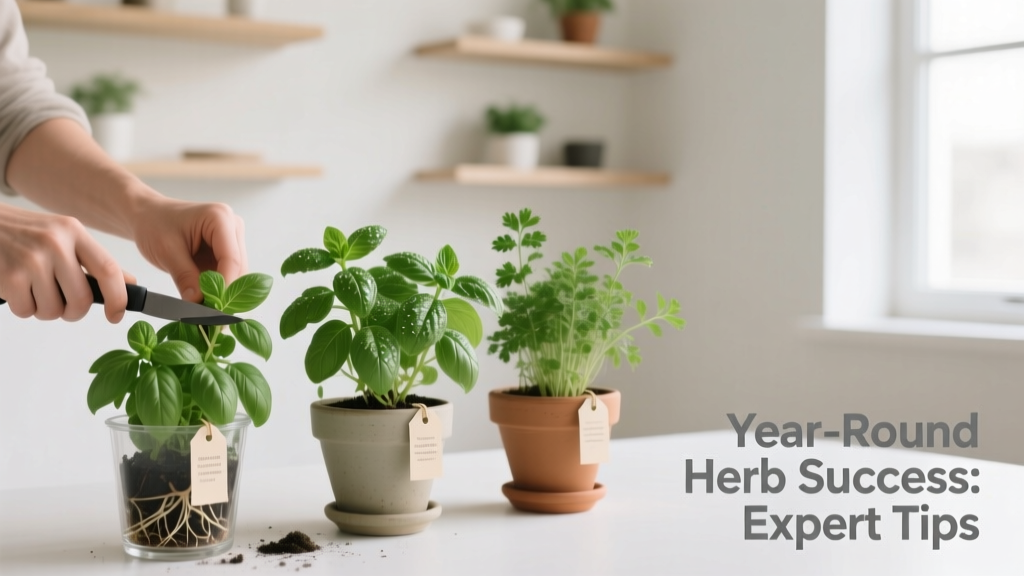
Most people assume indoor herb gardens fail because they don’t have a green thumb—but it’s usually about mismatched light, overwatering, or cramped pots. I’ve killed three batches of thyme in my Brooklyn apartment before cracking the code: herbs aren’t houseplants. They’re miniature crops that need precise conditions—and once you nail those, you’ll snip fresh basil for pasta every Tuesday.
Light: Not All Windows Are Equal
South-facing windows deliver 5–6 hours of direct sun—ideal for rosemary, oregano, and thyme. East-facing gives 3–4 hours of gentle morning light: perfect for cilantro and parsley. West works for mint and chives if you shade them after 3 p.m. North-facing? Skip basil and dill entirely; stick to low-light tolerant lemon balm or Vietnamese coriander.
- Use a $15 light meter app (like Lux Light Meter) to confirm readings—aim for 1,000–3,000 lux for most culinary herbs
- If natural light falls short, add a 24-watt full-spectrum LED bar (e.g., Barrina T5) hung 6 inches above leaves
- Rotate pots every 2 days—herbs lean hard toward light, causing lopsided growth and weak stems
Watering: Less Is More (and Timing Matters)
Stick your finger 1 inch into the soil. If it feels cool and slightly damp, wait. If dry and crumbly, water deeply until it runs from the drainage holes—then empty the saucer within 15 minutes. Overwatering causes root rot in 7 out of 10 failed indoor herb attempts (University of Illinois Extension, 2022).
Water early in the morning—not at night—so foliage dries before humidity rises. And never mist herbs like you would ferns; wet leaves invite powdery mildew, especially on sage and lavender.
"Herbs evolved in rocky, well-drained Mediterranean soils—not soggy potting mix. If you're checking soil daily, you're probably watering too often." — Dr. Linda Chalker-Scott, Washington State University Extension, 2021
Pots, Soil & Feeding: The Unseen Foundation
Ceramic or fabric pots breathe better than plastic—critical for preventing waterlogging. Choose containers at least 6 inches deep and wide (8 inches for rosemary or bay). Never reuse old potting soil: it compacts, loses nutrients, and harbors pathogens.
Use a mix of 2 parts potting soil, 1 part perlite, and 1 part coarse sand. Feed every 3 weeks with a diluted liquid fertilizer (half-strength fish emulsion or Espoma Organic Herb-Tone), but skip feeding for the first 4 weeks after transplanting.
- Repot every 8–10 weeks—roots fill small pots fast, stunting leaf production
- Add a ½-inch layer of gravel or lava rock at the bottom *only* if drainage is truly poor; otherwise, it traps water
- Label each pot with herb name + planting date using waterproof tape—prevents confusion when leaves look similar
Quick Reference Checklist
| Task | Frequency | Notes |
|---|---|---|
| Check soil moisture | Every other day | Use finger test—not just surface glance |
| Rotate pots | Every 2 days | Mark north side with a dot of nail polish |
| Trim tops regularly | Weekly | Pinch above leaf nodes to encourage bushiness |
| Clean leaves | Every 10 days | Wipe gently with damp microfiber cloth |
| Inspect for pests | Twice weekly | Look under leaves for aphids or spider mites |
Common Mistakes That Kill Indoor Herbs
Grouping herbs with clashing needs is the top error—mint loves wet feet while rosemary demands drought. Putting all herbs on the same shelf ignores microclimate differences: upper shelves get hotter and drier; lower ones stay cooler and damper.
Using garden soil indoors introduces fungus gnats and compaction. And harvesting less than ⅓ of a plant at once seems cautious—but actually starves the plant of photosynthetic capacity, slowing regrowth.
- Planting multiple herbs in one pot (except compatible pairs like basil + parsley)
- Ignoring seasonal light shifts—move pots closer to windows in winter
- Pruning with dull scissors (crushes stems, invites disease)
- Assuming humidity trays help—most herbs prefer airflow, not stagnant moisture
How often should I harvest indoor herbs?
Harvest 1–2 times per week during active growth (spring/summer), cutting no more than ⅓ of the foliage at once. In winter, reduce to every 10–14 days. Frequent, light harvesting stimulates branching—skip a week, and stems get leggy and woody.
Can I grow herbs from grocery store clippings?
Yes—but only certain ones. Basil, mint, and lemon balm root reliably in water (change water every 2 days). Place cuttings in a clear glass with 2 inches of water and indirect light. Once roots hit 1.5 inches, pot in soil. Skip rosemary or thyme—these rarely root from store-bought stems.
Why do my indoor herbs get tall and spindly?
It’s almost always insufficient light intensity—not duration. Even 12 hours of weak fluorescent light won’t prevent etiolation. Move closer to the window, add supplemental LEDs, or switch to lower-light herbs like chives or stevia. Also check if you’re over-fertilizing nitrogen: excess causes stem stretch, not leaf density.
Do I need different pots for different herbs?
Yes. Rosemary and lavender thrive in unglazed terra cotta (it wicks moisture). Mint and parsley prefer plastic or glazed ceramic—they hold moisture longer. Use self-watering pots only for chives or cilantro, never for Mediterranean herbs.
How do I keep aphids off indoor herbs?
Spray affected leaves with a mix of 1 tsp neem oil + 1 quart water every 3 days for 2 weeks. For severe infestations, isolate the plant and wipe each leaf with cotton swabs dipped in 70% isopropyl alcohol. Prevent recurrence by increasing airflow and avoiding overhead watering—aphids love humid, still air.
Should I use tap water or filtered water?
Filtered or rainwater is best—especially for basil and cilantro, which are sensitive to chlorine and fluoride. If using tap water, let it sit uncovered for 24 hours to off-gas chlorine. Hard water buildup shows as white crust on soil surface; flush pots monthly with distilled water.
Start small: one basil, one mint, one parsley. Master their rhythms before adding rosemary or thyme. You’ll know you’ve got it right when you catch yourself pausing mid-recipe to snip a sprig of basil straight into the pan—no trip to the store, no wilted plastic clamshell. For more on container prep, see our best potting mix for indoor plants. And if pests strike, our organic indoor pest control guide walks through safe, kitchen-tested fixes.