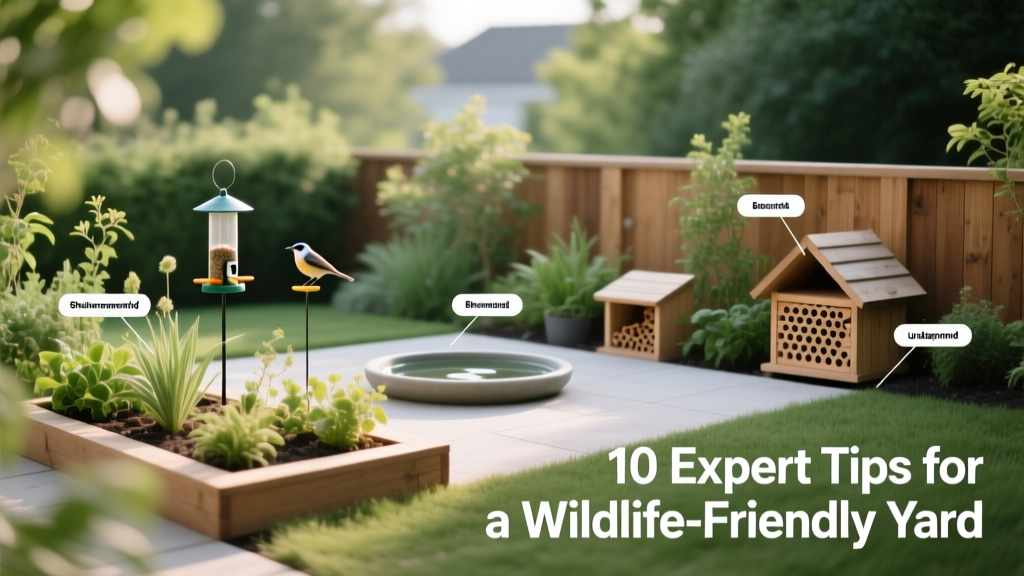
Turning your yard into a haven for wildlife doesn’t require acres of land—or even a complete landscape overhaul. It starts with small, intentional choices: swapping one invasive shrub for three native perennials, leaving leaf litter under that oak instead of raking it all up, or installing a shallow birdbath with a rough stone ledge. These actions add up fast—especially when you know which ones deliver the biggest ecological return.
Plant Native Species Strategically
Native plants support 90% more insect species than non-natives, according to Doug Tallamy’s Braiding Sweetgrass (2022) research cited in the National Wildlife Federation’s 2023 Habitat Certification Guide. Focus on layers: canopy trees (like serviceberry or eastern red cedar), understory shrubs (e.g., spicebush or buttonbush), and groundcovers (wild ginger, goldenrod, or purple coneflower).
- Plant in clusters—not single specimens—to mimic natural stands and improve pollinator navigation
- Aim for at least three species that bloom in each season (spring: redbud; summer: milkweed; fall: aster)
- Avoid cultivars with double blooms or sterile flowers—they offer little nectar or pollen
Create Safe Water & Shelter
Water is often the limiting factor for wildlife in suburban yards—especially during dry spells. A reliable, shallow source (2–3 inches deep) with sloped edges or stones for grip attracts birds, frogs, and beneficial insects without drowning risk.
Shelter goes beyond birdhouses. Leave dead snags (if safe), stack brush piles in quiet corners, and keep a 6-inch layer of leaf litter under native trees—it’s home to over 40 species of moth pupae, many of which feed chickadee nestlings.
"A yard with just one mature native oak supports over 500 species of caterpillars—the primary food for most backyard songbirds." — Dr. Doug Tallamy, University of Delaware, 2021
Best Birdhouse Dimensions by Species
| Species | Hole Diameter (in) | Floor Size (in) | Depth (in) |
|---|---|---|---|
| Chickadee | 1 1/8 | 4 × 4 | 8–10 |
| Bluebird | 1 1/2 | 5 × 5 | 8–12 |
| Wren | 1 1/4 | 4 × 4 | 6–8 |
| Tree Swallow | 1 1/2 | 5 × 5 | 6–8 |
Reduce or Eliminate Pesticides & Herbicides
Neonicotinoid insecticides persist in soil for up to 1,000 days and have been linked to bumblebee colony collapse and reduced monarch butterfly larval survival (Xerces Society, 2022). Instead, encourage natural pest control: install ladybug hotels, plant dill and fennel for parasitic wasps, and tolerate some leaf damage—it means caterpillars are feeding and birds are nearby.
- Replace turf grass with native sedges or clover patches—reduces mowing and chemical use
- Use horticultural oil or insecticidal soap only as a last resort—and never during peak pollinator activity (10 a.m.–4 p.m.)
- Hand-pull invasive weeds like garlic mustard before they seed; avoid broad-spectrum herbicides near wildflower beds
Quick Reference Checklist
Use this list to audit your yard in under 10 minutes. Check off what you already do—and pick one new action to try this month.
- At least 70% of plants are native to your ecoregion (find yours here)
- One year-round water source (cleaned weekly)
- No synthetic pesticides applied in the last 12 months
- At least one brush pile, log stack, or standing dead tree
- Leaf litter left intact under at least one native tree
- Night lighting uses motion sensors or amber LEDs (learn why)
Common Mistakes to Avoid
Even well-intentioned gardeners accidentally undermine wildlife goals. Here’s what trips people up—and how to fix it:
- Over-pruning native shrubs in late summer: You’re cutting off next year’s flower buds and shelter. Prune right after flowering (e.g., spicebush in early June).
- Using “wildlife-friendly” mulch that’s actually toxic: Avoid dyed rubber mulch or cocoa hulls (toxic to dogs and insects). Stick with shredded hardwood or pine straw.
- Installing bird feeders without predator safeguards: Place feeders either within 3 feet of windows (so birds can’t gain fatal speed) or 30+ feet away—and add a baffle on poles.
- Choosing non-native “pollinator plants” like lavender or butterfly bush: They attract adults but don’t host larvae. Replace Buddleia davidii with native Joe-Pye weed or New England aster.
Do I need a big yard to help wildlife?
No—you need intentionality. A 4×4-foot patio planter with goldenrod, coneflower, and little bluestem grass supports bees, moths, and sparrows. Balcony dwellers can hang native vines like trumpet honeysuckle (not Japanese honeysuckle) and add a wall-mounted birdbath.
What about deer or raccoons? Won’t they ruin everything?
They’ll visit—but rarely cause lasting harm if you diversify. Plant deer-resistant natives like mountain mint or asters alongside preferred species. Use temporary fencing only around newly planted saplings. Raccoons eat grubs and beetles—let them forage at night, then secure trash lids and remove pet food after dusk.
Can I still have a lawn?
Absolutely—but shrink it. Replace perimeter strips with native groundcovers like creeping phlox or Pennsylvania sedge. Mow high (3–4 inches) to shade out weeds and allow clover to bloom. Skip the fertilizer: most native plants thrive in low-nutrient soil.
How long until I see results?
You’ll spot more bees and butterflies in weeks. Birds nesting in your brush pile or new boxes may take 1–2 seasons. Caterpillar diversity increases noticeably within 12–18 months of planting native oaks, cherries, or willows—key host plants for dozens of Lepidoptera species.
Are there legal restrictions on creating wildlife habitat?
Rarely—but check local ordinances before installing ponds deeper than 24 inches (some require fencing) or removing large trees (permits may apply). Most HOAs can’t prohibit native plantings thanks to state-level Right-to-Farm or Pollinator Protection laws—like Minnesota’s 2023 Native Plant Ordinance Act.
Your yard isn’t just property—it’s part of a living corridor. Every native plant, every unmowed corner, every pesticide-free season stitches together resilience for species facing shrinking habitats. Start where you are. Choose one change. Then another. The fox kits, the hummingbirds, the fireflies—they’ll notice.