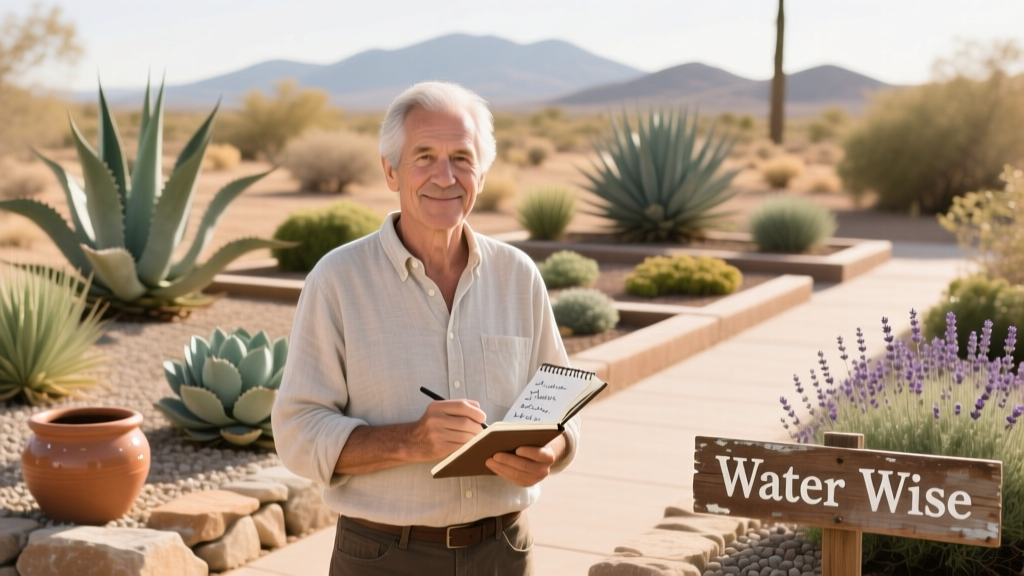
Most homeowners water their gardens like it’s 1985—deep, daily, and drenched—while droughts tighten and utility bills climb. In California alone, residential outdoor water use accounts for 50–80% of total household consumption (Pacific Institute, 2022). Water wise gardening isn’t about going barren; it’s about working with your soil, climate, and plants—not against them.
Choose Climate-Adapted Plants First
Start with species that evolved where you live—or in similar conditions. Native California sages, Texas lantana, and Arizona penstemon thrive on winter rain and summer dormancy. Avoid assuming ‘drought-tolerant’ means ‘zero-water’: many labeled plants still need 1–2 deep soakings per month in their first year to establish roots.
- Replace thirsty lawn patches with creeping thyme or dwarf yarrow—both bloom, suppress weeds, and need zero supplemental water once established
- Use the Native Plant Finder tool from the National Wildlife Federation to match species to your ZIP code and soil type
- Group plants by water need (hydrozoning) so drip lines don’t overwater lavender while under-watering nearby tomatoes
Amend Soil—Not Just Add Mulch
Mulch helps, but it’s a bandage—not the cure. Sandy soil drains too fast; clay holds water but chokes roots. The fix? Blend in compost at planting time: 3 inches tilled into the top 6 inches boosts water retention by up to 25% (USDA Natural Resources Conservation Service, 2021). For raised beds, mix in coconut coir—it absorbs 10x its weight in water and releases slowly.
"Soil organic matter is the single biggest lever for water efficiency in home gardens. Every 1% increase in OM saves ~16,500 gallons per acre-year." — Dr. Sarah L. Anderson, UC Davis Soil Science Extension, 2023
Time Irrigation Like a Pro
Watering at noon wastes 30%+ to evaporation. Early morning (5–8 a.m.) gives roots time to absorb before heat spikes. Use a smart controller like Rachio or RainMachine—they adjust for local weather and soil moisture readings. Even basic timers should run longer, less often: 45 minutes twice weekly beats 15 minutes daily.
- Drip emitters deliver 0.5–2 gallons/hour—ideal for shrubs and perennials; avoid spray heads unless you’re watering newly seeded native grasses
- Install a rain sensor (under $25) to shut off irrigation automatically after 0.25" of rain
- Check pressure-compensating emitters every spring—they prevent uneven flow on slopes
Quick Reference Checklist
| Task | Time Required | Tool/Resource Needed |
|---|---|---|
| Map sun/shade patterns across your yard | 20 minutes | Free Sun Survey app or notebook + compass |
| Test soil texture with jar test | 15 minutes + 24 hrs wait | Mason jar, water, soil sample |
| Install drip line for 3 priority beds | 2–3 hours | 1/4" tubing, emitters, punch tool, timer |
| Apply 3–4" mulch (wood chips or gravel) | 1 hour | Wheelbarrow, rake, mulch delivery or bagged |
Common Mistakes That Waste Water
Even experienced gardeners repeat these errors—often because they seem harmless:
- Over-pruning drought-adapted shrubs: Cutting back sage or ceanothus midsummer triggers new growth that demands more water
- Using bark mulch around young trees: It pulls nitrogen from soil as it breaks down—use compost + wood chips instead
- Irrigating based on calendar, not conditions: A cool, cloudy week needs half the water a hot, windy one does—even if it’s “Tuesday”
- Ignoring runoff: If water pools or runs off before soaking in, reduce flow rate or break irrigation into shorter cycles
How often should I water newly planted natives?
First 2 weeks: every 2–3 days (soil surface moist but not soggy). Weeks 3–6: every 4–5 days. After week 7: taper to once every 10–14 days—unless rainfall exceeds 0.5". Use a 6-inch soil probe to check moisture depth before turning on the hose.
Can I reuse greywater safely in my garden?
Yes—if filtered and used correctly. Laundry-to-landscape systems (with biodegradable, low-sodium detergents) work well for fruit trees and ornamentals—but avoid using on vegetables or root crops. According to the California Graywater Guide (2023), 20–30 gallons per load can irrigate 100 sq ft of landscape weekly.
Do rain barrels really save water?
They do—but only if sized right and used consistently. A 55-gallon barrel fills in ~0.3" of rain on a 10'×12' roof. To offset even 10% of summer irrigation for a 500-sq-ft garden, you’d need four 80-gallon barrels plus a gravity-fed drip kit. Better yet: link barrels to overflow into swales or rain gardens, as shown here.
Why are my drip emitters clogging?
Hard water minerals and fine sediment are the usual culprits. Install a 150-micron filter at the mainline inlet—and flush lines quarterly by opening the end cap and running for 2 minutes. If you’re on well water, add a pre-filter rated for iron removal.
Is drip irrigation worth the setup cost?
Absolutely—for anything beyond container gardening. Drip uses 30–50% less water than sprinklers (EPA WaterSense, 2022) and cuts weed germination by 70%. A basic 200-foot kit costs $85–$120 and pays back in water savings within 1–2 seasons in most arid zones.
What’s the best mulch for water retention?
Shredded hardwood chips win for long-term soil health (lasts 2–3 years, feeds microbes). Gravel works for rock gardens and fire-prone areas—but reflects heat and doesn’t improve soil. Avoid straw near doors (harbors rodents) and dyed mulches (leach heavy metals in acidic soils).
Water wise gardening isn’t austerity—it’s precision. You’ll spend less time dragging hoses and more time watching bees hover over lavender, birds dart through manzanita, and your garden thrive on what nature already provides. Start with one bed, track your meter for a month, and compare. Most readers see measurable drops by week three.