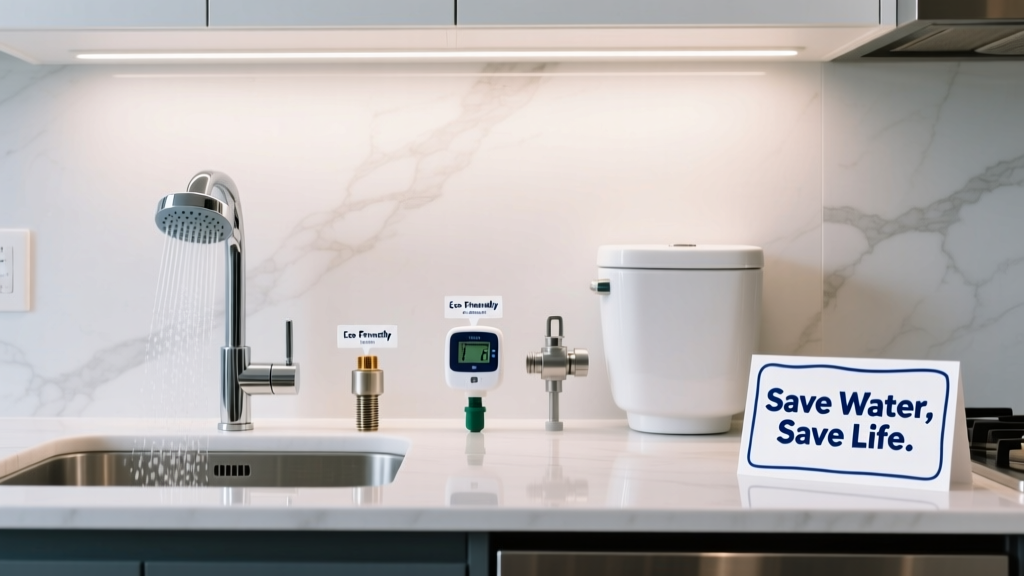
Most households waste nearly 10,000 gallons of water annually from leaks alone — that’s enough to wash 270 loads of laundry (U.S. EPA, 2023). And it’s not just toilets: dripping faucets, overwatered lawns, and inefficient appliances quietly inflate bills and strain local supplies. The good news? Over 80% of this waste is preventable with low-effort, high-impact habits.
Fix Leaks Before They Multiply
A faucet dripping once per second wastes about 3,000 gallons per year — more than many families drink in a decade. Start with the big three: toilets, outdoor spigots, and under-sink supply lines. Place a dry paper towel behind shutoff valves; if it’s damp after 12 hours, replace the compression ring or washer. For toilet flappers, add a few drops of food coloring to the tank; if color appears in the bowl within 10 minutes without flushing, replace the flapper ($3–$5 at hardware stores).
- Check irrigation system valves monthly — look for wet soil or pooling near heads
- Test your water meter before and after a two-hour no-use period; movement means a hidden leak
- Keep a log: note date, location, and fix applied — helps spot recurring issues
Optimize Outdoor Water Use
Landscape irrigation accounts for nearly 30% of residential water use nationwide (USDA Natural Resources Conservation Service, 2022). Skip the timer-based schedule — instead, use a screwdriver to lift the rain sensor arm on your controller and test its response. If it doesn’t pause watering within 90 seconds of simulated rain, replace the sensor ($12–$22). Water early (before 6 a.m.) or late (after 8 p.m.) to cut evaporation losses by up to 30%.
Swap thirsty turf for native groundcovers like creeping thyme or sedum — they need zero supplemental water once established. A 200-square-foot section of Kentucky bluegrass drinks 20,000 gallons yearly; the same area planted with drought-tolerant lavender uses under 2,000.
Smart Sprinkler Upgrades
Upgrade one zone at a time with rotating nozzles (MP Rotators) — they deliver water 30% slower but 50% more evenly than spray heads. Pair them with a smart controller like Rachio or WeatherTRAK that adjusts run times based on hyperlocal weather forecasts and soil moisture data.
Reinvent Your Indoor Habits
Shorten showers by installing a low-flow showerhead (1.8 GPM or less). The U.S. EPA WaterSense-labeled models cut usage by 20–40% without sacrificing pressure. Also: scrape dishes instead of rinsing before loading the dishwasher — modern machines don’t require pre-rinsing, and skipping that step saves 6–20 gallons per load.
"A single family switching to WaterSense fixtures can save 5,000 gallons annually — equivalent to 100 full bathtubs." — U.S. Environmental Protection Agency, WaterSense Program, 2023
Laundry Load Logic
Wait until you have a full load — but don’t overload. An overloaded washer reduces cleaning efficiency and often triggers extra rinse cycles. For small loads, use the 'half-load' or 'eco' setting only if your machine has a dedicated water-level sensor (not just a dial). Top-loaders with agitators use ~25% more water than high-efficiency front-loaders.
Quick Reference Checklist
| Action | Annual Savings | Cost | Time to Implement |
|---|---|---|---|
| Replace toilet flapper | 5,000 gal | $4 | 10 minutes |
| Install aerators on all sinks | 700 gal | $8 | 15 minutes |
| Switch to drip irrigation for beds | 3,200 gal | $45 | 2 hours |
| Set water heater to 120°F | 200 kWh + reduced hot water use | $0 | 5 minutes |
Common Mistakes That Waste Water
Many people assume turning the faucet to “low” saves water — but most standard aerators still flow at 2.2 GPM even on low. True savings come from reducing flow *and* duration. Others overwater container plants because they’re visible on patios — yet pots dry faster than in-ground beds and rarely need daily watering, even in summer.
- Running the tap while brushing teeth (up to 4 gallons wasted per session)
- Using a hose to clean driveways instead of a broom (10+ gallons/minute)
- Setting irrigation clocks for fixed weekly schedules, ignoring rainfall or soil saturation
- Installing high-pressure spray nozzles on garden hoses — they use 10–15 GPM vs. 1–2 GPM for trigger-nozzle types
How much water does a running toilet waste?
A continuously running toilet loses about 200 gallons per day — roughly 73,000 gallons yearly. That’s enough to fill a small above-ground pool. Listen for hissing or trickling sounds after flushing; if you hear either, check the flapper seal or float height.
Do low-flow showerheads really work?
Yes — when properly installed and maintained. WaterSense-certified models must pass strict performance tests for spray force, coverage, and consistency. Look for ones with self-cleaning nozzles (like the Niagara Earth Massage) to avoid mineral clogging in hard water areas.
Is it worth installing a rain barrel?
For small-scale watering (containers, window boxes, new transplants), yes — especially in regions with frequent spring rains. A 55-gallon barrel fills in under 30 minutes during a 0.25-inch rain over a 200 sq. ft. roof. But don’t rely on it for lawn irrigation: you’d need 12+ barrels to water a 1,000 sq. ft. lawn just once. Pair it with a drip irrigation basics setup for best results.
Can I reuse pasta or rinse water?
Yes — but with limits. Cool, unsalted pasta water is safe for houseplants (starch feeds soil microbes). Rinse water from fruits and veggies works well for ornamentals — just avoid using soapy dishwater unless it’s biodegradable, phosphate-free, and diluted 10:1. Never reuse meat-rinse water or anything with grease, oil, or dairy.
What’s the biggest water waster indoors?
Toilets — specifically older models built before 1994. They use 3.5–7 GPF (gallons per flush). Replacing just one with a WaterSense 1.28 GPF model saves ~13,000 gallons yearly. Even better: install a dual-flush toilet installation guide to choose between full and half flushes based on need.
Water conservation isn’t about sacrifice — it’s about precision. You don’t need to go without; you just need to stop sending clean, treated water down the drain unnecessarily. Start with one tip this week — the flapper replacement takes less time than brewing coffee — and track your meter reading before and after. You’ll see the difference in both your bill and your impact.