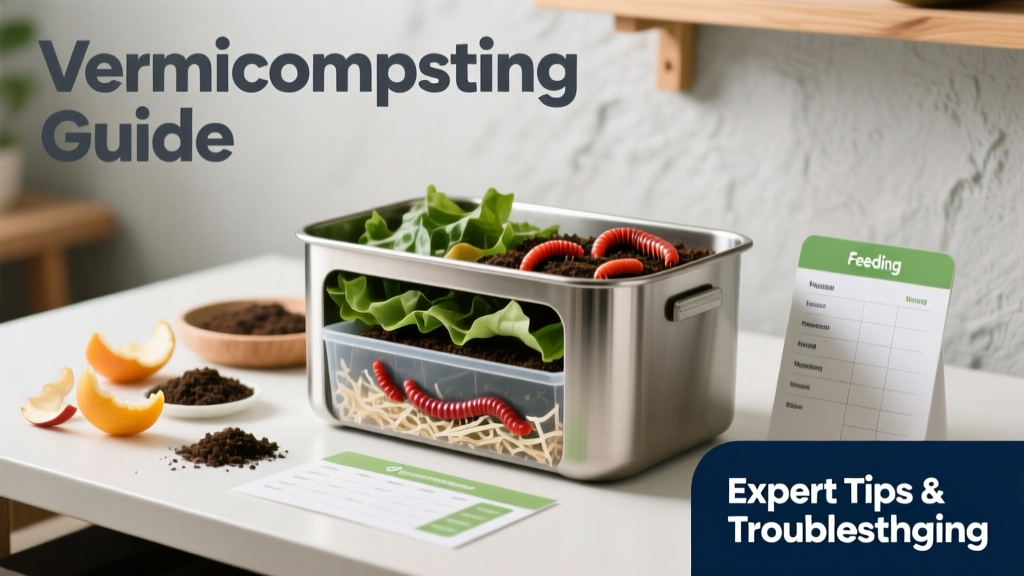
If you’ve ever opened a kitchen compost bin only to find fruit flies, mold, or a sour smell—not the rich, earthy aroma of finished castings—you’re not alone. Vermicomposting works brilliantly when done right, but it’s less about dumping scraps and more about tending a tiny, living ecosystem. I’ve run three indoor worm bins over seven years—two failed before I learned what red wigglers actually need.
Choose the Right Bin for Your Space
Not all bins are equal—and size matters more than aesthetics. A standard 18″ × 24″ × 8″ stacking tray system (like the Worm Factory 360) holds ~1–1.5 lbs of worms and processes ½ lb of food waste daily. For apartments, go vertical: shallow depth prevents anaerobic pockets. Basements or garages? A 20-gallon plastic tote (with ¼″ drilled holes and a tight-fitting lid) works fine—but skip metal or treated wood (toxic leachates harm worms).
- Drill holes in lid + upper sides only—never the bottom (bedding dries out)
- Line trays with ⅛″ hardware cloth to keep worms from escaping between levels
- Add a 2″ layer of shredded cardboard *under* bedding—it wicks excess moisture downward
Bedding That Supports Worm Health
Bedding isn’t just filler—it’s pH buffer, moisture regulator, and microbial starter. Avoid peat moss (too acidic and unsustainable) and newspaper with glossy ink (heavy metals). Use a 3:1 mix of moistened coconut coir and shredded, non-glossy paper. Squeeze a handful: one drop of water is ideal. Too wet? Add dry, crumpled newsprint. Too dry? Mist with dechlorinated water—not tap, unless left out 24 hours.
According to Cornell University’s Waste Management Institute’s 2022 Vermiculture Handbook, bedding pH must stay between 6.0–7.5; outside that range, reproduction drops by up to 70%.
"Worms don’t eat food scraps directly—they consume microbes growing on them. If your bedding smells like ammonia or rot, you’ve overwhelmed the microbes—not the worms." — Dr. Maria Zaleski, Cornell Cooperative Extension, 2021
Feed Smart, Not Heavy
What to Feed (and How Much)
Red wigglers eat half their body weight daily—so 1 lb of worms handles ~½ lb of scraps. Start slow: ¼ cup per day for the first week, then increase gradually. Bury food under 2″ of bedding to deter fruit flies and speed decomposition.
- ✅ Great: melon rinds, coffee grounds (with filters), tea bags (staple removed), crushed eggshells
- ⚠️ Limit: onions, citrus, broccoli stems (high sulfur slows microbes)
- ❌ Never: meat, dairy, oily foods, pet waste, or fermented items (e.g., pickles)
When to Harvest Castings
Wait until bedding looks dark, crumbly, and earthy—usually in 3–4 months. Don’t rush it. Use the “light separation” method: push finished material to one side, add fresh bedding + food to the other, and wait 1–2 weeks. Worms migrate naturally. Scoop the castings-only side with a stainless-steel spoon (no plastic—static clings to fine particles).
Quick Reference Checklist
| Task | Frequency | Notes |
|---|---|---|
| Check moisture level | 2×/week | Squeeze test: 1 drop = ideal |
| Rotate feeding zones | Every 2–3 days | Prevents compaction & odor |
| Fluff top 2″ of bedding | Weekly | Boosts oxygen for microbes |
| Remove moldy scraps | Immediately | Indicates overfeeding or poor airflow |
Common Mistakes That Kill Worms Fast
The #1 cause of worm die-offs isn’t cold weather—it’s pH crash from overfeeding acidic scraps like tomatoes or citrus. Second is drowning: too much water + compacted bedding = zero oxygen. Third? Using chlorinated water daily without dechlorination.
- Adding food before bedding stabilizes (wait 3–5 days post-setup)
- Mixing in soil “for grit”—red wigglers get grit from eggshells, not dirt (soil introduces mites/pathogens)
- Keeping bins in direct sunlight—even 10 minutes can cook surface layers
- Assuming more worms = faster composting (overcrowding raises CO₂ and lowers pH)
How do I know if my worms are stressed?
They’ll try to escape—especially at night. Clumping on walls or clustering near the lid means pH imbalance or low oxygen. Thin, pale, or sluggish worms signal chronic overfeeding or wrong moisture. Check bedding pH with litmus paper (aim for 6.5); adjust with crushed eggshells (raises pH) or coir (lowers slightly).
Can I vermicompost year-round in an unheated garage?
Yes—if temps stay above 40°F. Below that, metabolism slows; below 32°F, worms freeze. Insulate bins with straw bales or moving blankets, and add extra bedding (4–5″ deep). In Minnesota winters, we’ve kept bins at 45°F using a seedling heat mat set to 75°F *under* the bin—not inside—to gently raise core temp. Insulating compost bins makes a measurable difference: University of Vermont Extension found insulated bins process 40% more waste November–February.
Why are there little white bugs in my bin?
Most are springtails or mites—harmless detritivores that thrive when food is abundant. They’re not pests unless paired with foul odor or worm die-off. Reduce feeding for 5 days, stir bedding to dry surface, and add dry shredded paper. If they persist, screen castings before use—screening compost removes both bugs and unfinished bits.
How often should I harvest castings?
Every 3–4 months for active bins; every 6 months if feeding lightly. Over-harvesting strips beneficial microbes. Always leave 20% mature castings mixed into new bedding—it inoculates the next cycle. Think of it like sourdough starter: you never dump the whole culture.
Do I need special worms—or will garden earthworms work?
No. Lumbricus terrestris (nightcrawlers) burrow deep and won’t thrive in shallow bins. Only Eisenia fetida or Eisenia andrei (red wigglers) tolerate confinement, heat, and high-organic environments. Buy from reputable suppliers like trusted worm farms, not bait shops—bait store worms are often mislabeled or stressed.
Vermicomposting isn’t magic—it’s microbiology with patience. Get the moisture, pH, and feeding rhythm right, and you’ll turn apple cores into black gold while cutting household trash by 30%. Your plants—and your trash bill—will thank you.