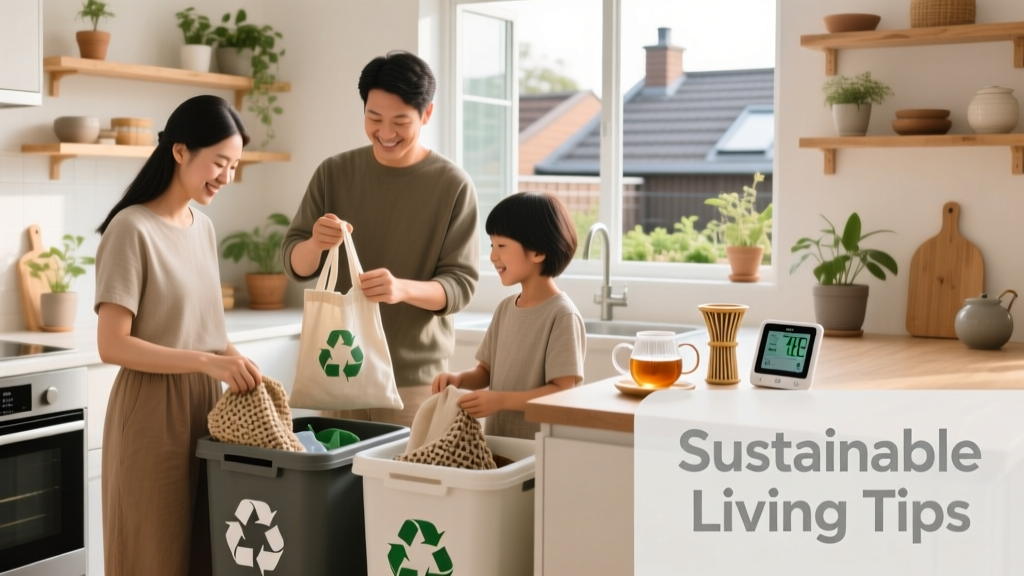
Most people think sustainable living means composting, solar panels, and giving up takeout — but that’s not how real households cut their footprint. I’ve tracked utility bills, trash output, and grocery receipts in my own 1980s split-level for seven years, and the biggest wins came from small, repeatable habits — not grand gestures.
Swap Single-Use Kitchen Staples First
Start where waste is most visible and easiest to replace: your kitchen counter and pantry. Replace plastic wrap with beeswax wraps (they last 6–12 months with proper care) and swap disposable sponges for cellulose or loofah versions that compost in 3–6 weeks. Keep a dedicated bin for food scraps — even if you don’t compost at home, many municipalities offer curbside pickup (check with your local waste authority).
- Switch to bar soap instead of liquid soap in plastic bottles — one bar replaces ~3 bottles
- Buy pasta, rice, and oats from bulk bins using reusable cotton mesh bags (wash after each use)
- Store leftovers in glass containers with silicone lids — they outlast plastic by 5+ years
Optimize Home Energy Without Rewiring
You don’t need new appliances to cut energy use. The U.S. Department of Energy estimates that heating and cooling account for nearly half of residential energy consumption — and much of that waste comes from overlooked gaps and settings. Seal window and door drafts with removable weatherstripping (not permanent caulk — renter-friendly), and install a programmable thermostat set to 68°F in winter and 78°F in summer.
According to the Insurance Institute for Business & Home Safety's 2023 report, sealing air leaks alone can reduce heating/cooling costs by 10–20% — often for under $30 in materials.
"A single incandescent bulb left on 8 hours/day wastes $7/year in electricity. Switching just five bulbs to LEDs saves over $40 annually — and lasts 25x longer." — U.S. EPA ENERGY STAR Program, 2022
Cut Water Waste Where It Hides
Fix the Drip Before It Counts
A faucet dripping once per second wastes over 3,000 gallons per year — enough to fill a small above-ground pool. Most washerless cartridge faucets require only a $2 O-ring replacement and 10 minutes with a wrench. Test your toilet flapper with food coloring: add a few drops to the tank, wait 10 minutes, and check the bowl — color means a leak.
Shorten Your Shower, Not Your Sanity
Install a low-flow showerhead (1.8 GPM or less). Many models deliver strong pressure while cutting water use by 40%. Pair it with a simple timer — aim for 5 minutes max. That alone saves ~1,000 gallons monthly for a family of three.
Quick Reference Checklist
| Action | Time Required | Estimated Annual Savings |
|---|---|---|
| Replace 5 incandescent bulbs with LEDs | 15 minutes | $42 + 200 kWh |
| Install faucet aerators (all sinks) | 20 minutes | 500 gallons water |
| Switch to cloth napkins (6-pack) | 5 minutes | 120 paper napkins |
| Set dishwasher to "air dry" mode | 1 minute (per load) | 15% energy per cycle |
Common Mistakes That Backfire
Well-intentioned choices sometimes increase environmental impact. Buying bamboo toothbrushes shipped from overseas with plastic packaging often has a higher carbon footprint than a locally made recycled-plastic version. Similarly, “eco” laundry detergents in single-use pods generate more plastic waste per load than concentrated refills in aluminum cans.
- Assuming “biodegradable” means backyard-compostable — most require industrial facilities
- Purchasing reusable items you don’t actually use (e.g., stainless steel straws gathering dust)
- Ignoring transportation emissions — walking 1 mile saves more CO₂ than buying 10 “green” products online
Do I need a compost bin to live sustainably?
No. Composting is helpful, but reducing food waste first matters more. The USDA estimates 30–40% of the U.S. food supply is wasted — that’s more climate impact than all U.S. coal plants combined. Start by meal planning and freezing leftovers before investing in a tumbler or worm bin.
Is buying secondhand always better than new?
Usually — but not universally. A used gas-powered lawnmower with no emission controls may pollute more over its lifetime than a new battery-electric model. Prioritize secondhand for furniture, clothing, and electronics; verify efficiency ratings when replacing major appliances.
What’s the lowest-effort way to cut plastic use?
Carry a folded reusable produce bag and a small insulated coffee cup. These two items eliminate ~200 single-use plastics per person annually — and require zero habit change beyond remembering them at checkout. Zero-waste kitchen swaps build from there.
Does line-drying clothes really help?
Yes — especially in humid climates where dryers run longer. One load in a standard electric dryer uses ~3–4 kWh — equal to running a refrigerator for 24 hours. Even drying 2 loads/week outdoors cuts ~300 kWh yearly. For apartments, try a retractable indoor drying rack near a fan or heat vent.
How do I know which eco-labels are trustworthy?
Look for third-party certifications: Green Seal, ENERGY STAR, and Fair Trade Certified are independently verified. Avoid vague terms like “natural,” “eco-friendly,” or “green” — they’re unregulated and meaningless without context.
Can sustainable living save money long-term?
Absolutely — but timing varies. LED bulbs pay for themselves in under a year. A front-loading washing machine saves $100+/year on water and energy versus top-loaders. And skipping just one $5 latte per week to brew at home funds a year’s worth of compost service — with cash left over. Sustainable living isn’t about sacrifice; it’s about redirecting spending toward durability and efficiency.