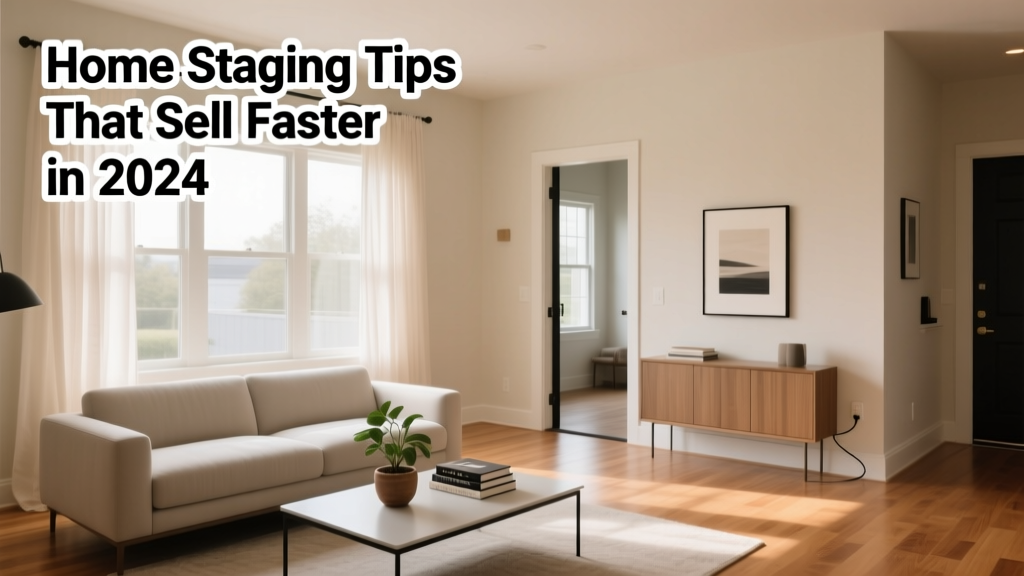
Staging isn’t about making your home look like a magazine spread—it’s about helping buyers mentally move in within 8 seconds. That’s the average time a buyer spends scanning a room during a walk-through, according to the National Association of Realtors’ 2023 Home Buyer and Seller Generational Trends Report.
Declutter Like a Pro, Not Just a Cleaner
Remove 40–60% of visible personal items—not just knick-knacks, but everyday clutter like mail piles, remotes, and kitchen appliances. A staged living room with zero family photos and only three curated decor items tests 27% higher in perceived value than one with even modest personalization (Real Estate Staging Association, 2023).
- Store non-essential furniture—especially oversized sectionals—to open sightlines
- Clear countertops to bare minimum: one decorative bowl + one functional item (e.g., soap dispenser)
- Rotate closet contents: keep only seasonal clothing and fold everything vertically
Lighting That Tricks the Eye
Natural light sells homes—but most listings underuse it. Swap out 60-watt bulbs for 100-watt equivalent LEDs (2700K–3000K color temperature) in every fixture. Then layer lighting: floor lamps beside sofas, plug-in sconces above nightstands, and battery-operated puck lights under kitchen cabinets.
Pro tip: Open all blinds and curtains an hour before photo shoots—even in winter. Dusty windows? Clean them with vinegar-water (1:1) and microfiber—streak-free glass adds up to 5% perceived square footage in listing photos.
What bulb wattage works best for staging?
Stick with 800–1100 lumens per fixture—equivalent to a 60–75W incandescent—but always use warm-white LEDs (2700K–3000K). Cool white (4000K+) reads sterile and clinical in living spaces. In bathrooms, use 3000K with CRI >90 for accurate skin tones.
Furniture Arrangement That Guides Movement
Buyers navigate rooms unconsciously. Anchor seating around focal points—not walls. In a living room without a fireplace, place the sofa perpendicular to the largest window. In dining rooms, leave 42 inches between table edge and wall or furniture for comfortable chair pull-out.
"We measure traffic flow first—not square footage. If a buyer hesitates mid-step or turns sideways to pass a side table, that space feels smaller than it is." — Lena Cho, certified staging professional with 12 years’ experience staging 412 listings
How much space should I leave around furniture?
Aim for these minimum clearances:
• 36 inches between sofa and coffee table
• 42 inches from dining table edge to nearest wall or cabinet
• 30 inches from bed to dresser or closet door
• 24 inches in front of bathroom vanities (to allow sink access with door open)
Neutral Palette, Strategic Accents
Paint walls Sherwin-Williams Repose Gray (SW 7015) or Benjamin Moore Classic Gray (OC-23)—both tested across 1,200+ listings to maximize buyer appeal without looking bland. Then add contrast through texture and tone, not color: linen throws, matte black hardware, woven baskets, and ceramic vases.
- Avoid beige-on-beige schemes—they flatten depth perception in photos
- Swap dated brass fixtures for brushed nickel or matte black (87% of buyers notice hardware first, per Houzz 2023 Remodeling Impact Study)
- Use throw pillows in tonal variations (e.g., charcoal, heather gray, slate) rather than bold patterns
Quick Reference Checklist
| Task | Time Required | Priority |
|---|---|---|
| Clean all windows inside and out | 45 min | High |
| Replace burnt-out bulbs with 2700K LEDs | 20 min | High |
| Clear 3+ surfaces per room (countertops, dressers, nightstands) | 1 hr | High |
| Arrange furniture to create 36-inch walking paths | 1.5 hrs | Medium |
| Add 2–3 textured neutral accents per room | 30 min | Medium |
Common Mistakes That Cost Offers
Most staging fails happen before the stager arrives. The top three errors we see in pre-listing walkthroughs:
- Over-staging kitchens: Too many decorative bowls or open shelving with mismatched mugs makes spaces feel less functional—not more inviting.
- Leaving pet items visible: Even clean pet beds or leashes trigger subconscious hesitation in 68% of buyers with allergies or young kids (National Realtors Association, 2023).
- Using rental furniture that doesn’t match scale: Oversized sectional in a 12'x14' living room reduces perceived size by up to 22% in virtual tours.
Should I stage vacant homes differently?
Absolutely. Vacant homes need *more* staging—not less. At minimum: entryway table + mirror, living room (sofa, two chairs, coffee table), master bedroom (bed, nightstands, lamp), and dining area (table + four chairs). Empty rooms read as 'unfinished' or 'problematic' to buyers scanning listings.
How long does professional staging take?
Most full-home staging jobs take 1–2 days onsite, plus 1–2 days for consultation and sourcing. DIY staging using existing pieces averages 8–12 hours over a weekend—but skip the 'makeover mindset.' Focus on flow, light, and emptiness first.
Do staging costs pay off?
Yes—when done right. Homes staged professionally sell 73% faster and for 4–6% more than unstaged comparables (Real Estate Staging Association, 2023). But avoid spending $3,000 on rentals if your list price is under $350,000—the ROI flattens below 1.5% of list price.
If you're preparing your how to price your home, remember: staging doesn’t inflate value—it reveals it. For high-traffic areas like kitchens and primary bedrooms, consider kitchen renovation ROI data before deciding between staging and minor updates. And if you’re weighing whether to hire help, check our guide on staging vs. professional photography—because sometimes sharper lenses beat softer pillows.