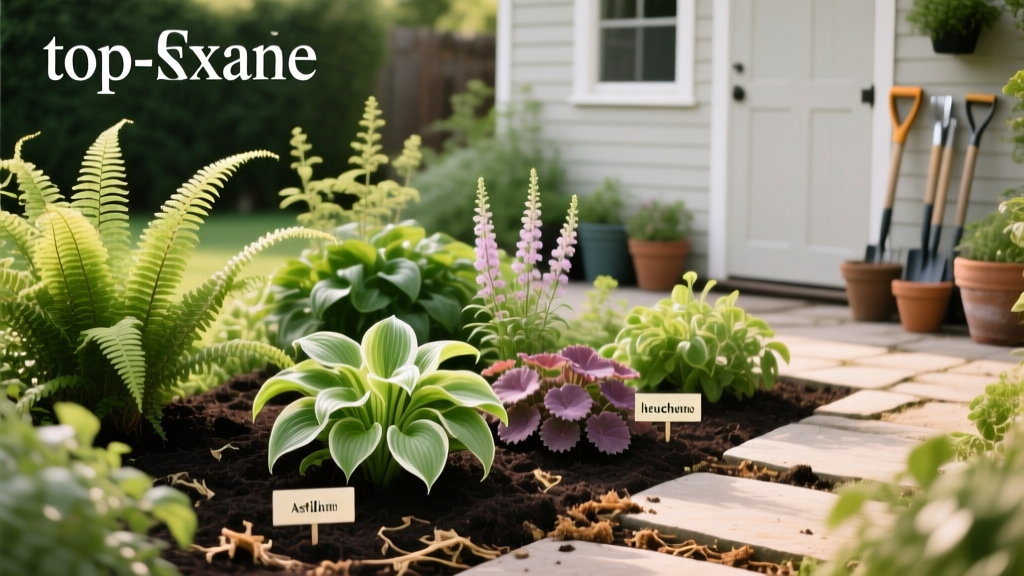
Most gardeners assume shade means compromise—fewer blooms, slower growth, constant disappointment. But a well-planned shade garden can deliver lush texture, layered foliage, and surprising flowers from April through October. I’ve grown one under mature sugar maples and dense hemlocks for 17 years; the key isn’t fighting the shade—it’s working with its rhythm, moisture, and microclimates.
Choose Plants by Shade Depth, Not Just Name
"Partial shade" on a plant tag often means 3–6 hours of direct sun—but that sun matters *when*. Morning light is cooler and gentler than afternoon. A spot shaded until noon under an oak canopy behaves very differently from one shaded only after 3 p.m. by a west-facing fence.
- Dense shade (under 2 hours sun/day): Try Asarum canadense (wild ginger), Polygala paucifolia (gaywings), or Jeffersonia diphylla (twinleaf)—all native to eastern forest floors.
- Medium shade (2–4 hours filtered or dappled sun): Hostas (‘Patriot’, ‘Halcyon’), Heuchera (‘Palace Purple’, ‘Lime Rickey’), and Actaea racemosa (black cohosh) thrive here with consistent moisture.
- Bright shade (full sun blocked but high light reflectivity): Ferns like Athyrium niponicum ‘Pictum’ and Epimedium cultivars bloom reliably—even in dry shade—if planted in amended soil.
According to the Missouri Botanical Garden’s 2022 Shade Plant Trials, 68% of failed shade plantings stemmed from mismatched light tolerance—not poor soil or pests.
Fix Soil Before You Plant Anything
Shade often means tree roots, compaction, and poor drainage—or paradoxically, drought. Maples and beeches create shallow, thirsty root mats; evergreens drop acidic needles. Test pH first: many shade natives prefer 5.5–6.5, while hostas tolerate up to 7.2.
Amend Smartly, Not Heavily
Don’t rototill under mature trees—their feeder roots live in the top 6 inches. Instead, spread 2 inches of composted leaf mold or aged bark fines over the root zone in early spring, then gently fork it in 2–3 inches deep. Repeat annually. This builds organic matter without damaging roots.
- For clay-heavy shade: Mix in perlite + compost at 1:3 ratio before planting individual holes.
- For dry, sandy shade: Work in coconut coir (1 cup per sq ft) to boost water retention without compaction.
- Avoid fresh manure—it burns tender roots and encourages fungal disease in low-airflow areas.
Design for Structure, Not Just Color
Flowers in shade are fleeting. Foliage carries the season. Layer heights, textures, and seasonal shifts—not just bloom time—to keep interest year-round.
"In shade gardens, contrast comes from leaf shape and sheen—not petal count. A glossy Lysimachia nummularia ‘Aurea’ next to matte Polystichum acrostichoides (Christmas fern) creates more drama than ten impatiens." — Karen M. Hahn, Senior Horticulturist, Brooklyn Botanic Garden, 2021
Use this layering sequence from back to front:
- Tall structure: Aruncus dioicus (goatsbeard), Hydrangea arborescens ‘Annabelle’, or Sambucus racemosa ‘Sutherland Gold’ (for bright shade).
- Mid-height rhythm: Phlox divaricata, Geranium macrorrhizum, or Chelone glabra (turtlehead).
- Groundcover anchors: Gaultheria procumbens (wintergreen), Pachysandra terminalis ‘Green Sheen’, or Vinca minor ‘Reticulata’ (with caution—see Common Mistakes).
Quick Reference Checklist
| Task | When | Notes |
|---|---|---|
| Soil pH test | Early spring or fall | Use a $12 kit; avoid aluminum-based testers near maples—they read falsely low. |
| Top-dress with leaf mold | Mid-March or late October | Apply 1.5–2 inches; skip if snow cover >6 inches. |
| Divide hostas & ferns | Early spring, just as shoots emerge | Replant divisions at same depth; water deeply for 10 days. |
| Prune invasive groundcovers | Early June & mid-September | Cut Vinca or Houttuynia back to 2 inches to limit spread. |
Common Mistakes
The biggest failures aren’t about plant choice—they’re about assumptions. Here’s what consistently trips up even experienced gardeners:
- Planting impatiens every year: Downy mildew wiped out 90% of commercial impatiens stock by 2013 (University of Minnesota Extension, 2014). Switch to New Guinea impatiens, Begonia semperflorens, or Torenia fournieri.
- Overwatering “dry shade”: Tree roots suck moisture fast—but soggy soil causes crown rot in Heuchera and Epimedium. Stick your finger 2 inches down before watering.
- Ignoring allelopathy: Black walnut trees release juglone, killing Tomatoes, Peonies, and Azaleas. Choose juglone-tolerant plants like Hosta, Ferns, or Virginia bluebells (Mertensia virginica).
Can I grow vegetables in shade?
Yes—but selectively. Leafy greens (spinach, lettuce, arugula) tolerate 3–4 hours of sun and actually bolt slower in cool shade. Root crops like radishes and carrots need 4–5 hours minimum. Avoid fruiting veggies (tomatoes, peppers, squash)—they’ll stretch thin and produce poorly. For best results, use raised beds filled with compost-rich soil and position them where morning sun hits longest.
How do I deal with tree roots when planting?
Don’t dig deep. Instead, build up: create a 6–8 inch raised bed using untreated cedar or stone edging. Fill with 50% topsoil, 30% compost, and 20% coarse sand. Plant shallow-rooted perennials like bleeding heart or foamflower (Tiarella) directly into that mix—no root competition, better drainage.
What’s the best mulch for shade gardens?
Shredded hardwood bark (not chips) or leaf mold. Avoid cocoa hulls—they’re toxic to dogs and wash away in rain. Apply 2–3 inches, keeping it 3 inches away from plant crowns and tree trunks. Replenish every 18 months. According to the U.S. Forest Service’s Urban Forestry Division (2020), shredded bark increases soil moisture retention by 32% in shaded, high-evaporation zones.
Why do my hostas get holes in the leaves?
Slugs are the usual culprit—but not always. Check underside for tiny black pellets (slug frass) and silvery trails. If absent, it may be hail damage, wind abrasion, or fungal leaf spot (brown centers with yellow halos). Rotate fungicides like chlorothalonil with copper-based sprays every 10 days during wet springs. Also, avoid overhead watering after dusk.
Are there shade-tolerant native grasses?
Absolutely. Chasmanthium latifolium (river oats) grows 3–4 feet tall in part-shade and adds graceful movement. Muhlenbergia capillaris (pink muhly) tolerates light shade and explodes in pink clouds each October. Both support local pollinators and require zero fertilizer. For low-mow options, try Schizachyrium scoparium ‘The Blues’—it holds its form beautifully under open-canopy oaks.
How do I add winter interest to a shade garden?
Think bark, berries, and evergreen texture. Hamamelis vernalis (spring witch hazel) blooms February–March with spidery yellow flowers and spicy scent. Ilex verticillata (winterberry holly) needs a male pollinator but delivers crimson berries through January. For structure, use Pachysandra ‘Green Sheen’ or Leucothoe fontanesiana ‘Rainbow’—its new growth emerges coral-pink in late winter sun. Pair with native shade plants for low-maintenance resilience.
A shade garden isn’t second-best—it’s a different language of growth. Once you stop measuring success in roses and start reading it in unfurling fiddleheads, rustling sedge blades, and the slow, steady pulse of moss between stepping stones, you’ll wonder why you ever fought the shadows at all. For more on adapting to site conditions, see our guide on dry shade gardening and woodland garden design.