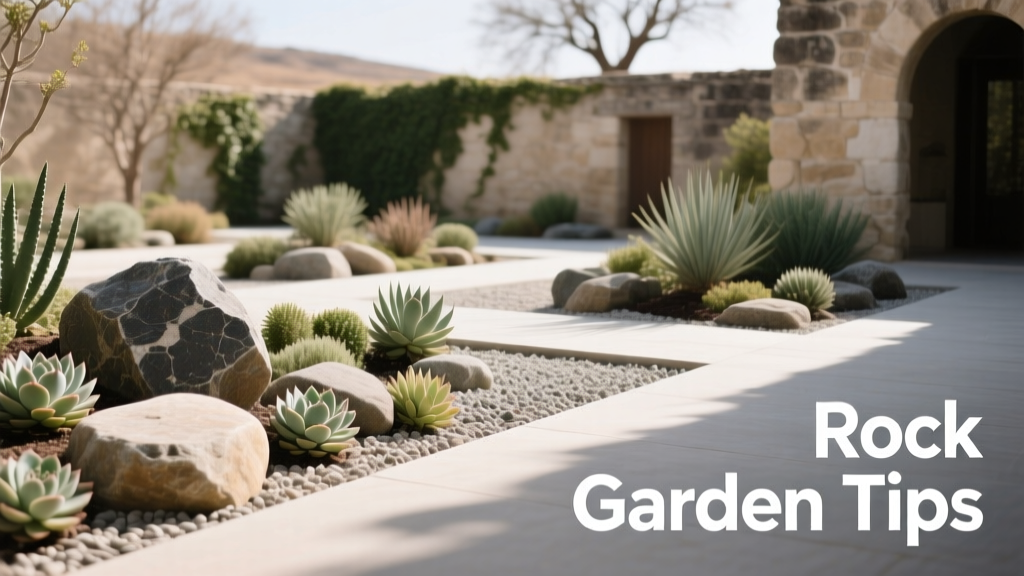
Rock gardens aren’t just for alpine enthusiasts—they’re practical solutions for sloped yards, poor soil, or drought-prone regions. I’ve built and revived seven rock gardens across Southern California and the Colorado Front Range, and every one taught me that success hinges on three things: drainage first, plants second, and patience third.
Start With Structure, Not Soil
Most failures begin underground. Rock gardens need 12–18 inches of gravel or crushed granite beneath the topsoil layer—not just a thin base. Skip the landscape fabric; it clogs over time and traps moisture where roots shouldn’t sit. Instead, use a 3-inch layer of ¾-inch crushed granite, then a 4-inch layer of sandy loam mixed with 30% pumice or coarse perlite.
- On slopes >15%, anchor boulders with ⅔ buried depth—never just set them on top
- Place largest rocks first, then work down to medium and small stones
- Leave 6–12 inches between major rocks for root spread and airflow
Choose Plants That Thrive on Neglect
Forget showy annuals. Rock gardens reward resilience. Stick to proven performers like Sedum spurium, Echinops ritro, and Penstemon pinifolius. These tolerate heat, infrequent watering, and shallow soil—and they bloom reliably without fertilizer.
According to the Lady Bird Johnson Wildflower Center’s 2022 regional planting guide, native stonecrops and yarrows reduce irrigation needs by up to 65% compared to traditional perennial borders.
“If you can’t forget about it for two weeks in July and still get flowers in August, it’s not rock-garden-ready.” — Horticulturist Elena Ruiz, Denver Botanic Gardens, 2021
Top 5 Drought-Tolerant Perennials for Rock Gardens
- Artemisia schmidtiana ‘Silver Mound’: Silvery foliage, zero mildew, deer-resistant
- Thymus vulgaris (common thyme): Walkable, fragrant, blooms pink in late spring
- Lewisia cotyledon: Needs perfect drainage but rewards with jewel-toned flowers
- Delosperma cooperi: Spreading ice plant—vibrant magenta, blooms May–October
- Yucca filamentosa: Architectural form, tolerates clay if elevated
Water Smart From Day One
Overwatering kills more rock garden plants than drought does. Install drip emitters at the base of each plant—not above-ground sprinklers—and run them for 12 minutes, twice weekly, only during the first six weeks after planting. After that, cut back to once every 10–14 days unless temps exceed 95°F.
The U.S. EPA estimates that 14% of household water usage is from leaks—but in rock gardens, the bigger waste is misapplied irrigation. A single 2-gallon-per-hour emitter placed correctly delivers precise hydration without runoff or rot.
Quick Reference Checklist
| Task | Timing | Pro Tip |
|---|---|---|
| Excavate & install gravel base | Before planting | Use a level to confirm 1–2% slope away from foundations |
| Set boulders and backfill | Before soil amendment | Tamp soil around bases with a rubber mallet—not feet |
| Plant in fall or early spring | When soil temp is 50–70°F | Avoid planting in summer—even with shade cloth, transplant shock spikes |
| Apply 1-inch gravel mulch | After planting, before first rain | Use pea gravel or decomposed granite—not river rock (too smooth) |
Common Mistakes That Kill Rock Gardens
These errors appear in nearly every failed project I’ve assessed:
- Using topsoil alone—no grit or pumice—causing root rot in winter
- Planting too close to rocks, creating micro-shade and moisture traps
- Adding organic mulch like bark or compost—holds moisture and invites slugs
- Installing automatic timers without seasonal adjustment—leading to overwatering in fall
- Choosing ‘rock garden’ plants labeled for Zone 4 in a Zone 9 yard (e.g., Saxifraga species)
How often should I fertilize my rock garden?
Nearly never. Most rock garden plants evolved in nutrient-poor soils. A light side-dressing of granular 5-10-5 in early spring—only in the first year—is enough. After that, skip it. Excess nitrogen encourages leggy growth and fewer blooms. For low-fertility alternatives, try our organic soil amendments guide.
Can I add succulents to a non-alpine rock garden?
Absolutely—if you match their needs. Echeverias and graptopetalums thrive in full sun and fast drainage but melt in humid summers. In the Southeast, opt for Sedum ternatum or Hylotelephium telephium instead. See our drought-tolerant plants for humid climates for region-specific picks.
What’s the best way to control weeds without herbicides?
Prevention beats removal. Lay 1 inch of crushed granite *after* planting—not before—and hand-pull seedlings when soil is damp. A narrow hoe (like a Cape Cod weeder) works better than a trowel in tight spaces. Avoid vinegar sprays—they lower pH and harm nearby sedums and sempervivums.
Do I need to replace rocks every few years?
No. Natural stone lasts decades. But inspect annually for shifting—especially after heavy rains or freeze-thaw cycles. Re-seat any rocks that tilt more than 5 degrees. If moss builds up on north-facing surfaces, scrub gently with diluted hydrogen peroxide (1 part peroxide to 3 parts water), not bleach.
How do I keep grass from invading the edges?
Install a 6-inch-deep edging barrier—steel or rigid plastic—set flush with grade. Then top with 2 inches of gravel to discourage rhizomes. Mow right up to the edge weekly during peak growth (May–July); grass won’t encroach if it’s never allowed to seed.
A well-built rock garden gains character with age: lichens stain boulders silver, sedums spill over crevices, and yarrow forms dense, hummingbird-friendly mats. It’s not about perfection—it’s about working with what your site gives you, then stepping back. For more hardscaping tricks, see our dry creek bed ideas and gravel path maintenance guides.