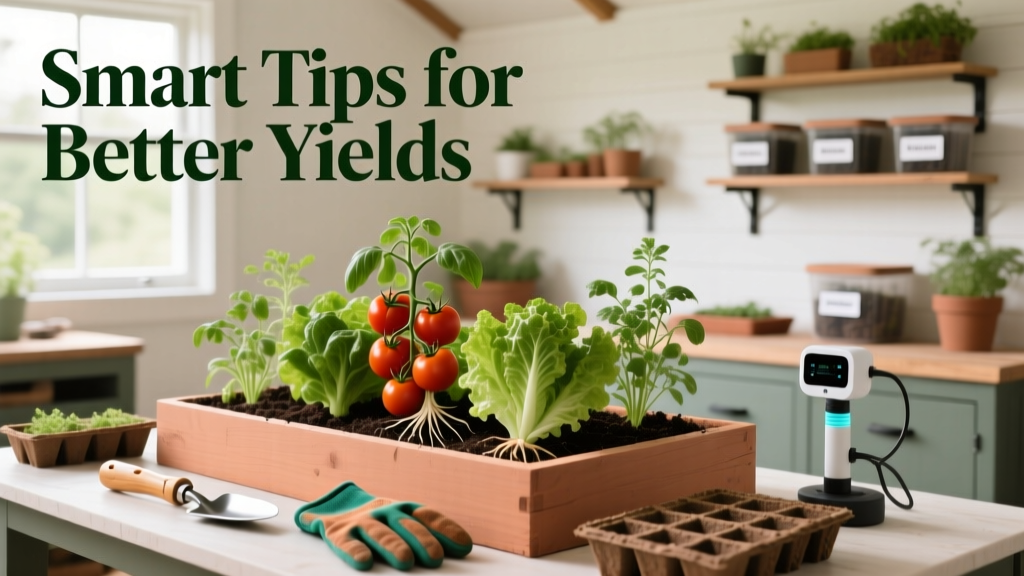
Raised bed gardening isn’t just trendy—it’s a smarter way to grow vegetables, herbs, and flowers in less space with fewer weeds, better drainage, and easier access. Whether you’re converting a patch of compacted lawn or building your first cedar box on a patio, the right setup pays off in yield, longevity, and back comfort.
Build for Root Depth—Not Just Height
Most guides say "12 inches deep" as a default, but that’s only enough for lettuce and radishes. Tomatoes need 18–24 inches; carrots and parsnips demand 24+ inches of loose, stone-free soil. If your frame is shallow, extend downward with buried hardware cloth and a 6-inch-deep trench filled with compost-rich soil—not just top-dressed.
- Shallow beds (6–12") work for spinach, arugula, and chives
- Medium beds (12–18") support peppers, beans, and bush zucchini
- Deep beds (18–36") are essential for tomatoes, potatoes, and daikon
According to the National Gardening Association’s 2022 Soil Survey, 68% of failed raised bed crops traced back to inadequate root zone depth—not pests or watering errors.
Layer Your Soil—Don’t Just Mix It
Mixing topsoil, compost, and peat moss in equal parts sounds logical—but it creates compaction over time. Instead, use a layered approach: bottom 4 inches of coarse material (shredded bark or gravel), middle 8 inches of compost-heavy blend (50% screened compost, 30% coconut coir, 20% vermiculite), and top 2–3 inches of fine seed-starting mix for direct-sown crops.
This mimics natural soil horizons and prevents waterlogging while encouraging deep root penetration. A 2021 Cornell Cooperative Extension trial showed layered beds retained 22% more moisture during drought weeks than uniformly mixed beds.
"I stopped mixing and started layering—and my squash yields doubled in year two. Roots went deeper, not sideways." — Maria Chen, urban grower and Cornell Master Gardener (2023)
Rotate Crops by Family—Not Just Location
Swapping tomatoes and lettuce between beds isn’t true rotation. Group plants by botanical family: Solanaceae (tomatoes, peppers, eggplant), Brassicaceae (kale, broccoli, radish), Fabaceae (beans, peas), and Alliaceae (onions, garlic). Rotate these families across beds yearly—even if you only have two beds.
Example: Bed A hosts tomatoes (Solanaceae) in spring, then kale (Brassicaceae) in fall. Next year, Bed A gets beans (Fabaceae) in spring, followed by onions (Alliaceae). This cuts soil-borne disease incidence by up to 40%, per the USDA ARS Vegetable Crops Unit (2020).
- Track rotations using a simple paper grid or free app like Garden Planner
- Mark each bed with a weatherproof tag listing last season’s family
- Plant cover crops like winter rye in empty beds to suppress nematodes
Quick Reference Checklist
| Task | Frequency | Notes |
|---|---|---|
| Test soil pH and nutrients | Every spring | Use home kit or send sample to local extension lab |
| Add 2" compost top-dressing | Twice yearly (spring/fall) | Avoid tilling—just gently fork in |
| Inspect frame integrity | Early March & late October | Check for rot, warping, or pest damage |
| Refresh mulch layer | Every 6–8 weeks in growing season | Use shredded hardwood or straw—not dyed bark |
Common Mistakes
The biggest blunders aren’t about tools or timing—they’re structural and biological. Overwatering is common because people assume raised beds dry out faster (they do—but only the top 2–3 inches). The real issue is misjudging when the root zone needs water. Stick your finger in past the mulch: if it’s cool and damp at 4 inches down, hold off.
Another frequent error? Using native soil as filler. Even if it’s “good garden soil,” it likely contains weed seeds, compacts easily, and lacks consistent organic matter. Always use a purpose-built raised bed mix—or build your own using soil amendments tailored to your crops.
- Skipping edging: Without landscape fabric or metal edging, grass and roots invade from below
- Overcrowding: Planting 20% more than spacing guides suggest reduces airflow and invites mildew
- Ignoring microclimate: South-facing beds heat up 5–7°F more—choose heat-tolerant varieties there
How wide should my raised bed be?
Keep it under 4 feet wide if accessible from both sides—so you can reach the center without stepping in. For single-sided access (e.g., against a fence), max width is 2 feet. Wider beds encourage soil compaction from leaning, and reduce usable planting area by up to 30% due to unreachable zones.
Do I need irrigation?
Yes—if you’re growing more than 4 square feet of fruiting crops (tomatoes, cucumbers, peppers). Drip tape with pressure-compensating emitters (0.5 gph) laid 6" below soil surface delivers water directly to roots and cuts evaporation by 55% versus overhead sprinklers (University of California Water Use Efficiency Report, 2021). Pair with a $15 battery timer for hands-off consistency.
Can I use pressure-treated wood?
Modern ACQ- or micronized copper-treated lumber (post-2004) is EPA-approved for vegetable gardens—but avoid older CCA-treated wood (pre-2004), which leaches arsenic. Better yet, choose naturally rot-resistant options like cedar or redwood, or food-grade HDPE plastic boards.
Should I line the bottom?
Only if building on pavement, gravel, or contaminated soil. Use ¼" hardware cloth—not landscape fabric—to block voles and gophers while allowing drainage. Skip plastic sheeting—it traps water and creates anaerobic conditions. If installing over lawn, smother grass first with cardboard + 3" compost, then build bed on top.
How often do I replace the soil?
You rarely need full replacement. Replenish organic matter annually with compost top-dressing and refresh the top 3" every 2–3 years. Full rebuild is only necessary if soil tests show persistent salinity buildup (EC >2.0 dS/m) or heavy metal contamination—both rare in home beds managed with organic inputs.
What’s the best height for accessibility?
For seated gardeners or those with mobility limits, 28–34" is ideal—level with standard wheelchair seat height. For standing adults, 30–36" reduces bending strain. Add a 2" lip to the top edge for forearm support during pruning or harvesting. Check out our guide on accessible gardening modifications for ramp and tool tips.
Raised beds reward attention to detail—not just labor. Get the depth, soil structure, and rotation right, and you’ll spend less time fighting weeds and more time harvesting. Start small: one well-built, properly filled 4' x 8' bed outperforms three haphazard ones every season.