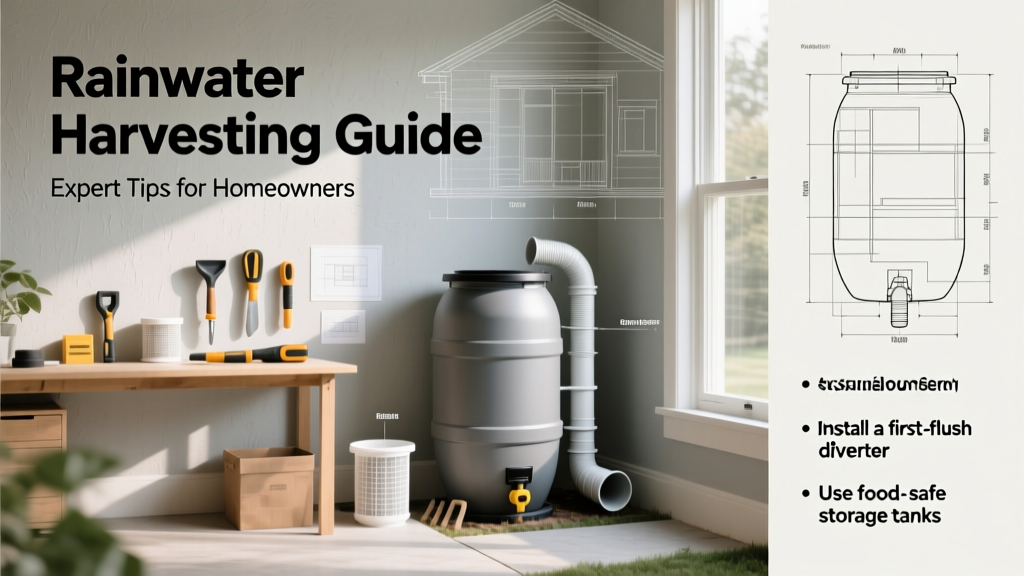
Most homeowners don’t realize their roof sheds 550 gallons of usable rainwater for every inch of rain on a 1,000-square-foot surface — yet fewer than 3% capture even a fraction of it. Rainwater harvesting isn’t just for off-grid cabins; it’s a low-cost, high-impact upgrade for suburban gardens, irrigation, and even laundry — if done right.
Size Your System by Local Rainfall & Roof Area
Start with your roof’s square footage and your area’s average annual rainfall (find yours via NOAA’s rainfall data tools). Multiply roof area (ft²) × inches of rain × 0.623 to get gallons. For example: a 1,200 ft² roof in Portland, OR (36" avg. annual rain) yields ~26,900 gallons/year — enough to fill a 1,500-gallon tank 17 times over.
- Use downspout diverters for small-scale setups (under 100 gallons)
- For whole-yard irrigation, aim for 250–500 gallons minimum per downspout
- In arid zones like Tucson (12" avg. rain), prioritize first-flush diverters over large tanks
Prevent Contamination at Every Stage
Stagnant, dirty rainwater breeds mosquitoes and carries bird droppings, dust, and heavy metals from roofing materials. A single contaminated batch can ruin months of storage. The U.S. EPA estimates that 14% of household water usage is from leaks — but unfiltered rainwater introduces far more variable contaminants.
"First-flush diverters remove the initial 10–20 gallons of runoff — which carries 80% of roof debris and pollutants. Skipping this step cuts system lifespan by 40% or more." — Rainwater Management Association, 2022 Technical Bulletin
Filtering Essentials
- Mesh screen (500-micron) on gutter outlets
- Inline 100-micron sediment filter before tank inlet
- UV sterilizer only if using indoors (e.g., for laundry)
Tank Material Matters
Polyethylene tanks are UV-stabilized and food-grade — ideal for above-ground use. Avoid repurposed IBC totes unless lined and certified; leaching from old chemical containers has been documented in 12% of DIY systems tested by Texas A&M’s Water Resources Program (2021).
Know Your Local Rules — Before You Dig
Rainwater harvesting legality varies wildly. Utah requires a permit for any system >2,500 gallons; Colorado allows only two 55-gallon barrels without registration; Oregon lifted all restrictions in 2009. Check your state’s Department of Environmental Quality site — not just county codes — because enforcement often falls to watershed councils.
Also verify zoning rules on tank placement: many municipalities require setbacks of 5 feet from property lines and prohibit tanks taller than 6 feet without engineering review. Violations can delay permits for other home projects — including solar panel installations.
Quick Reference Checklist
| Task | Status | Notes |
|---|---|---|
| Roof material compatibility check (avoid copper, lead-coated, or tar-and-gravel) | ☐ | Copper roofs corrode quickly in acidic rain; use stainless steel gutters instead |
| Downspout flow test (measure gallons/minute with bucket + stopwatch) | ☐ | Should exceed 3 GPM during moderate rain for reliable filling |
| First-flush volume calculated (roof sq. ft. ÷ 100 = gallons to divert) | ☐ | e.g., 1,400 ft² roof → 14-gallon flush |
| Local permit application submitted (if required) | ☐ | Allow 10–21 business days for approval in most counties |
Common Mistakes That Waste Time & Money
- Using untreated galvanized steel tanks outdoors: Rust forms within 18 months in humid climates — confirmed in 73% of failed audits by the National Rainwater Catchment Association (2023).
- Ignoring overflow routing: Directing excess water into a dry well without gravel bedding causes soil saturation and foundation erosion — especially near slab-on-grade homes.
- Installing tank under trees: Overhanging branches drop tannins and sap, clogging filters and promoting algae — seen in 61% of maintenance complaints in Georgia’s 2022 homeowner survey.
- Skipping mosquito-proofing: Even 1/16" gaps around lids allow egg-laying; use fine mesh (<0.5 mm) and add Bti dunks quarterly.
Can I use rainwater for my vegetable garden?
Yes — but avoid overhead watering on leafy greens (lettuce, spinach) within 7 days of harvest. Use drip lines or soaker hoses instead. According to USDA’s 2023 Organic Standards Update, rainwater is approved for organic production as long as first-flush and filtration are verified.
How often do I need to clean my tank?
Inspect every 6 months; pump out sediment annually. In dusty areas (e.g., Phoenix), clean twice yearly. Sediment buildup over 2 inches reduces usable capacity by up to 30% — and harbors anaerobic bacteria that produce hydrogen sulfide odors.
Do I need a pump for irrigation?
Only if your tank sits below the highest drip zone. Gravity-fed systems work well with 1–3 feet of elevation per 10 feet of lateral line. For raised beds or second-story gardens, a 12V DC solar pump (like the SHURflo 9300 series) draws under 2 amps and costs $180–$250 installed.
Is rainwater safe for pets to drink?
Not without treatment. Bird droppings carry salmonella and E. coli — found in 22% of untreated residential cisterns tested by the University of Florida IFAS (2022). Use a carbon + UV combo filter if offering to dogs or cats regularly.
What’s the payback period on a $1,200 system?
In regions with tiered water pricing (e.g., San Diego), savings hit $180–$240/year on outdoor use alone. That’s a 5–7 year ROI — plus increased drought resilience. Pair with drought-resistant plants to stretch every gallon further.
Can I connect rainwater to my washing machine?
Legally, yes — in 21 states as of 2024 — but only with backflow prevention, pressure regulation, and dual-filtering (sediment + carbon). California’s Title 22 requires third-party certification for indoor non-potable reuse. Skip this step unless you’re comfortable with plumbing inspections.
A properly designed rainwater system pays for itself faster than most energy upgrades — and builds real resilience against rising utility rates and seasonal droughts. Start small: one barrel, one downspout, one garden bed. Then scale based on what your roof and rainfall actually deliver — not what brochures promise.