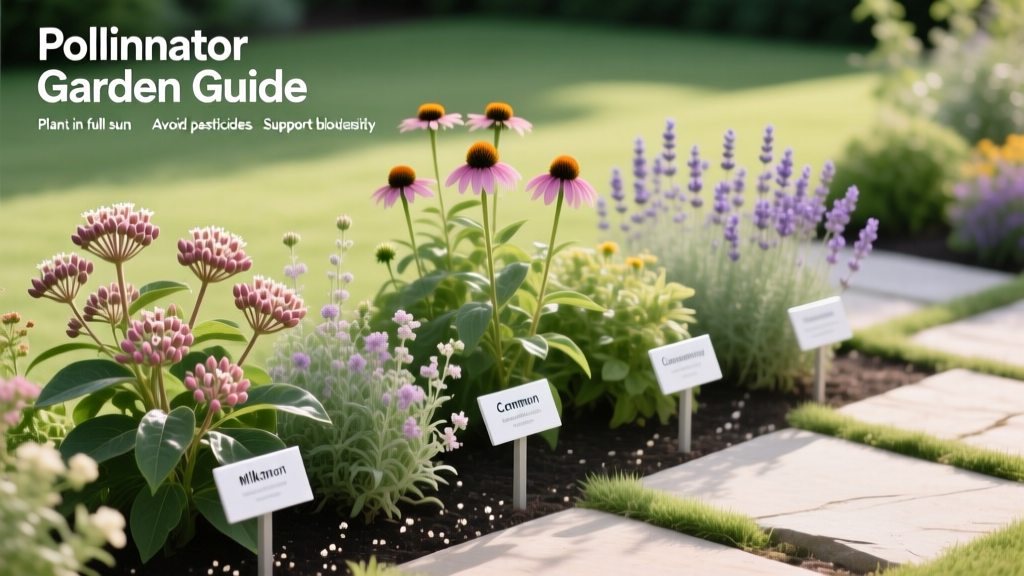
Every square foot of your yard can become a lifeline for declining pollinators—especially if you skip the glossy magazine spreads and focus on what actually works in your soil, sun, and climate. I’ve watched monarchs lay eggs on the same milkweed patch for five seasons—and lost three early gardens to overwatering and invasive ‘bee-friendly’ exotics. Start here, not with Pinterest.
Choose Native Plants First—Not Just 'Bee-Friendly' Labels
Labels like “pollinator-friendly” mean almost nothing unless the plant is native to your ecoregion. Non-native species often offer little or no nutritional value to local larvae. For example, common purple coneflower (Echinacea purpurea) supports 29 native moth and butterfly species in the Midwest—but the double-flowered cultivar ‘White Swan’ produces almost no pollen and has tightly packed petals that block access.
- In the Pacific Northwest? Prioritize Oregon grape (Mahonia aquifolium), goldenrod (Solidago spp.), and western columbine (Aquilegia formosa).
- In the Southeast? Use swamp milkweed (Asclepias incarnata), blue mistflower (Conoclinium coelestinum), and wild petunia (Ruellia caroliniensis).
- Avoid butterfly bush (Buddleja davidii)—it’s invasive in 22 states and offers nectar but no host value. Replace it with native buttonbush (Cephalanthus occidentalis), which hosts 20+ moth species.
Layer Your Garden Vertically—Like a Forest Floor
Pollinators need shelter, nesting sites, and bloom continuity—not just a flat sea of flowers. Mimic natural plant communities by stacking height, texture, and bloom time. A 4' x 6' corner can host 12+ species across layers without crowding.
Ground Cover & Low Growers
- Wild strawberry (Fragaria virginiana) — evergreen, blooms April–June, feeds early bumblebees
- Creeping thyme (Thymus serpyllum) — drought-tolerant, fragrant, low-maintenance
Mid-Height Perennials & Shrubs
- New England aster (Symphyotrichum novae-angliae) — late-season nectar powerhouse, blooms Sept–Oct
- Leadplant (Amorpha canescens) — nitrogen-fixing shrub, hosts silver-spotted skipper caterpillars
Water & Mulch Like a Pro—Not a Landscaper
Most pollinators don’t drink from birdbaths—they sip dew, rain, or shallow soil moisture. Overwatering drowns beneficial ground-nesting bees (70% of native bees nest underground). And dyed mulch? It leaches toxins and blocks soil gas exchange critical for bee larvae.
"In a 2022 Xerces Society field study, gardens using shredded hardwood mulch had 3.2× more ground-nesting bee activity than those with rubber or cocoa bean mulch." — Xerces Society Pollinator Habitat Assessment Report, 2022
Use 1–2 inches of coarse, untreated wood chips—not fine bark—around perennials. Leave bare, undisturbed soil patches (at least 2 ft²) in sunny, south-facing spots for mining bees. Skip irrigation once established natives hit their second year—most tolerate 3+ weeks without rain.
Quick Reference Checklist
| Plant | Bloom Time | Soil/Sun Needs | Pollinator Bonus |
|---|---|---|---|
| Joe-Pye weed (Eutrochium fistulosum) | July–Sept | Moist, full sun | Hosts 42 moth species; nectar magnet for swallowtails |
| Partridge pea (Chamaecrista fasciculata) | June–Sept | Dry, sandy, full sun | Nitrogen-fixer + host for sulphur butterflies |
| Golden alexander (Zizia aurea) | April–June | Medium moisture, part–full sun | Only known host for black swallowtail caterpillars in spring |
| Little bluestem (Schizachyrium scoparium) | Fall seed heads | Dry, rocky, full sun | Overwintering habitat for wasps & beetles; larval host for skipper moths |
Common Mistakes That Backfire
Even well-intentioned gardeners accidentally harm pollinators. These four missteps appear in over half the ‘failed’ pollinator gardens we’ve assessed at native plant sourcing workshops.
- Planting only for adult nectar — skipping host plants means no next generation. Milkweed isn’t optional for monarchs.
- Using systemic neonicotinoids — even soil drenches applied months before planting leave residues in pollen for up to 5 years (University of Minnesota Bee Lab, 2021).
- Cleaning up too thoroughly in fall — leaving stems standing and leaf litter intact shelters overwintering bees, moths, and beetles.
- Grouping by color instead of ecology — red salvia may look dramatic beside orange zinnias, but if both are non-native and bloom at the same time, they create a ‘nectar desert’ in July.
How much space do I really need?
Start with 3 ft × 3 ft. A single cluster of nine native plants—like goldenrod, aster, and blazing star—supports more pollinators than a 100-ft monoculture of lavender. Scale up only after observing which species thrive and which get ignored. Track visits with a simple notebook: tally bumblebee landings for 5 minutes each week. You’ll spot patterns faster than any app.
Do I need to fertilize?
No—and doing so harms more than helps. Native plants evolved in low-nutrient soils. Fertilizer spikes growth but dilutes floral chemistry, reducing nectar sugar concentration and pollen protein. The U.S. Fish & Wildlife Service recommends zero fertilizer for pollinator gardens, ever.
Can I mix natives with vegetables?
Absolutely—and it pays off. Interplanting basil with yarrow attracts hoverflies that eat aphids. Lettuce rows edged with pussytoes (Antennaria plantaginifolia) draw parasitic wasps that control cabbage loopers. See our companion planting guide for crop-specific pairings.
What about hummingbirds?
They’re pollinators too—but need tubular, red-to-orange flowers with high-sugar nectar. Trumpet honeysuckle (Lonicera sempervirens), not Japanese honeysuckle, is the native choice. Avoid feeders unless you clean them weekly; fermented sugar water kills nestlings.
How do I know if my garden is working?
Look beyond bees. See soldier beetles on coneflowers? Good sign—they prey on pests and pollinate while doing it. Hear buzzing near bare soil in May? Likely mining bees digging nests. Find chewed leaves on milkweed? Monarch caterpillars are present. True success isn’t Instagrammable perfection—it’s messy, alive, and slightly chaotic. For deeper tracking, try the free iNaturalist project prompts we built with the National Wildlife Federation.
Your garden doesn’t have to be big, flawless, or certified to matter. It just has to grow something real—something that breathes, feeds, and shelters. Start small. Watch closely. Adjust next season. That’s how pollinator gardens earn their wings.