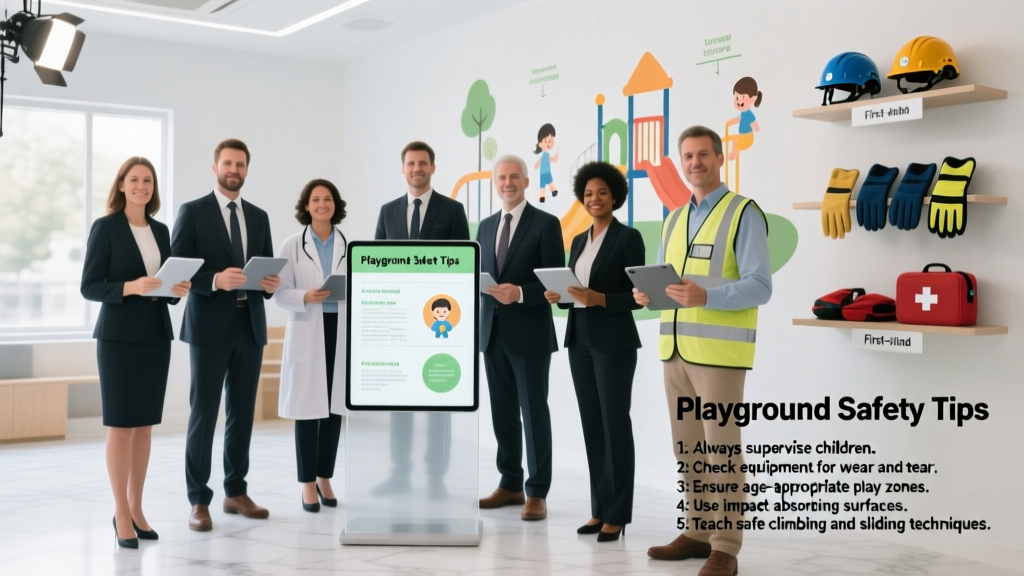
Every year, over 200,000 children visit U.S. emergency departments for playground-related injuries—most involving falls from equipment (CPSC, 2023). Many of these are preventable with simple, consistent habits—not just supervision, but smart setup and real-time awareness.
Inspect the Surface Before Letting Kids Play
Impact-absorbing surfacing is the single most effective injury reducer. Hard-packed dirt, grass, or concrete under play structures increases fracture risk by up to 7x compared to proper materials. The CPSC recommends at least 12 inches of loose-fill material (like engineered wood fiber or rubber mulch) extending 6 feet in all directions from equipment edges.
- Test depth: Push a ruler vertically into mulch—measure from top of material to hard surface underneath
- Avoid shredded tires: They compact unevenly and retain heat; surface temps can exceed 150°F on sunny days (U.S. Consumer Product Safety Commission, 2022)
- Check for debris: Rocks, broken glass, or exposed hardware compromise cushioning
Match Equipment to Age and Development
Playgrounds labeled "all ages" aren’t truly safe for all ages. Toddlers lack the balance and judgment needed for climbing walls designed for 8-year-olds—and older kids often underestimate risks on toddler swings or spring riders.
According to the National Program for Playground Safety (NPPS), age-appropriate zoning cuts fall-related injuries by 42%. Here’s how to spot mismatched use:
- Toddler zone (6–23 months): Should have no platforms over 32 inches high; openings must be <3.5" or >9" to prevent head entrapment
- School-age zone (5–12 years): Slides should be ≥12 inches wide; ladder rungs spaced ≤12 inches apart
- Never allow infants in bucket swings without full torso support and harnesses
Why height matters more than speed
Falls from heights greater than 5 feet account for 78% of playground fractures (American Academy of Pediatrics, 2021). A 4-foot slide exit isn’t inherently safer than a 6-foot one—if the landing zone is poorly maintained or crowded.
Dress for Safety—Not Just Style
Clothing and accessories introduce hidden hazards. Drawstrings on hoods, dangling scarves, and oversized backpacks have caused strangulation on climbing nets and merry-go-rounds. Jewelry, especially necklaces or bracelets with clasps, can catch on S-hooks or chain links.
| Item | Safe Choice | Risky Choice |
|---|---|---|
| Hoodies | Pull-on style with no drawstring | Hood with knotted or looped drawstring |
| Footwear | Velcro-strap sneakers or closed-toe sandals | Flip-flops, Crocs without heel straps, or bare feet on hot metal |
| Accessories | Short, snap-button hair clips | Long scarves, beaded necklaces, or dangling ID lanyards |
Supervision That Actually Works
Active supervision means staying within arm’s reach of toddlers and scanning every 10 seconds for school-age kids—even during 'quiet' moments like swinging or sliding. Distraction is the top contributor to missed near-misses: 63% of caregivers observed in a 2022 NPPS field study checked phones during active play periods.
"Supervision isn’t about being nearby—it’s about seeing, interpreting, and acting. If you’re reading or texting, you’re not supervising. You’re occupying space." — Dr. Elena Torres, Pediatric Injury Prevention Specialist, Nationwide Children’s Hospital, 2023
When to step in—before the fall
Intervene when you see: a child standing on a swing seat, climbing outside designated paths, or using equipment in unintended ways (e.g., sliding headfirst, hanging upside-down on monkey bars). These behaviors precede 89% of serious injuries (CPSC Injury Data, 2023).
Quick Reference Checklist
- ✅ Surface depth meets CPSC minimums (12" loose-fill, 6' radius)
- ✅ No head entrapment gaps (3.5"–9" openings)
- ✅ Equipment shows no rust, splinters, or missing bolts
- ✅ Child’s clothing has no loops, strings, or dangling parts
- ✅ You’ve scanned the area for hazards *before* letting them run off
Common Mistakes Parents Make
Even vigilant caregivers miss subtle but critical errors. These five missteps show up repeatedly in injury reports:
- Assuming rubber tiles = always safe (they crack, lift, or shift—exposing concrete underneath)
- Letting kids wear bike helmets on playgrounds (they can get caught on equipment and increase strangulation risk)
- Using home-installed backyard equipment without anchoring it to soil or concrete
- Trusting 'maintenance complete' signs without verifying recent inspection logs
- Allowing multiple kids on a single swing seat or spring rider beyond manufacturer limits
How often should playgrounds be inspected?
Public playgrounds require daily visual checks by staff and formal inspections every 1–3 months by certified inspectors (ASTM F1487-23 standard). For backyard sets, inspect bolts, chains, and anchors monthly—and after storms or extreme temperature swings.
Are inflatable bouncers safer than fixed equipment?
No. Inflatable units cause more traumatic brain injuries per hour of use than traditional playgrounds—especially when unsupervised or over capacity (Pediatric Emergency Care, 2022). Anchor points, wind conditions, and operator training drastically affect safety.
What’s the safest way to teach a child to use the monkey bars?
Start low: Use ground-level bars or those mounted at waist height. Demonstrate grip (palms down, fingers wrapped fully), and insist on one hand on the bar at all times. Never allow jumping off mid-cross—teach controlled dismounts onto both feet first.
Can shade structures reduce risk beyond sunburn?
Absolutely. Shade lowers surface temperatures on metal slides and decks by up to 40°F—cutting burn risk significantly. But ensure shade fabric doesn’t create tripping hazards or obstruct sightlines for supervisors.
Is it safe for kids to wear sunglasses at the playground?
Yes—if they fit snugly and have breakaway straps. Avoid oversized adult styles that slip down noses and impair peripheral vision during climbing or running.
Playground safety isn’t about eliminating risk—it’s about managing it intelligently. Small adjustments in how you inspect, dress, supervise, and advocate make measurable differences. For more on home playset installation, see our backyard playset installation guide. And if your local park lacks proper surfacing, learn how to advocate for playground upgrades with city officials. Stay alert, stay informed, and trust your gut when something feels off—because it probably is.