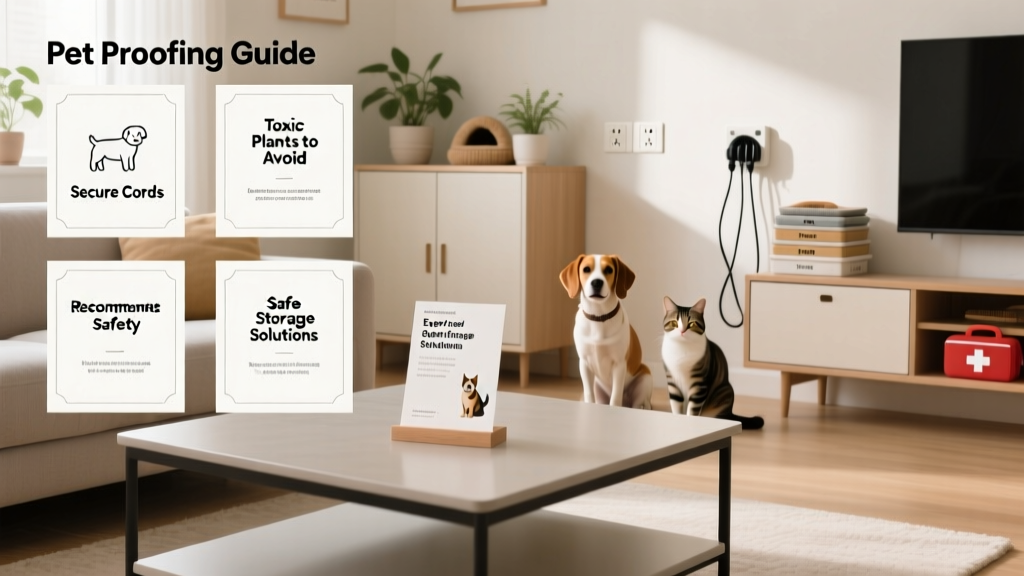
If you’ve ever found chewed baseboards, a tipped-over trash can, or your cat perched on a precariously balanced houseplant, you know pet proofing isn’t optional—it’s urgent. Pets explore with mouths, claws, and curiosity, and their instincts don’t sync with human safety standards. The good news? Most hazards are preventable with low-cost, high-impact adjustments.
Secure Toxic Substances
Household cleaners, medications, and even common plants like lilies or sago palms can cause severe illness or death in pets. According to the ASPCA Animal Poison Control Center’s 2023 annual report, human medications accounted for 21% of all pet poisonings reported—more than any other category.
- Store all medications—including vitamins and topical creams—in locked cabinets, not bathroom drawers (cats jump; dogs nose open gaps)
- Replace liquid laundry pods with powder or tablets—those colorful gels look like candy to dogs and cause rapid oral swelling and respiratory distress
- Label every plant with its scientific name and cross-check against the ASPCA’s toxic plant database
Anchor & Block High-Risk Zones
Vertical space is dangerous territory. Cats climb; dogs jump; both knock things over. A 2022 study in Journal of Veterinary Behavior found that 68% of indoor pet injuries involved falls from furniture or countertops.
Kitchen Safety
Keep cabinet doors shut—and install child locks on lower ones holding cleaning supplies or sharp objects. Unplug and stow appliance cords (especially toaster ovens and blenders) when not in use; chewing exposes live wires.
Bathroom Boundaries
Closed toilet lids prevent drowning risks for small dogs and curious kittens. Use non-slip mats in tubs and remove dangling shower curtain rings—they’re irresistible tug toys.
Manage Cords, Cables & Small Objects
Electrical cords aren’t just fire hazards—they’re chew magnets. The U.S. Consumer Product Safety Commission recorded 1,240 pet-related cord-chew incidents requiring emergency vet care in 2023 alone.
"I see at least two cord-burn cases per week during summer months—often from dogs gnawing on extension cords under sofas. Covering them isn’t enough; route them behind furniture or use rigid PVC conduit." — Dr. Lena Torres, DVM, Emergency Veterinary Clinic of Austin, 2024
- Bundle cords with Velcro straps—not rubber bands (which snap and become choking hazards)
- Use cord concealers with ventilation slots, not solid plastic tubes (heat buildup damages wiring)
- Clear nightstands and coffee tables of loose buttons, batteries, hair ties, and dental floss—these cause intestinal blockages if swallowed
Quick Reference Checklist
| Room | Hazard Type | Action |
|---|---|---|
| Kitchen | Open trash, stove knobs, hanging utensils | Install motion-sensor trash lid; remove stove knob covers; hang pots on wall-mounted racks |
| Living Room | Loose strings, dangling blinds, unstable bookshelves | Trim blind cords to 6 inches max; anchor shelves to wall studs; store yarn/ribbon in latched bins |
| Bedroom | Open closets, loose socks, under-bed storage | Add closet door stops; keep laundry hampers covered; seal under-bed bins with bungee cords |
| Laundry Room | Detergent pods, dryer sheets, open hampers | Switch to detergent tablets in opaque containers; store dryer sheets in metal tins; use hamper lids with pet-proof latches |
Common Mistakes
Even well-intentioned owners miss subtle dangers. Here’s what trips people up most:
- Assuming ‘pet-safe’ labels mean ‘chew-proof’ — Many pet-safe cleaners still contain glycerin or xylitol analogs that attract licking but cause GI upset
- Using baby gates without checking height clearance — A 24-inch gate stops a puppy but not a 12-pound terrier who leaps or a 9-pound cat who climbs the mesh
- Leaving ‘safe’ rooms unmonitored — A bedroom may seem secure until your dog discovers how to nudge open the door latch or your cat knocks over a framed photo onto a power strip
How do I pet proof an apartment with limited control over fixtures?
Focus on portable solutions: adhesive cord clips instead of drilling into walls, tension-mounted shelf brackets, removable drawer locks, and heavy-duty rubber doorstops to prevent accidental entry into balconies or utility closets.
Is it safe to use citrus sprays as natural deterrents?
Yes—for most dogs—but avoid on cats. Citrus oils (d-limonene) are hepatotoxic to felines. For cats, try diluted rosemary or eucalyptus oil (never tea tree), applied only to surfaces they shouldn’t access—not their bedding or food bowls.
What should I check first when bringing home a new puppy?
Start with the floor: sweep for loose change, rubber bands, and pill fragments. Then inspect baseboards for gaps where paws or snouts could get stuck. Finally, test every cabinet latch—many ‘childproof’ models release with 5 lbs of pressure, which a determined 10-week-old pup easily exerts.
Can I pet proof without making my home look cluttered?
Absolutely. Choose low-profile solutions: flat magnetic cord organizers, clear acrylic drawer locks, and furniture-leg anchors hidden beneath rugs. Prioritize function over visibility—then layer in aesthetics later with woven baskets or decorative storage boxes.
Do older pets need pet proofing too?
Yes—especially for mobility and cognition changes. Senior dogs may forget trained boundaries; arthritic cats might misjudge jumps and land on fragile electronics. Add non-slip stair treads, lower litter box entries, and motion-sensor nightlights along common paths.
How often should I re-evaluate my pet proofing setup?
Every 3–4 months—or after any major life change: new furniture, seasonal decor, home renovation, or shifts in your pet’s behavior (e.g., sudden chewing, pacing, or hiding). Puppies mature; seniors slow down; cats develop new obsessions. Your home should evolve with them.
Pet proofing isn’t about perfection—it’s about observation, adjustment, and consistency. Start with one room this weekend. Then move to the next. You’ll notice fewer surprises, fewer ER calls, and more relaxed naps—on the couch, not in the vet’s waiting room. For more on managing pet behavior around hazards, see our dog chewing solutions and cat scratching alternatives guides.